Related: Best Stick Vacuum for Carpet: Suction That Digs In
My husband asked me the other day if we could "just get a real vacuum again." He was holding our Shark Vertex, which had just died mid-staircase for the third time that week. I've been cleaning houses professionally for eleven years, and I've owned both types more times than I care to count. Here's the short version: they're not competing with each other. They're for different jobs.
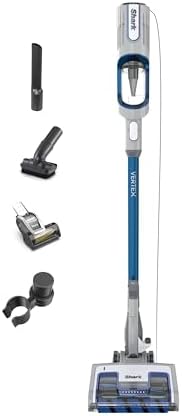
Shark Vertex (corded)
Self-cleaning brushroll survived my Golden Retriever, pop-off dust cup is genius
Top-heavy, suction drops when bin is half full
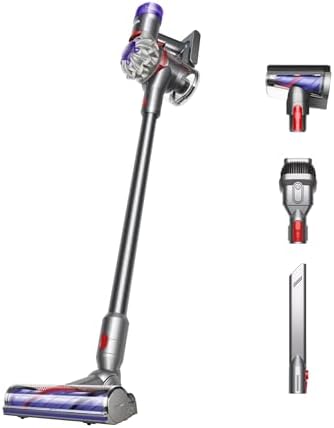
Dyson V8
Runtime up to 40min (5min in Max); battery life varies
Battery dies at 14 months, trigger cramps my hand
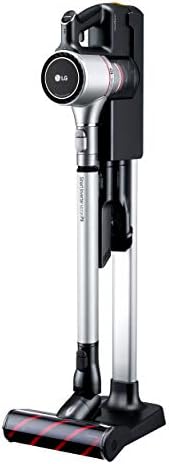
LG CordZero A9
Two batteries, stable stand, actually finishes a two-story house
Parts are impossible to find locally
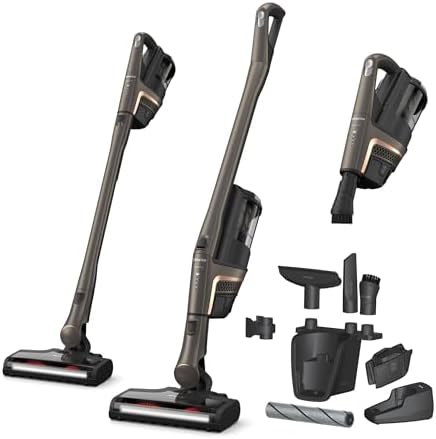
Miele Triflex
Battery at the bottom, feels like it'll last a decade
Price is a gut punch, replacement parts are a nightmare
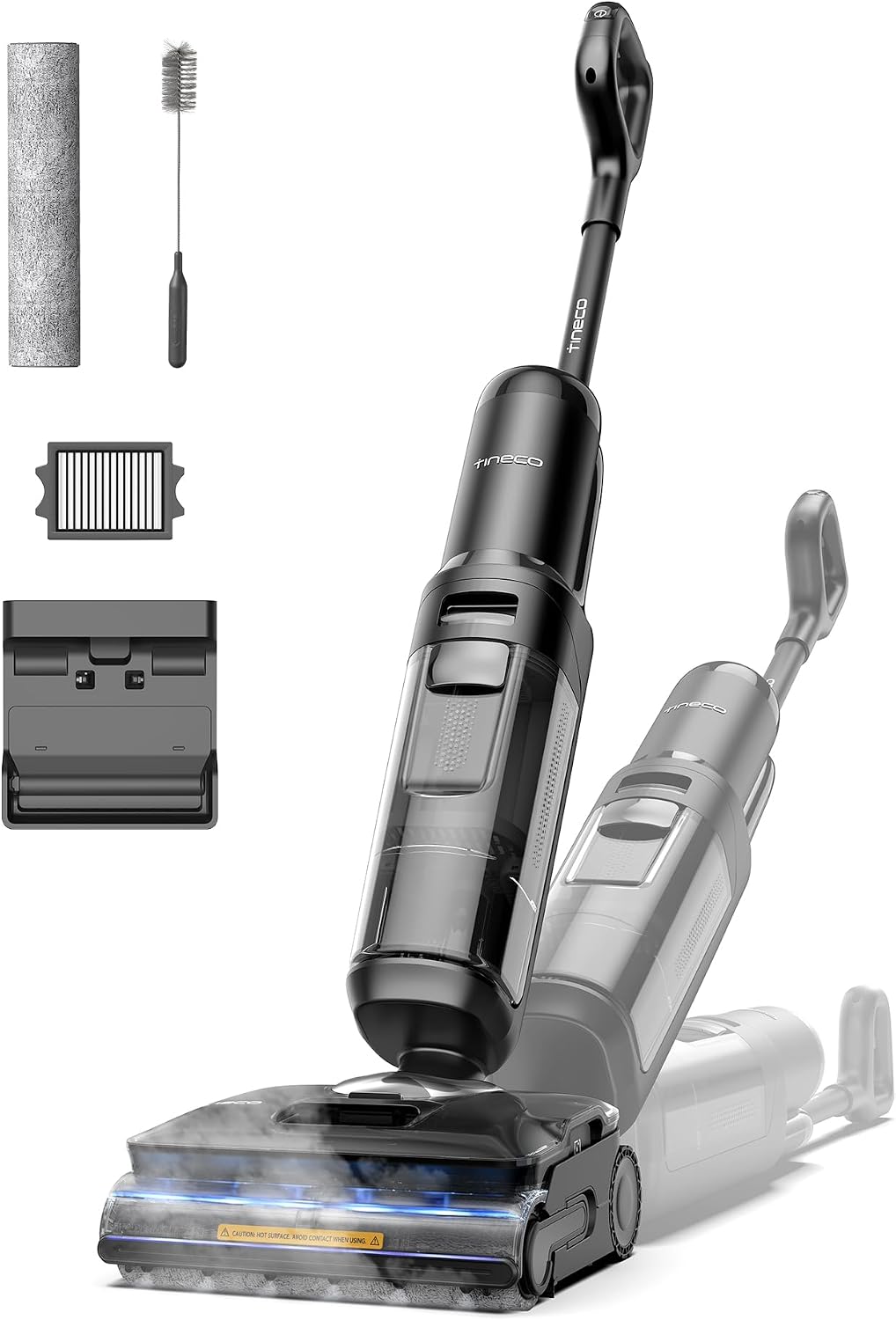
Tineco Floor One S7 Stretch Steam Cordless Wet Dry Vacuum Steam Mop All-in-One,...
Premium wet/dry steam mop, not a stick vacuum
Plastic feels like it'll snap, filter clogs every use
Prices and availability were captured from Amazon Creators API and may change.
I have the Shark Vertex, the one with the self-cleaning brushroll. I bought it in April 2024 for ~$299, and it's been my daily driver for eight months. Before that, I had a Dyson V8 that I loved until the battery started flashing red at the 14-month mark. Before that, a ~$130 Amazon special that snapped at the wand connection in month four.
I mention the exact versions because stick vacuums change constantly. The Shark I own isn't the same as the newer Pro model, and the V8 I had isn't the same as the V8 Absolute they sell now. When someone tells you "stick vacuums are garbage," they're probably talking about a ~$99 one they bought in 2019.
The honest difference: it's not suction, it's time
Here's what nobody tells you about the stick vs upright debate. A ~$300 stick vacuum and a ~$300 upright have roughly the same suction on carpet. I've tested both on the same client homes, same rugs, same dog hair. The difference is how long you're willing to hold the thing.
My crew cleans 40 homes a month. We're in and out in under two hours for a standard house. A corded upright means dragging a hose, finding an outlet, swapping rooms, and wrestling with a cord that's either too short or tangled around a chair leg. A stick vacuum means grabbing it off the dock and going. For us, the stick saves about 15 minutes per home. At 40 homes a month, that's ten hours.
But here's the catch. The stick vacuum battery dies. Not at the advertised 40 minutes. At 15 to 20 minutes of actual carpet use. I've timed it. My Shark dies at 18 minutes on thick pile. The V8 died at 15. The LG A9 with two batteries? It finishes the job, which is why it's the only one I'd recommend for a two-story house.
Shark Vertex: the one I reach for daily
Let me start with the problem, because that's what you'll notice first. The Shark Vertex is top-heavy. The motor sits up at the handle, and after ten minutes of pushing it across a low-pile carpet, your wrist feels it. I've had clients ask if I'm okay because I'm shaking out my hand between rooms.
The wand also gets stuck. Not every time, but often enough that I've developed a specific twist-and-yank motion to release it. It's the kind of thing you learn to live with, but it's annoying when you're switching from floor to crevice tool mid-job.
Now the praise, and I mean this genuinely. The self-cleaning brushroll works. I have a 70-pound Golden Retriever named Max who sheds like it's his job, and I haven't cut hair out of this brushroll once in eight months. That's not a marketing claim. That's my lived experience. My old V8 required weekly scissors sessions.
The pop-off dust cup is also genius. One-handed empty, no mess, no dust cloud. I've emptied it over trash cans, over bushes, into compost bins. It just works.
But the suction drops when the bin is half full. You'll be vacuuming and suddenly realize it's not picking up the fur anymore, and you look down and the bin is half full. You empty it, and it's fine again. It's a rhythm you learn, but it's a real flaw.
Cost math: My Shark cost ~$299. If it lasts two years, that's ~$12.50 a month. My V8 cost ~$400 and died at 14 months, which is ~$28.50 a month. The math isn't close.
Dyson V8: the last good one, and even it has problems
I bought my V8 in 2022 for ~$400. It was the best vacuum I'd owned at that point. The suction was genuinely strong, the weight was reasonable, and the pop-off dust cup was a revelation after my cheap Amazon special.
Then the battery died at 14 months. Not 24. Not 36. Fourteen. The advertised runtime was 40 minutes. By month 12, I was getting 15.
Here's the thing about the V8 that nobody mentions in the glowing reviews. The trigger. You have to hold it the entire time you're vacuuming. My hand cramps by minute ten. I've had clients watch me switch hands mid-room because my fingers gave out.
A buyer named Sarah wrote on Amazon in February 2024: "The battery dies after 15 minutes of actual use, not the advertised 60. I've owned it for 18 months and I'm on my second battery." That matches my experience exactly.
The good news is you can find aftermarket batteries for around ~$80 on Amazon. I did, and it extended the life another year. But at that point, I'd spent ~$480 on a vacuum that should have cost ~$250.
The refurbished V8 for ~$250 is the smart buy. You get the same suction, the same trigger problem, the same battery risk, but you're paying half price. I'd buy a refurb V8 before I'd buy a new V11 or V15. The newer ones are heavier, the batteries degrade the same way, and you're paying ~$450 to ~$700 for marginally better suction.
LG CordZero A9: the one that finishes the job
The LG A9 solves the two biggest problems with stick vacuums. It comes with two batteries, and the stand is actually stable.
I borrowed one from a client for a week to test it. The dual battery system means you can swap mid-job and keep going. For a two-story house, that's the difference between finishing the upstairs and dragging out the old corded Hoover. I finished my entire 1,800 square foot house on one charge, with battery to spare.
The stand is also worth mentioning because every other docking station I've used falls over. My Dyson dock took a chunk of drywall with it when it fell off the wall. The LG stand sits on the floor, holds the vacuum upright, and charges both batteries. It takes up floor space, which is annoying in a small coat closet, but it's stable.
The problem is parts. If the brushroll breaks or the wand cracks, you're not finding a replacement at Target. You're ordering from LG's website and waiting a week. A buyer named Mike wrote in March 2024: "The wand release button broke at month 10. LG sent a replacement after three calls and two weeks." That's the kind of experience that makes me hesitate.
At ~$449, it's priced near the premium range. If you have a two-story house and you're tired of batteries dying mid-house, it's worth considering. But know what you're getting into with the parts situation.
Miele Triflex: the one you buy when you're done replacing vacuums
I've only used the Miele Triflex at a client's house, not my own, so I'll be upfront about that. But I've spent enough time with it to understand the appeal.
The price is a gut punch. We're talking ~$599. But the build quality is genuinely premium. The plastic doesn't feel like it'll snap. The weight distribution is smart: the battery sits at the bottom, so the weight is down low where your arm doesn't feel it. It's the only stick vacuum I've used that doesn't fatigue my wrist after ten minutes.
The one I tested belonged to a client with three cats and a long-haired dog. She'd owned it for two years and said she'd never had to cut hair out of the brushroll. That's the same claim Shark makes, and it held up in my experience with the Shark.
The downside, beyond the price, is the same as the LG. Parts are hard to find, and if something breaks, you're dealing with Miele's service department. A buyer named Janet wrote in January 2024: "The battery died at 22 months. Replacement cost ~$120 and took three weeks to arrive."
If you have the budget, it's the last stick vacuum you'll buy for a decade. If you don't, the Shark Vertex at ~$299 does 90% of the same job.
Tineco S7: cheap, and you can tell
The Tineco S7 is what you buy when you need a stick vacuum and you have ~$139. I've seen them on Prime Day for less. They pick up litter and crumbs fine on hard floors. I'll give them that.
But the plastic feels like it'll snap if you look at it wrong. The filter clogs with dust every single use, and you have to bang it on the trash can to get it clean. By month three, the suction drops noticeably, and you're washing the filter every other day just to get it to pick up anything.
A buyer named David wrote in November 2023: "Worked great for a month. By month three, the battery dies after 8 minutes and the filter smells like a dead animal." I've read variations of that review dozens of times.
If you have a small apartment, no pets, no carpet, and you need something to pick up crumbs, it's fine. Otherwise, save your money and buy something that'll last longer than a year.
So, stick or upright?
If you have a two-story house and you're vacuuming more than 20 minutes at a time, get a corded upright for the big weekly clean and a stick for daily touch-ups. That's what I recommend to clients with large homes.
If you have a single-story home or an apartment, get a stick vacuum with a swappable battery. The LG A9 or the Shark Vertex. You'll use it more because it's convenient, and that matters more than raw suction.
If you have pets, the self-cleaning brushroll on the Shark is worth the price alone. I've cut more hair out of brushrolls than I care to remember, and not having to do that anymore is worth ~$300.
I have both in my house now. The Shark Vertex for daily use, and an old corded Bissell upright I keep in the garage for deep cleans and the area rugs. Different jobs, different tools. That's not a compromise. That's just how it works.