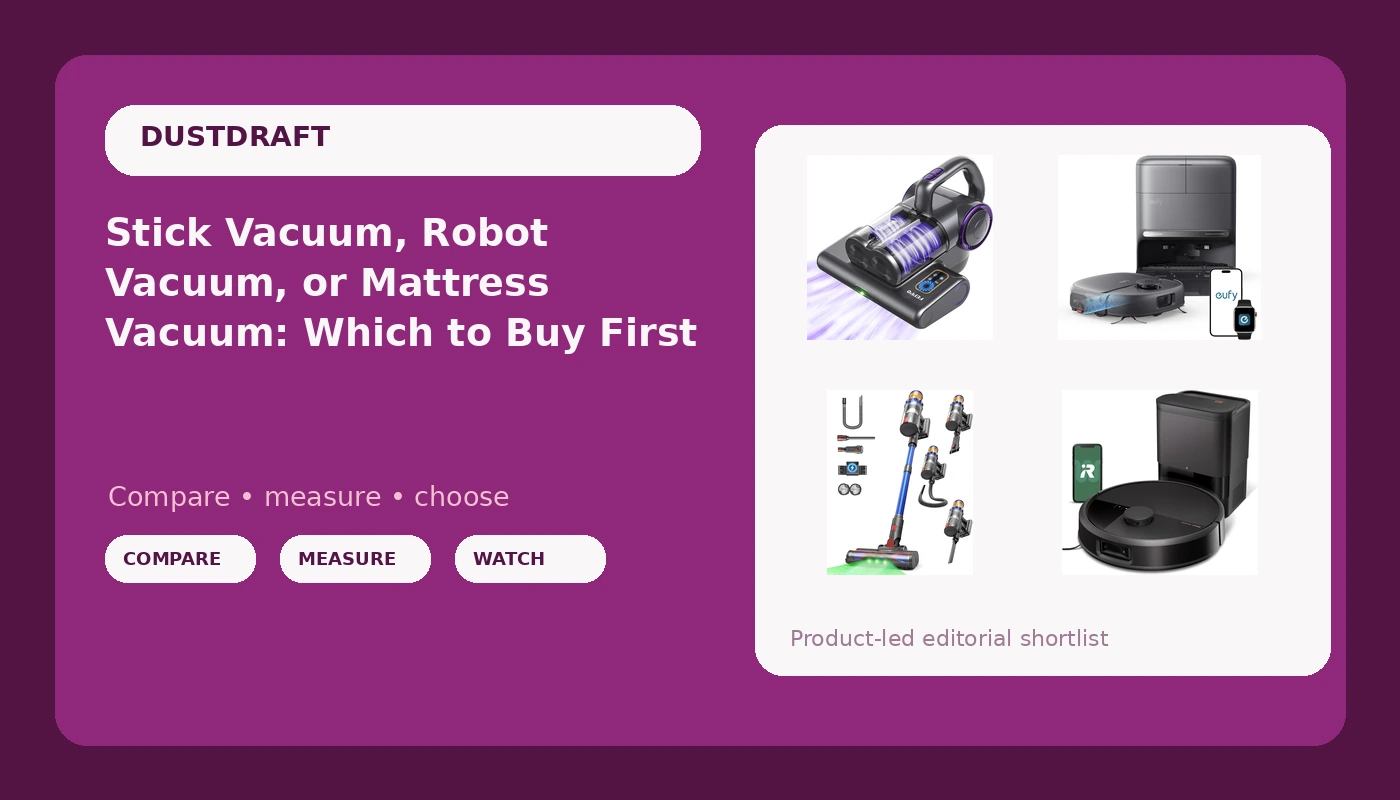
I have cleaned houses in Denver for eleven years. For the last four I have run a three-person crew that covers more than 40 homes a month, and most of those homes have at least one dog or cat. A few have huskies, which is a different sport entirely. I have killed more stick vacuums than I can count: the ones that die halfway up a staircase, the ones that cannot pick up a single Cheerio, the ones that fling debris across the kitchen instead of swallowing it. This cordless stick vacuum comparison is the conversation I have with clients, written down.
Here is the part nobody tells you before you spend money. The machine that fits your home depends less on the suction number on the box than on what you actually do every day. Stairs, pets, kids, allergies, and how much you hate emptying a bin decide the answer before any spec sheet does.
My short answer: if you have stairs and a mix of carpet and hard floor, buy the cordless stick vacuum first. If your main living space is open and the floors are mostly hard surface, buy the self-emptying robot first. The mattress vacuum is a third purchase, not a first one.

Cordless Vacuum Cleaner, 650W/55Kpa Vacuum Cleaners for Home, 70Mins Stick Vacuum with Self-Standing, Anti-Tangle, Wall Mount Charging, Lightweight Wireless Vacuum for Hardwood Floors Carpet Pet Hair Car
Stands on its own, mounts on the wall, claims 70 minutes and 55Kpa from a 650W motor
Runtime claims shrink on carpet, and the anti-tangle promise needs owner reports to back it

iRobot Roomba Max 715 Pet Robot Vacuum, 30,000Pa Suction, Dual Rubber Anti-Tangle Brushes & Side Brush, 90 Days Self-Emptying, PrecisionVision AI Obstacle Avoidance, 3D Mapping, Advanced Dirt Detect
30,000Pa, dual rubber brushes built to resist hair wrap, and a base that holds debris for up to 90 days
It cannot do stairs, and it still needs a human to clear the floor before it runs

eufy C28 Robot Vacuum Cleaner and Mop Combo, 15,000 Pa, HydroJet Roller Mop
Vacuum and mop in one pass, with a roller mop that keeps dirty water out of the clean path
Less raw suction than the other robot, and mop maintenance is a real weekly chore
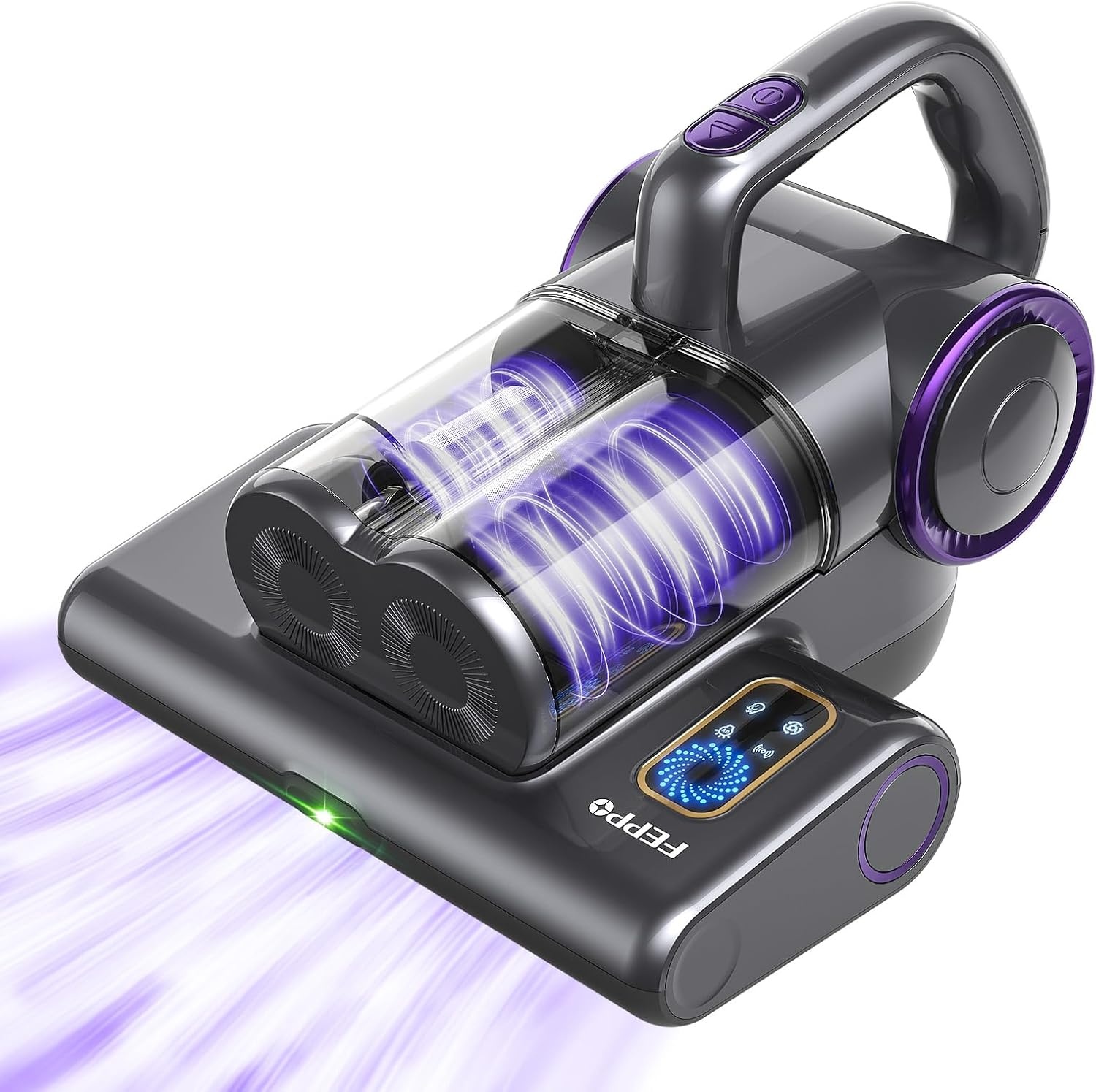
FEPPO Mattress Vacuum Cleaner, 16Kpa Bed Vacuum with 253.7nm UV-C Light
A dedicated tool for mattresses, cushions, and upholstery, with UV-C light in the same pass
It only does beds and soft surfaces, so it never replaces a floor vacuum
Prices and availability were captured from Amazon Creators API and may change.
What I look at before anything else
Three questions decide whether a vacuum gets handed to my crew on a Tuesday.
The first is the brush roll. If a brush tangles after one pass through pet hair, it is not a pet vacuum, it is a chore with a motor attached. Anti-tangle is the most abused phrase in this category. The only honest way to judge it is to look at the brush design and read what owners say after a month of real use.
The second is suction under load. A suction number is measured on a clean machine with an empty bin on a bare floor. That is not a home. The real test is the second pass, when the bin is half full and the filter has been breathing carpet dust for twenty minutes. Bin cyclones are what separate a vacuum that keeps pulling from one that quits.
The third is emptying. If I need two hands, a screwdriver, or a prayer to get the dirt out, the machine goes in the trash. One-handed emptying is not a luxury. It is the difference between a ten-second mid-job dump and a ten-minute detour while a client watches.
Everything below is judged on those three questions plus what the spec sheet actually promises, because I do not hand a vacuum to my crew on the strength of a marketing bullet.
The cordless stick vacuum: the daily driver
The Cordless Vacuum Cleaner is the machine in this group that does the most jobs. A 650W motor rated to 55Kpa, a claimed 70 minutes of runtime, self-standing, anti-tangle brush, wall mount charging, and a lightweight body aimed at hardwood, carpet, pet hair, and car interiors.
Two of those specs matter more than the rest to someone who cleans for a living.
Self-standing is the one I would put on a billboard. My single biggest pet peeve in this category is a stick vacuum that will not stand up on its own, so you lean it against a wall, it slides, it falls, and you pick it up for the fortieth time before lunch. A vacuum that stands by itself is a vacuum you can park while you move a chair or answer a client's question. It sounds trivial. It is not.
Wall mount charging is the second. A vacuum that lives on a wall in the hall gets used. A vacuum that lives in a closet behind the coats gets used twice a month. Where the dock goes decides how often the machine comes out.
The 70 minutes is the number I trust least, and that is not a knock on this vacuum, it is a fact about the category. Runtime is measured with an empty bin on a bare floor. Put the brush roll down on medium pile carpet and that number shrinks. Every brand does this. Budget for less than the box says and you will never be disappointed.
The anti-tangle claim is the one to verify with owner reviews after a month. If it holds up, this is the machine for a home with a golden retriever and carpeted stairs. If it does not, you will be cutting hair off a brush roll with scissors, which is the exact chore a stick vacuum is supposed to remove.
The self-emptying robot: iRobot Roomba Max 715
The iRobot Roomba Max 715 Pet Robot Vacuum is the machine that changed my opinion about robots in pet homes. The specs are the story: 30,000Pa of suction, dual rubber anti-tangle brushes plus a side brush, 90 days of self-emptying capacity, PrecisionVision AI obstacle avoidance, 3D mapping, and Advanced Dirt Detect.
Start with the brushes. Rubber dual brushes are the right answer for pet hair, because hair wraps around a bristle brush and slides off a rubber one. This is the same physics that makes a squeegee better than a broom on a wet floor. A side brush gets the corners and along baseboards where a round robot cannot reach with its main brush.
Then the 90 days. The reason most people stop using a robot vacuum is that they get tired of emptying a tiny bin after every run. A base that holds debris for up to 90 days removes that job from your week entirely. For a household with two shedding animals, that is the difference between a robot that runs daily and a robot that becomes a very expensive doorstop.
PrecisionVision AI and 3D mapping are the features I used to mock. I still think the app is not the point. But obstacle avoidance matters when you have pet toys, charging cables, and a water bowl on the floor, and mapping matters when you want one room cleaned rather than the whole house. Dirt Detect is the extra passes over the spots that need them, which is how a robot covers a kitchen doorway properly.
What it cannot do: stairs, and anything that needs a wand. If your home has a carpeted staircase, this machine does not replace a stick vacuum. It replaces the daily sweep of the main floor. That is a real job, and in an open plan home with pets it is the job that matters most.
The robot that mops: eufy C28
The eufy C28 Robot Vacuum Cleaner and Mop Combo pairs 15,000 Pa of suction with a HydroJet Roller Mop. The number to notice is not the suction. It is the word roller.
A roller mop scrubs a wet roller across the floor and wrings itself as it spins, which keeps the dirty water out of the clean path. Flat pads drag the same grimy cloth around the room and leave a film behind. If you have ever mopped a kitchen twice with the same bucket, you know exactly what I mean.
That makes this the pick for a home with hard floors and kids, where the floor gets sticky every single day and a full mop and bucket never happens. Vacuuming and mopping in one pass is not a gimmick in that house. It is the only way the floor gets mopped at all.
Two honest trade-offs. First, 15,000 Pa is less raw suction than the other robot here, so a home with wall-to-wall carpet and heavy shedding should think harder. Second, a roller mop needs maintenance. You empty a dirty water tank, you refill a clean one, and you clean the roller. If you will not do that weekly, buy the vacuum-only robot and keep a separate mop for the days you feel ambitious.
The mattress vacuum: FEPPO
The FEPPO Mattress Vacuum Cleaner is a 16Kpa bed vacuum with a 253.7nm UV-C light. This is the machine people email me about after they read something about dust mites.
Here is the honest version. You cannot vacuum a mattress with a stick vacuum's floor head. The tool is wrong, the angle is wrong, and you cannot press down on a pillow-top without dragging the sheets around. A dedicated bed vacuum has a flat head built for fabric, and it lets you run along the seams and the piping where dust and dead skin actually collect.
The 16Kpa is respectable for this job, because you are pulling fine dust out of fabric, not gravel out of a carpet. As for the 253.7nm UV-C light, that wavelength is the one used in germicidal lamps, and it runs in the same pass as the suction. I treat UV-C on a bed vacuum the way I treat any add-on: nice if the suction is good, not a reason to buy a weak vacuum. Buy it because the suction and the head design do the job.
Who actually needs one: allergy households, homes with pets that sleep on the bed, and anyone with a baby or toddler who spends the day on a play mat and a couch. Buy it third, after the floors are handled.
Which one for which home
An apartment with one cat and mostly hard floors: the stick vacuum, plus the mattress vacuum if someone in the house sneezes all spring.
A house with two huskies and carpeted stairs: the stick vacuum first, because you have to do the stairs by hand no matter what. Add the self-emptying robot later if the main floor is open enough to run one.
An open plan home with kids and hard floors: the robot with the roller mop. Sticky floors are the whole problem, and daily mopping fixes them.
A home with wall-to-wall carpet and heavy shedding: the self-emptying robot with the rubber brushes, run daily, plus a stick vacuum for stairs and edges.
The trade-offs, stated plainly
The stick vacuum cannot run while you are at work, and its runtime shrinks on carpet.
The self-emptying robot cannot climb stairs, cannot reach a crevice, and needs a floor that is picked up before it starts.
The mop combo robot gives up some suction for the mopping, and the mop itself needs cleaning.
The mattress vacuum only handles beds, couches, and soft surfaces, so it never replaces a floor machine.
What I would buy first
Ranked by what I would buy first, not by budget.
One, the cordless stick vacuum. It does stairs, it does car seats, it does the kitchen after dinner, and it stands on its own so it actually gets used. If you only buy one machine, this is the one.
Two, the self-emptying robot, if your main floor is open and you are tired of sweeping. The 90-day base is the feature that keeps it running.
Three, the mop combo robot, if your problem is sticky floors rather than carpet.
Four, the mattress vacuum, once the floors are handled and you want the beds and couches done properly.
What I am watching next
Three things on my list for the rest of the year: how long the newest battery cells hold their runtime after a year of charging on a wall dock, whether roller mops survive a household of long hair without needing a new roller every season, and how the self-emptying bases hold up when a house has two heavy-shedding dogs. Those are the questions that decide whether a vacuum is still on the wall in three years or in the garage sale pile, and they are the questions a spec sheet will never answer.