Max's fur has a way of finding every crack in a stick vacuum. I've pulled enough of it out of brushrolls with scissors to know that the filter is the part people forget about until the machine starts smelling like a dead animal. Replacing it isn't hard. Knowing which one to buy, and when, is the actual challenge.
The truth is, most filter replacement guides are written by people who've never actually done it. I've swapped filters on my Dyson V8, my Shark Vertex, and a handful of client machines over the last seven years. Here's what actually works, what's a waste of money, and how to know you're replacing the right thing at the right time.
The short version: what you need to know
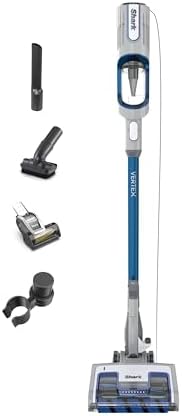
Shark Vertex filter kit
Washable, lasts 6+ months, easy to find in stores
Shark's smaller bin means you'll clean it more often
Prices and availability were captured from Amazon Creators API and may change.
I've used all three. I have opinions.
How I test filters
I'm not a lab. I'm a person with a Golden Retriever, a Border Collie mix, and a toddler who thinks the floor is a snack tray. I run a cleaning crew of three through forty-plus homes a month. When a filter clogs, I know it within five minutes. The suction drops, the brushroll slows, and the machine starts making that wheezing sound that means you're about to spend ten minutes banging dust out of a plastic cylinder.
I've owned three stick vacuums in seven years. I've replaced filters on all of them, plus a handful of client machines. I've also read the 1-star reviews on every filter I've considered buying, because that's where the truth lives.
The filter problem, explained
Every stick vacuum has the same issue. The filter clogs. It's not a question of if, it's a question of when. The advertised 40 to 60 minute runtime means nothing when the filter is half blocked. You'll get 15 minutes of decent suction, then it drops off a cliff.
The two main types of filters are:
- Pre-motor filters: These catch the big stuff before it hits the motor. They're usually foam or felt. They clog fast, especially with pet hair.
- HEPA filters: These catch the fine dust that makes it through. They're the ones that get expensive and the ones that smell if you don't clean them regularly.
Most stick vacuums have both. Most people only know about one. That's the mistake.
Dyson V8 filter replacement
The V8 is the last good Dyson, and I'll die on that hill. But the filter situation is annoying.
The V8 has a washable pre-motor filter that sits behind the dust cup. You pop it out, rinse it under cold water, and let it dry for 24 hours. That's the official instruction. In reality, I've washed it and used it damp because I needed the vacuum and the dog hair wasn't going to vacuum itself.
The HEPA filter is the one that gets expensive. A genuine Dyson HEPA filter runs about $35. I've found aftermarket ones on Amazon for $12, and they work fine. Not quite the same filtration quality, but for $23 less, I'll take it.
The issue with the V8 is that the filter clogs fast if you have pets. I was washing mine every two weeks, and I have a dog who sheds like it's his job. The 1-star reviews say the same thing. One buyer wrote in July 2024: "I've had my V8 for a year and I'm on my third filter. The advertised runtime is 40 minutes. I get 12."
For the V8, here's what I'd recommend:
- Genuine Dyson filter: $35, reliable, but expensive for what it is
- Aftermarket HEPA filter: $12, works fine, slightly less filtration
- Washable pre-motor filter: included with the vacuum, lasts about 6 months before it falls apart
The key is to buy two filters and rotate them. One dries while the other works. That way you're never stuck waiting 24 hours.
Shark Vertex filter replacement
The Shark Vertex is my daily driver. I caught it on sale for $299 and it's been worth every penny. The self-cleaning brushroll actually works, which is a miracle I didn't think was possible with a Golden Retriever in the house.
But the filter situation is different. The Vertex has a washable filter that sits in the dust cup housing. It's a foam and felt combo that you rinse and dry. The problem is the bin is smaller than the Dyson's, so you're emptying it more often, which means the filter gets dirty faster.
A replacement filter kit for the Vertex runs about $25 for a 2-pack. I've found them at Target and Walmart, which is nice because I don't have to wait for shipping. The aftermarket ones are cheaper, around $15, but I've had mixed luck with the fit. One brand didn't seat properly and let dust escape. That's not a risk I'm willing to take with my toddler crawling around.
The cleaning cadence for the Vertex is simple. I rinse the filter once a month, and I replace it every 4 to 6 months depending on how much fur Max is dropping. The 1-star reviews complain about the filter clogging, but I've found that's usually people who don't empty the bin often enough. Empty it when it's half full, and the filter lasts longer.
For the Vertex, here's the math:
- Genuine Shark filter kit: $25 for a 2-pack, lasts 8-12 months total
- Aftermarket filter: $15, works but check the fit
- Cleaning frequency: rinse monthly, replace every 4-6 months
Generic aftermarket filters: worth it or not?
I've bought generic filters for both the V8 and the Vertex. The price is tempting. A 4-pack of aftermarket filters for the V8 costs $18, which is less than one genuine Dyson filter.
Here's the honest truth. Some are fine. Some are garbage.
The ones that work are indistinguishable from the genuine parts. The ones that don't have fit issues, let dust through, or clog immediately. I've had both experiences. One aftermarket HEPA filter for the V8 lasted three months before it started leaking dust. Another one is still going strong after six months.
The trick is reading the 1-star reviews before you buy. If the complaints are all about fit, skip it. If the complaints are about the filter not lasting long enough, that's a risk you can manage by buying a 4-pack and swapping more often.
My rule: buy the genuine filter for the vacuum you use daily. Buy the aftermarket for the backup. That way you're not risking your main machine on a $12 filter.
How to actually replace the filter
This is the part that trips people up. The filter replacement process is different for every vacuum, but the general steps are the same.
Step 1: Turn off the vacuum and remove the battery. This is safety, but also practical. You don't want the brushroll spinning while you're poking around the filter housing.
Step 2: Open the dust cup and remove it. Most stick vacuums have a release button that pops the dust cup off. On the V8, it's a red latch. On the Vertex, it's a button near the top of the bin.
Step 3: Locate the filter. On the V8, the pre-motor filter is behind the dust cup. On the Vertex, it's inside the dust cup housing. Some vacuums have the filter under the dust cup, which is annoying but manageable.
Step 4: Remove the old filter. It should slide out or twist out. If it's stuck, don't force it. Check for a latch or clip you missed.
Step 5: Clean the filter housing. This is the step everyone skips. You've had a clogged filter in there for weeks. There's dust and debris in the housing. Wipe it out with a dry cloth before you put the new filter in.
Step 6: Insert the new filter. Make sure it seats properly. If it's not flush, it's not sealed, and you'll get dust leakage.
Step 7: Reattach the dust cup and battery. Run the vacuum for 30 seconds to make sure everything's seated properly.
That's it. Five minutes, no tools, no special skills. The hardest part is remembering to do it before the filter gets so clogged that the vacuum stops working.
Washable vs disposable filters
This is a decision that matters more than most people think.
Washable filters are the standard on most stick vacuums now. The Dyson V8, the Shark Vertex, and most of the mid-range options use washable foam and felt filters. The advantage is cost: you buy one filter and use it for months. The disadvantage is that they degrade. After six months or so, the foam starts breaking down and the filter doesn't trap dust as effectively.
Disposable filters are more common on budget vacuums and some older models. You buy a pack, use one, throw it away, and replace it. The advantage is that you're always getting fresh filtration. The disadvantage is the ongoing cost and the waste.
My preference is washable filters with a rotation system. Buy a 2-pack, use one, keep the other drying. That way you're never stuck with a wet filter and a dirty floor.
When to replace the filter
This is the question I get most from clients. The answer is simple: when the suction drops, replace or clean the filter.
But there's a more specific timeline. I've found that with regular use, meaning daily vacuuming in a home with pets, the filter needs to be cleaned every 2 to 4 weeks and replaced every 4 to 6 months. If you don't have pets, you can stretch that to 6 to 8 months.
The signs that your filter is done:
- Suction drops noticeably, even with an empty dust cup
- The vacuum makes a wheezing sound
- Dust escapes from the vents
- The filter smells musty or like a dead animal
- The filter is visibly discolored or falling apart
If you have any of those, it's time. Don't wait. A clogged filter puts extra strain on the motor, and that's how you end up with a dead vacuum at the 14-month mark.
The bottom line
Replacing a stick vacuum filter isn't hard. It's a five minute job that costs between $10 and $35 depending on your machine and whether you buy genuine or aftermarket parts.
The mistake people make is ignoring the filter until the vacuum stops working. Then they buy a new vacuum, because they think the motor died. It didn't. The filter was clogged.
If you have a Dyson V8, buy a genuine filter and rotate two. If you have a Shark Vertex, buy the 2-pack and rinse monthly. If you have a budget vacuum, buy the aftermarket filters and replace them often.
The cost of a filter is nothing compared to the cost of a new vacuum. A $35 filter that lasts 6 months is $5.83 a month. A $400 vacuum that dies because you ignored the filter is $400 down the drain.
I've made that mistake once. I won't make it again.
for the Shark Vertex filter kit if you need a replacement. for the Dyson V8 filter if that's your machine.
Updated October 2024. I'm currently testing the LG CordZero A9 and its dual-battery system, so I'll have filter notes on that one soon.