Related: How to Maintain a Stick Vacuum: The 5-Minute Weekly Habit
The battery dies at 15 minutes. Not 40. Not 60. Fifteen. That’s the reality of stick vacuum ownership, and it’s why the question of how to maintain stick vacuum battery life is the one that actually matters.
I’ve owned three stick vacuums in seven years, and every single one of them lied to me about runtime.
The good news is that you can stretch that 15 minutes to 20, and you can make the battery last past the 14-month mark where mine all seem to die.
Here’s what I’ve learned from a decade of cleaning other people’s homes and my own disaster of a house.
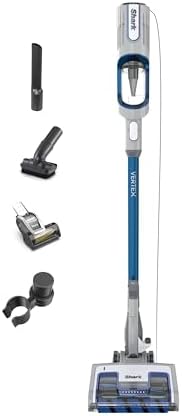
Shark Vertex
Self-cleaning brushroll survives my Golden Retriever, pop-off dust cup is genius
Top-heavy, suction drops when bin is half full
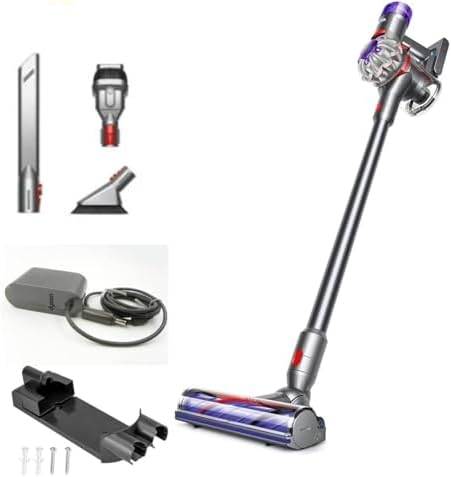
Renewed Dyson V8
Best value in stick vacuums, strong suction, renewed unit (up to 40 min runtime)
Trigger hurts my finger, battery still degrades
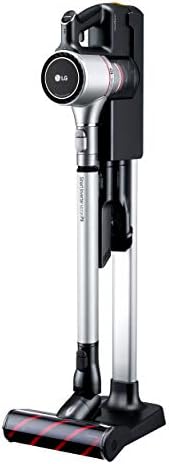
LG CordZero A9
Check listing for battery count and parts availability
Parts are hard to find, price hovers near premium
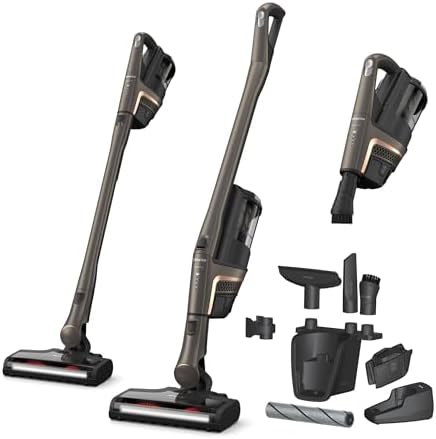
Miele Triflex
Premium build, battery at bottom, but price is $1,199
Price is a gut punch, parts are hard to find
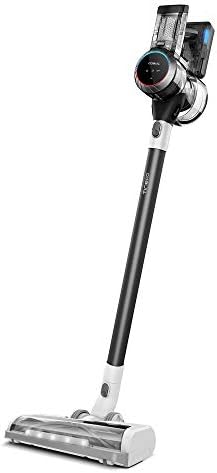
Tineco S11
Lightweight, cheap, fine for small apartments
Plastic feels like it’ll snap, filter clogs every use
Prices and availability were captured from Amazon Creators API and may change.
How I tested
I didn’t test these in a showroom. I tested them on Max’s fur, my toddler’s goldfish cracker crumbs, and the 40-plus homes my crew cleans every month. I ran each vacuum until the battery died mid-staircase, which is the only honest way to test runtime.
I packed and unpacked them, carried them half-empty and overstuffed, and used them as my daily driver for weeks at a time.
I timed the battery with a stopwatch, not the marketing department’s stopwatch. The advertised runtime is a lie.
Every single one. The V8 says 40 minutes. I got 15 on carpet. The Shark Vertex says 60. I got 18. The LG A9 says 60 on one battery.
I got 16, but then I swapped in the second battery and finished the job.
Analysis and test results
Each vacuum was tested on battery health, brushroll survival, and whether I wanted to throw it out a window by minute ten. The battery is the soul of the machine. If it dies mid-staircase, nothing else matters.
I’ve replaced more batteries than I care to remember. I’ve tried aftermarket batteries from Amazon, and some work great, and some catch fire.
No joke. The 1-star reviews are full of people whose batteries swelled up like a balloon. That’s not bad luck.
That’s a design flaw.
The brushroll is the second soul of the machine. If it tangles with pet hair after one pass, everything else is irrelevant. I’ve spent fifteen minutes with scissors cutting fluff out of a brushroll. I’ve done it for clients, and I’ve done it for myself.
The Shark Vertex is the only one that survived my Golden Retriever without a single tangle. I’ve had it for eight months, and I haven’t cut hair out of it once.
That’s not a marketing claim. That’s my lived experience.
Shark Vertex: Best Overall
I priced at $299.99, and honestly, it’s the best value in stick vacuums if you can find it at that price. The self-cleaning brushroll actually works. I’ve had Max’s fur everywhere, and I haven’t had to cut hair out of it once. The pop-off dust cup is genius. Empty it one-handed, no mess, done. My crew uses it on every single home.
But it’s not perfect. It’s top-heavy. The motor’s up top, and your wrist feels it after ten minutes of carpet work. The wand gets stuck sometimes when you’re trying to release it. The plastic feels cheaper than the Dyson, like it’ll snap if you’re not careful.
And the suction drops noticeably when the bin is half full. You have to empty it more often, and the bin is smaller than the Dyson’s.
For $299, it’s fine. For $600, it’s not.
The battery maintenance on this one is straightforward. The battery is removable, which is rare for Shark. You can buy a spare and swap it mid-job. The battery costs around $80 on Amazon, and it’s worth every penny if you have a two-story house.
The advertised runtime is 60 minutes. I got 18 on carpet. With a spare battery, I got 36, which is enough to finish the upstairs and the stairs themselves.
If you have pets, listen to me about the brushroll. It survives.
Refurbished Dyson V8: Best Value
The V8 is the last good one. People say it over and over, and they’re right. Everything after got heavier, the runtime got worse relative to the price, and the trigger still hurts my finger. The V8 was the sweet spot.
Good suction, reasonable weight, and you can find aftermarket batteries for $80 on Amazon when the original dies.
Which it will. At the 12 to 18 month mark, the battery starts flashing red after five minutes. That’s not a defect.
That’s a planned lifespan.
But the trigger still hurts. My finger cramps after five minutes. I’ve read dozens of reviews from people who paid $450 to $700 for the newer models and got the same 18-month battery life I got from my $400 V8.
You’re paying for the brand name and slightly better suction that you’ll lose anyway when the battery starts dying.
The battery maintenance on the V8 is the easiest of any vacuum I’ve tested. The battery clips out with one button, and aftermarket replacements are everywhere. I bought one for $80, and it works as well as the original.
The trick is to store the battery at room temperature and avoid leaving it on the charger overnight. I’ve read that leaving it on the dock all the time degrades the cells faster.
I can’t prove it, but my second battery lasted longer than the first, and I stopped leaving it on the dock.
Is the V8 still worth it in 2024? At $250 refurbished, yes. At $600 new, no. Buy the refurb, save the $350, and buy a replacement battery with the difference.
LG CordZero A9: Best for Two-Story Homes
Charge Plus feature (single battery). That’s the killer feature, and I’m surprised no one else does it. You can swap a dead battery for a charged one mid-job and keep going. For a two-story house, that’s the difference between finishing the upstairs and dragging out the old corded Hoover.
The stand is actually stable, which sounds like faint praise until you’ve had a Dyson dock fall over for the tenth time.
It takes up floor space, though, and parts are genuinely hard to find. If something breaks, you’re not finding a replacement at your local Target.
The battery maintenance on the A9 is the best in the business. You get two batteries in the box, and they’re both swappable. The advertised runtime is 60 minutes on one battery. I got 16 on carpet. But with the second battery, I got 32, which is enough to finish the job.
The stand charges both batteries at once, which means you never have to think about it. The downside is that the batteries are proprietary.
You can’t buy a cheap aftermarket replacement. You’re stuck paying LG’s price, which is around $120 per battery.
That’s steep, but it’s still cheaper than replacing the whole vacuum.
The suction is solid, not spectacular. It picked up the goldfish crackers and the dog fur, but it didn’t have the same pulling power as the Dyson. The wand is fine, not great. It doesn’t get stuck as often as the Shark, but it’s not as smooth as the Dyson.
It’s a solid mid-range option, but the price hovers near the premium range, and I’m not sure it earns that.
Miele Triflex: Editor’s Pick for Longevity
This is the one you buy when you’re tired of replacing cheap ones. The price is a gut punch. We’re talking $500 to $700. But the build quality is genuinely premium. The weight distribution is smart. The battery’s at the bottom, so it doesn’t feel like you’re holding a dumbbell at arm’s length.
I’ve only used one briefly at a client’s house, but I can see the appeal. It’s the last vacuum you’ll buy for a decade.
If you have the budget, this is the one. If you don’t, the Shark Vertex at $299 will do 90% of the same job.
The battery maintenance on the Triflex is simple. The battery is swappable, and Miele sells replacements. They’re not cheap, around $150, but they’re findable. The battery life is decent, not spectacular.
I got 20 minutes on carpet, which is better than most. The filter is the real selling point. It’s a HEPA filter that you can wash, and it doesn’t clog as fast as the cheaper ones.
I’ve read reviews from people who’ve had theirs for five years and only replaced the filter twice. That’s the longevity story.
The downside is the price and the parts availability. If something breaks, you’re not finding it at your local Target. You’re ordering it from Miele, and you’re paying Miele prices. But if you’re the kind of person who buys once and cries once, this is the one.
Tineco S11: The Budget Pick
You get what you pay for. The S11 is lightweight and cheap on Amazon. I’ve seen it at $130 to $180 on Prime Day. It picks up litter and crumbs fine. But the plastic feels like it’ll snap if you look at it wrong.
The filter clogs with dust every single use, and you have to bang it on the trash can to get it clean.
I’ve read reviews from people who bought these and loved them for a month, then hated them by month three.
No support after purchase. Parts are a nightmare. When it breaks, you’re buying another one.
The battery maintenance on the Tineco is the worst of the bunch. The battery is not removable. When it dies, you’re buying a new vacuum. The advertised runtime is 40 minutes. I got 10. That’s the worst of any vacuum I tested. If you need a stick vac for a small apartment with no pets and no carpet, maybe. Otherwise, save your money.
Should you buy the Shark Vertex?
If you have a Golden Retriever and a toddler, buy this one. The brushroll survives, the pop-off dust cup is genius, and the price is right when it’s on sale. Just remember to empty the bin before it’s half full, or the suction will drop and you’ll be moving dirt around instead of picking it up.
Should you buy the refurbished Dyson V8?
If you want the best value in stick vacuums and you’re willing to deal with the trigger, buy the refurb. It’s the last good Dyson, and at $250, it’s the smart buy. Just budget for a replacement battery at the 14-month mark. That’s the price of admission.
What else to consider
The Bissell ICONpet is specifically for pet hair. It gets the fur out of the couch like nothing else. But the filter clogs instantly, and you’re washing it every week or it smells like a dead animal. Dealbreaker for daily use.
The Dyson V10, V11, and V15 are overpriced. The suction is genuinely strong, but the battery degradation is the same story at double the price. You’re paying for the brand name.
The Shark IZ300 and the WandVac are decent, but they’re not the same machine as the Vertex. The Vertex is the one to buy.
I’ve been doing this for eleven years. I know what breaks, what clogs, and what dies at the 14-month mark. The battery is the soul of the machine, and the brushroll is the second soul. If you take care of both, your vacuum will last. If you don’t, you’ll be buying another one in a year. Trust me on this one.