A stick vacuum for pet hair has one job: pick up the fur on the first pass, and still pick it up on the second pass when the bin is half full and one hand is holding a collar. I have cleaned 40-plus homes a month with a three-person crew in Denver for years now, and most of those homes have at least one dog. Those floors are not showroom floors. They are stairs, the corners behind the couch, and the rug the cat has decided belongs to her.
That is the lens for this guide. Not spec sheets, not the runtime number printed on the box. The question is whether a machine saves you time on a Tuesday afternoon when you have three houses left and a golden retriever is following you from room to room.
Below are the two stick vacuums I recommend for pet hair and stairs, followed by the exact routine I run with both.
Why you should trust me
I have been a professional house cleaner for 11 years, and for the last several of those I have run a three-person crew that handles more than 40 homes a month. Dogs, cats, toddlers who treat the kitchen floor like a buffet, stairs in every single one of those houses.
I have killed more stick vacuums than I can count. The ones that die mid-job. The ones that cannot handle a single flight of stairs. The ones that fling debris backward instead of picking it up. I have also stood in a repair shop and watched a guy pull a matted hair sausage out of a brush roll housing, which taught me more about vacuum design than any product page ever did.
My rules for myself are simple. No pet-hair claim without a husky-and-golden test day. No battery claim without a timed run on medium pile. No recommendation without a full real-home clean, stairs included. I do not hand a machine to my crew until it passes all three.
The four tests a vacuum has to pass
Before a stick vacuum earns a spot in the van, it has to survive these four checks. Use them on any machine you are considering, including the two below.
Test one: the second pass. Run the vacuum over a visibly furry section of carpet, then immediately run it again over the same strip. A vacuum with healthy bin cyclones keeps pulling hair on that second pass. A vacuum with choked airflow leaves a gray haze behind and just polishes it. Suction numbers on a box are marketing. The second pass is the truth.
Test two: one hand. Carry the vacuum in one hand while you move a dog bed with the other. If the machine needs two hands to steer, it is a dustpan with a motor. One-handed operation is the whole reason a stick exists.
Test three: the brush roll tangle. After one pet-hair room, look at the brush. If hair is wrapped tight around the ends and you need scissors, that is a chore, not a pet vacuum. A brush roll that sheds hair as it spins is the only real answer to a shedding dog.
Test four: stairs and reach. Take it up a full flight, then reach under a bed with the wand. Stairs are where stick vacuums win or lose, and crevice reach under furniture is the second half of that test.
The two stick vacuums I recommend
One corded, one cordless. That is not an accident. Most pet homes need both capabilities, and the honest answer to "which one" depends on how much carpet and how many stairs you have.
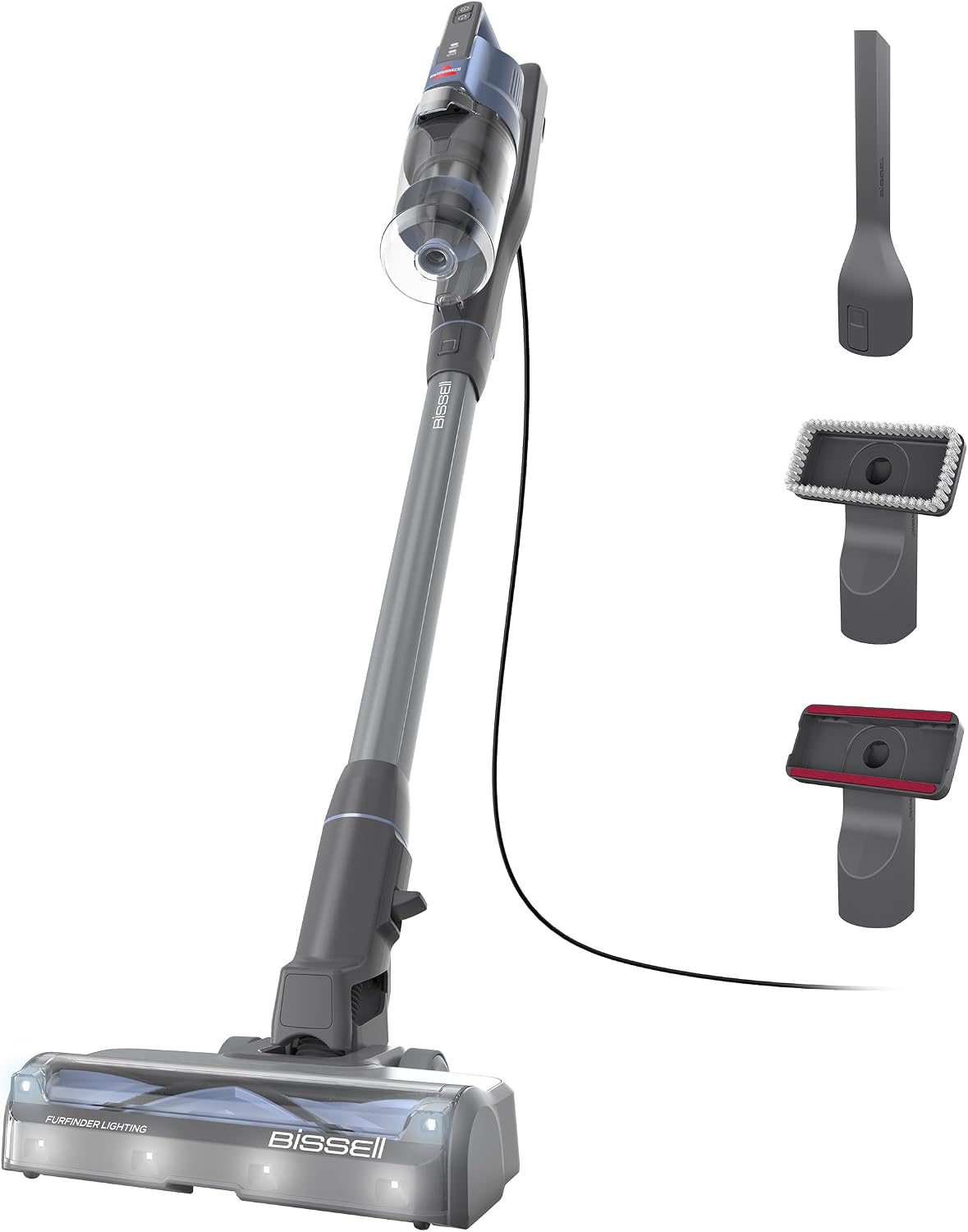
The corded pick: Bissell PowerClean FurFinder Corded Stick Vacuum, HEPA, 4282K
 Visit on Amazon →
This is the one I point people to when the house has wall-to-wall carpet and at least one heavy shedder. Corded means no runtime countdown and no battery fade in the middle of the second bedroom. You plug in, you clean the whole floor, and the suction you started with is the suction you finish with. For a pet-hair house with thick pile, that consistency matters more than the convenience of a battery.
The HEPA filtration is the other reason it belongs in a pet home. If anyone in the house has allergies, the point of the vacuum is not just to remove hair from the floor, it is to not blow the fine dander back into the room while you do it. HEPA is the part of the spec sheet that actually changes how a house feels an hour after you leave.
The name tells you the design intent: FurFinder is aimed squarely at pet hair, and the PowerClean line is built as a workhorse rather than a lifestyle object. That is the right instinct for a first stick vacuum.
Flaws but not dealbreakers: It is corded, so you are managing a cord through doorways and around furniture legs. On a big open floor that is a two-second inconvenience. On a house with four rooms and a hallway, you will unplug and replug more than once. That is the trade for never watching a battery bar drop.
Who it suits: Renters and homeowners with mostly carpet, a shedding dog, and a budget that does not stretch to a flagship cordless. Also anyone who wants one vacuum to do the whole house in one pass without stopping.
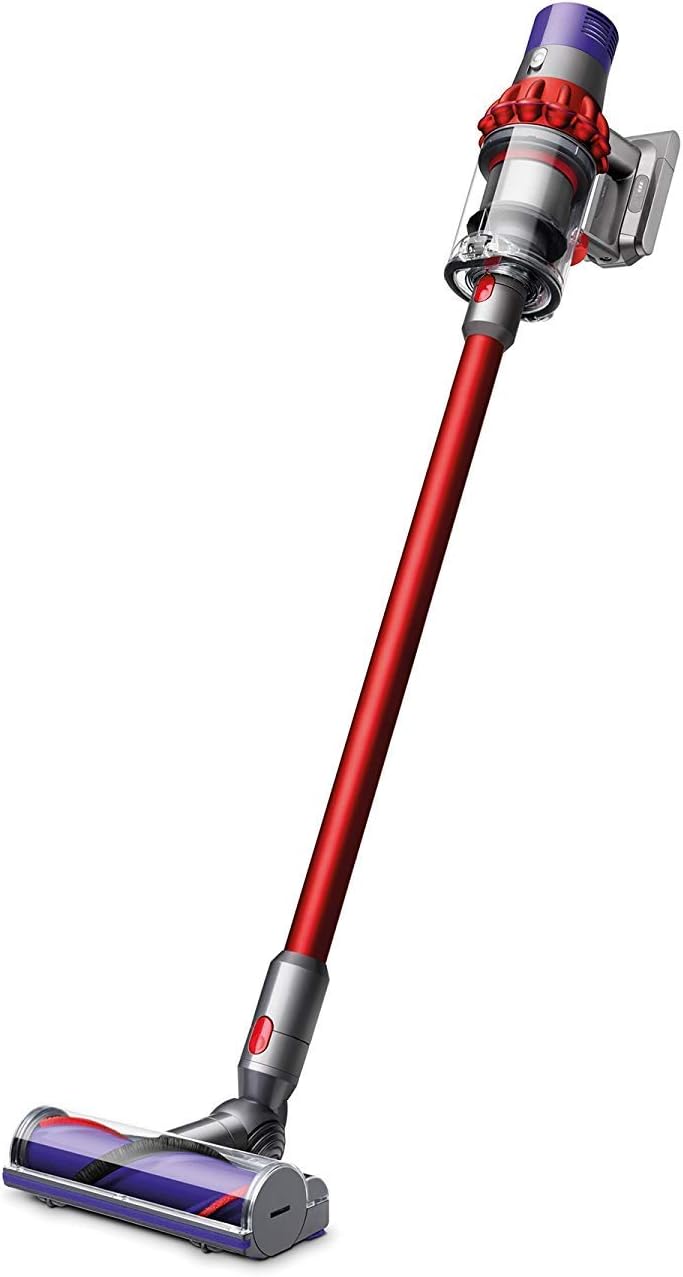
The cordless pick: Dyson Cyclone V10 Motorhead Lightweight Cordless Stick Vacuum Cleaner
 Visit on Amazon →
This is the machine for the grab-and-go part of the job. Hard floors, quick kitchen pass, the trail of kibble under the bowl, the stairs, the car. Cordless is not a gimmick when you are cleaning a house in the order you clean it, because you are constantly moving between floors and rooms and you are not dragging anything behind you.
The V10 Motorhead sits in the sweet spot of the Dyson stick lineup. It is light enough to carry in one hand while you move something with the other, and the cyclone design is the part that keeps suction steady as the bin fills, which is exactly what test one is measuring. If you have ever owned a cheap cordless that quit pulling halfway through a room, you know why that matters.
The weight is the point. A stick vacuum you dread carrying upstairs does not get used on the stairs. This one gets used on the stairs.
Flaws but not dealbreakers: Runtime is finite, and the number on the box is measured on a bare floor with an empty bin, not on your medium-pile carpet with a full one. Plan your cleaning order around the battery instead of fighting it: do the hard floors and stairs first, then plug in for the deep carpet work. The bin is also small enough that you will empty it more than once in a heavy-shedding house, so make peace with that before you buy.
Who it suits: Homes with a mix of hard floor and low-pile carpet, multiple levels, and a cleaner who values speed over raw capacity. If your whole house is thick carpet, start with the corded machine and add this later.
How to clean a pet-hair house with a stick vacuum
The vacuum matters less than the order of operations. Here is the routine that works with either machine above.
Step one: empty the bin before you start. A full bin chokes the airflow and kills suction before you have finished the first room. Emptying first costs you 20 seconds and buys you a whole room of performance.
Step two: pick up the big stuff by hand. Dog toys, socks, hair ties, the chew stick that got abandoned under the couch. Stick vacuums are not shop vacs, and one sock can jam a brush roll for the rest of the job.
Step three: start at the far corner and work backward. You want to walk out of the room, not into it. Cleaning toward the door means you are stepping on the clean strip at the end, which is how you leave footprints in a room you just finished.
Step four: slow down. The single biggest mistake people make with a stick vacuum is moving it like a broom. Slow passes give the brush roll time to agitate the carpet and the airflow time to lift what the brush kicked up. Fast passes are how you end up doing the second pass test twice.
Step five: overlap your lanes and cross-hatch. Two passes at half speed beat four passes at full speed. On carpet, go one direction, then go perpendicular on the same area. Pet hair mats down in one direction, and the cross pass is what pulls it out.
Step six: do the edges before the middle. Edge the baseboards with the wand, then do the open floor. If you do the middle first, you will knock dust and hair back onto the clean carpet while you edge.
Step seven: handle stairs with the machine above you. Set the vacuum on the step above the one you are cleaning and work downward, never the other way. Gravity is helping you, and you are not balancing a machine on a step edge while you reach.
Step eight: empty, then check the brush roll. Empty the bin outside or into a bag-lined can, not into the kitchen trash where you will just redistribute the hair. Then look at the brush roll. If hair is starting to wrap, clear it now, while it is still loose, instead of letting it bake on for a month.
Step nine: clean the filter on a schedule, not on a whim. Rinse it, let it dry completely, and put it back. A damp filter smells like a wet dog and cuts suction. Write the cleaning date on the filter housing with a marker if you have to.
What I skip, and why
Some features sound useful and are not.
Skip any "max" mode you cannot reach mid-clean. If you have to stop, change a setting, and restart, you will never use it, and you paid for it.
Skip stick vacuums that will not stand on their own. If it falls over every time you let go, you will start leaving it on the floor, and then you will trip on it.
Skip "cordless freedom" with a 15-minute runtime. That is enough to clean one room and half of the next one, which means you will finish with a broom and resent the vacuum while you do it.
Skip brush rolls that need monthly detangling surgery. If it cannot shed hair on its own, it is not a pet vacuum, it is a second job.
Skip bins that need two hands and a prayer to empty. The bin you can dump one-handed is the bin that gets dumped before it chokes the airflow. The one that needs a screwdriver goes in the trash.
What this all costs
Corded is the lower-cost path in this category. You are paying for a motor, a cord, a brush roll, and a filter, and nothing else. No battery cells, no charging dock, no electronics that will age out in three years while the rest of the machine is still fine.
Cordless is the higher-cost path, and the reason is simple: you are buying battery cells, and battery cells have a lifespan. When the runtime drops to the point where it no longer finishes a room, you are looking at a replacement battery, which is the real long-term cost of cordless ownership.
The middle ground that most pet homes land on is one of each. The corded machine does the deep carpet work and the whole-house passes. The cordless machine handles hard floors, stairs, quick touch-ups, and the car. If you only buy one, buy the one that matches the majority of your floor area, not the one that looks better on a shelf.
Check current Amazon price on both before you decide, and check the price of replacement filters and batteries at the same time. That number tells you more about five-year cost than the sticker does.
The bottom line
Choosing a stick vacuum for a pet home is not about which brand wins a spec war. It is about four questions. Does it still pull hair on the second pass? Can you run it with one hand? Does the brush roll survive a husky? Can you empty it without setting anything down?
Answer those, pick the corded or the cordless version based on how much carpet and how many stairs you actually have, and then run the routine above in the same order every time. The vacuum does the lifting. The order is what makes it fast.