Most people vacuum in straight lines, room by room, and then wonder why the floor looks grimy again by Thursday. The vacuum is rarely the problem. The order is.
I have cleaned houses in Denver for eleven years. My crew of three covers more than forty homes a month, and a lot of those homes have dogs, cats, or kids who treat the kitchen floor like a buffet line. In that world, a cordless stick vacuum routine is not a chore you squeeze into your week. It is a fixed sequence, and the sequence is what keeps a floor clean when your time is short.
This is the routine I would hand to a homeowner on day one. What to set up before you start, the exact order for a whole-house pass, where a robot vacuum earns its keep, and the small mistakes that make a good machine look like a bad one.
Why you should trust me
I started cleaning solo, doing rentals and short-term units around Denver, and now I run a three-person crew that handles 40-plus homes a month. I have watched a lot of vacuums die: mid-job, mid-stair, mid-sentence. I have also watched homeowners buy the wrong machine twice in one year because a spec sheet told them a number mattered more than it does.
What that means for you is simple. I do not recommend a vacuum I would not put in a crew van. My standards come from repetition, not from a showroom floor where the carpet is two weeks old and nobody has ever dropped a bowl of kibble on it.
How I picked and how I tested
Every machine in this guide gets judged against the same four questions my crew asks before anything goes in the van.
First, does the brush roll tangle after one pass through pet hair? If hair wraps the roll, the vacuum turns into a maintenance project, and maintenance projects get skipped.
Second, does suction hold when the bin is half full? This is the one nobody tests in a store. Bin cyclones separate dirt from air, and when that separation works, the machine keeps pulling as the bin fills. When it does not, you lose pickup on the second half of the room and blame yourself instead of the vacuum.
Third, can I empty it one-handed? A bin that needs two hands and a prayer is a bin that gets emptied into the kitchen trash and left there.
Fourth, would I hand it to my crew on a Tuesday, in a house with a husky and a golden retriever, with stairs and a hallway rug? That is the whole test.
I also care about the boring stuff: how far the wand and tools actually reach under a couch, whether the machine stands up on its own when you let go, and whether the battery is swappable or the whole thing goes on a charger and stops your day.
I apply that list to real homes with real dirt. I am not going to quote you a lab number. I am going to tell you what order to use the machines in so that the floor actually stays clean.
The two machines you need before you start
You do not need a garage full of gear. You need one cordless stick vacuum that lives near the door and one robot that runs while you are doing something else. Those two cover about 95 percent of what a normal house throws at a floor.
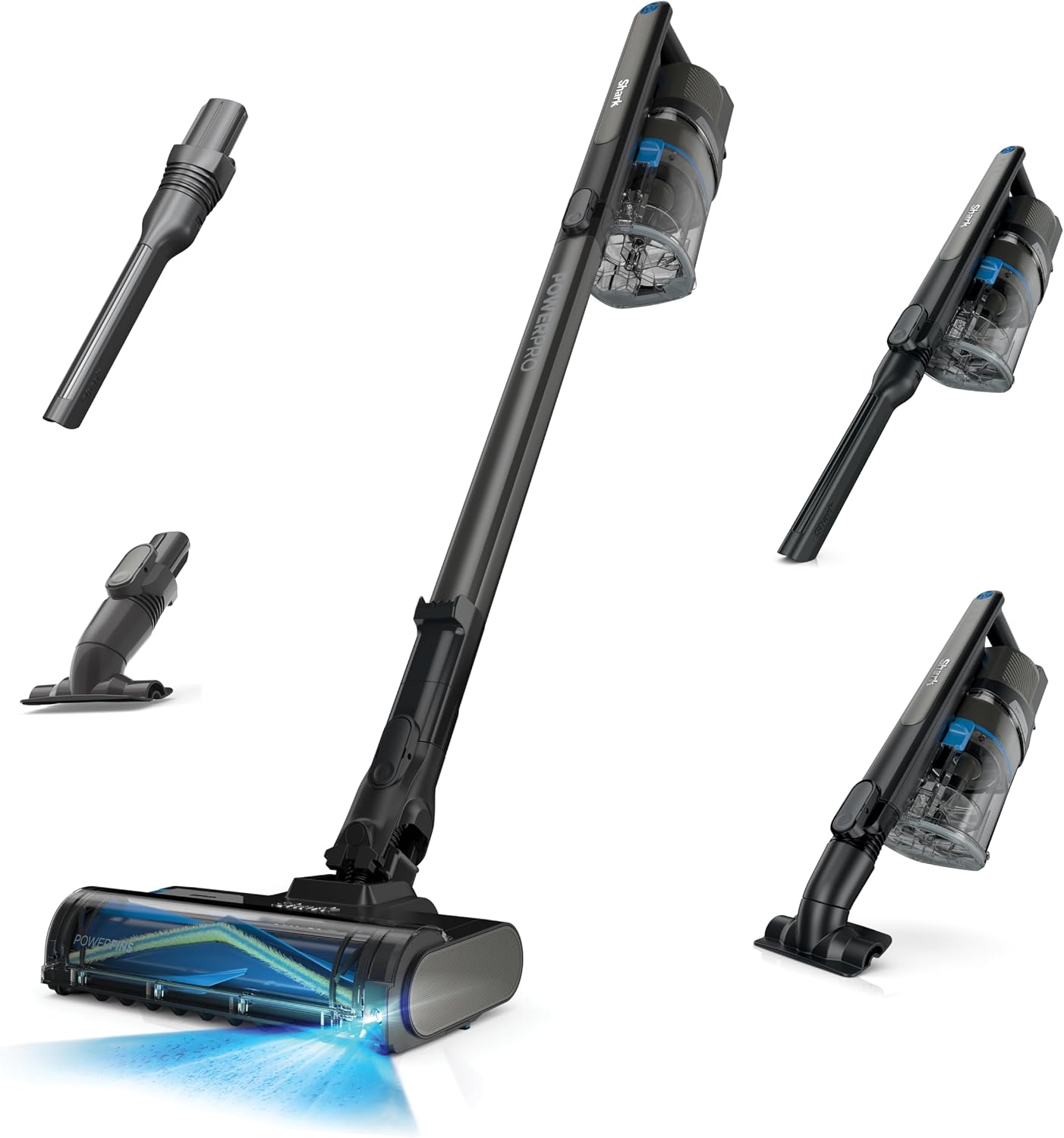
The daily driver: Shark PowerPro Reveal Plus Cordless Vacuum Cleaner - Charcoal - IZ376H
 Visit on Amazon →
The daily driver is the machine you grab for two minutes because someone tracked in grass clippings, and it is the machine that decides whether your routine survives a busy week. That job description points to a cordless stick in charcoal like this one, because the whole point of a stick is that it is faster to pick up than to argue with.
What to check on any stick you are considering for this role, including this one: whether the brush roll clears hair without you cutting it free, whether the bin empties with one hand over the trash, whether it stands on its own when you pause to move a chair, and how the battery behaves on medium pile rather than on the bare floor where every vacuum looks heroic.
In my rotation, the stick does the edges, the corners, the stairs, the under-couch reach with the wand, and the second pass down the traffic lanes. It is not the machine that does the whole house in one charge, and you should not expect it to be.
Flaws but not dealbreakers: A cordless stick is a specialty tool, not a whole-house vacuum. If your home is mostly wall-to-wall thick carpet, a stick will feel like a supplement rather than a primary. That is a category trait, not a knock on this machine.
Homeowners with a mix of hard floor, a couple of rugs, and stairs will get the most out of a daily driver like this.
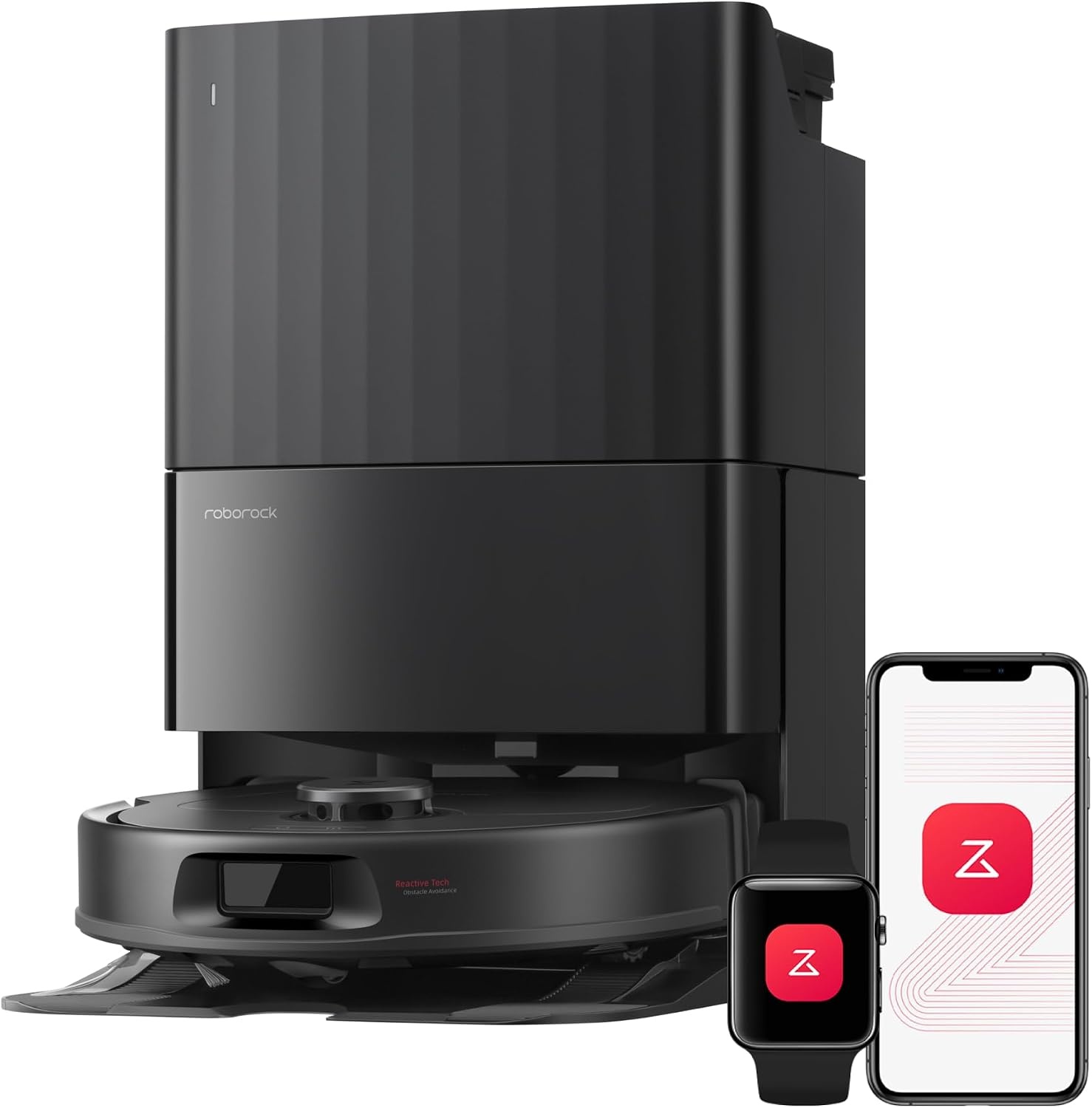
The floor sweeper that works while you are gone: roborock 2026 New Qrevo S Pro Robot Vacuum and Mop, 18,500Pa Suction
 Visit on Amazon →
This is the piece most people skip, and it is the piece that makes the routine sustainable. A robot vacuum and mop with 18,500Pa of rated suction is doing the boring daily pass: the open floor, the under-bed dust, the crumbs under the table, the kitchen floor that gets sticky every single evening.
The reason this matters in a pet home is that loose hair and grit are what ruin a floor finish over time. If a robot is pulling that debris off the open floor every day, your cordless stick stops being the machine that has to save the whole house, and starts being the machine that handles the details. The stick gets the corners and the stairs. The robot gets the acreage.
Flaws but not dealbreakers: A robot cannot do stairs, cannot reach the top of the baseboards, and cannot judge a pile of dog hair behind a door. It also needs a floor that is clear of cables and stray socks, which is a habit you build rather than a feature you buy. Treat it as the maintenance pass, not the rescue pass.
Anyone with a mostly open floor plan and a pet that sheds year-round will get their money's worth out of a robot mop and vacuum combo.
The routine, step by step
Now the part you came for. This works in any home, with any stick vacuum, in about twenty minutes for a normal three-bedroom.
Step one: Pick up, do not vacuum around. Toys, shoes, charging cables, the dog's rope toy. Every object on the floor is something the brush roll has to dodge and something the robot will eat. Two minutes of picking up saves ten minutes of untangling.
Step two: Let the robot run first, and leave the room. Start the robot on the open floor before you touch the stick. This feels backwards if you are used to doing everything yourself, but it matters: the robot lifts the loose hair, grit, and cereal dust that would otherwise fill your stick's bin in the first four minutes. Let it work while you clean a bathroom or fold laundry. You are buying back time, not delegating the job.
Step three: Take the stick around the perimeter. Once the robot has covered the middle, walk the edges of every room with the stick: along the baseboards, into the corners, under the toe kick of the kitchen cabinets. This is where a stick beats a robot and beats an upright, because you can angle the wand and get the head flat under furniture.
Step four: Do the traffic lanes on the second pass. This is the step everyone skips and the step that matters most. Go back over the paths people actually walk: hallway, kitchen to living room, the strip beside the couch. On this pass, the bin is already partly full, which is exactly the condition your vacuum will be in during real life. A machine that still picks up here is a machine worth keeping.
Step five: Stairs, then upholstery. Stairs are the reason a cordless stick exists. Take the stick up with the crevice tool, hit the treads and the edges where hair collects, then run the upholstery tool over the couch cushions and the dog's bed if it has a removable cover. This is the pass that changes how a house smells.
Step six: Empty the bin and check the brush roll before you put it away. Emptying one-handed into the kitchen trash takes seconds. Do it every single time, not when the bin is packed. Then look at the brush roll. If hair is wrapped around it, deal with it now, because a tangled roll is the number one reason a good vacuum starts performing like a bad one.
Step seven: Once a week, do the deep pass. Pull the furniture out six inches, run the stick along the wall behind the couch, and wash or rinse the filter according to the manufacturer's instructions. Let the filter dry completely before it goes back in. A damp filter is worse than a dirty one.
Where people go wrong
They run the stick first and the robot second. All that does is fill the stick bin with the easy debris and leave the robot pushing dust around. Robot first, stick second, always.
They vacuum a full bin. Suction drops as the bin packs, and the cyclones stop separating properly. Empty it every time you finish a room, not when the light comes on.
They never check the brush roll. If your vacuum suddenly leaves a stripe of hair behind, the roll is usually the reason, not the motor. Thirty seconds with scissors once a week prevents that.
They trust the marketing runtime. The number on the box is measured on a bare floor with a fresh battery and an empty bin. Your run time is measured on your carpet, with your dirt, at the speed you actually push the machine. Plan the routine so the stick does the detail work and the robot does the distance, and the runtime question mostly stops mattering.
They leave the robot running on a wet floor. If you mopped by hand, or the dog had an accident, stop the robot. A robot mop dragging through a spill spreads it into every room it can reach.
They store the stick on the charger in a hot garage. Battery cells age faster in heat. Keep it inside, on the dock, near where you use it.
The competition and why it lost
Uprights. Great for wall-to-wall carpet in a house with no stairs. Wrong for this job, because they are heavy, they do not reach under furniture, and you will not pull one out for a two-minute cleanup, which means the crumbs stay until the weekend.
Canisters. Genuinely better suction, genuinely better for a deep clean. But they need a cord, they need a second hand for the hose and the body, and they turn a two-minute job into a ten-minute job. If you own one already, keep it for the seasonal deep clean and let the stick handle the daily work.
Wet-dry combo units. Useful for a garage, a mudroom, or a basement. Not what you want to grab for the kitchen floor at 7 a.m., and not what you want to store in a closet next to coats.
Broom and dustpan. It moves the hair around the room instead of removing it. This is the machine the stick vacuum replaced, and there is no reason to go back.
A robot without a stick, or a stick without a robot. Both half-routines. The robot cannot do corners, and the stick cannot do the whole floor every day without you dreading it. Together they cover the house.
What this all costs
I am not going to pretend this is free, but the math that matters is time, not dollars. Both machines in this guide are worth checking on price before you commit, since sales move around. Check current Amazon price for the Shark PowerPro Reveal Plus Cordless Vacuum Cleaner, and Check current Amazon price for the roborock Qrevo S Pro Robot Vacuum and Mop.
What you are buying with the pair is a routine that takes about twenty minutes a day instead of an hour on Saturday. Five minutes saved a day is thirty-five minutes a week. Over a year, that is roughly thirty hours, which is a full work week you get back from your floors.
The other half of the math is replacement cost. A machine that tangles, clogs, and loses suction gets replaced every couple of years by frustrated owners. A machine that gets emptied every time, has its brush roll checked weekly, and never runs on a full bin tends to last. Maintenance is the cheapest upgrade you can make.
Do the order right, keep the bin empty, and the floors stay done. That is the whole system.