Most stick vacuums don't die of weak suction. They die of bad habits. A cordless stick vacuum routine that survives a real house is boring on purpose: the vacuum lives where the mess happens, the passes run in the same order every time, and the bin gets emptied before it has to be. Get those three things right and a mid-priced machine outlasts a flagship that spends its life in a closet.
I clean houses for a living, so I've watched this play out in hundreds of kitchens. The people whose floors stay clean are not the ones with the most expensive vacuum on the block. They're the ones who never let the routine get complicated enough to skip.
What follows is the routine I run, the two machines that make it work, and the places where it falls apart. No spec-sheet theater, just the order of operations and the reasons behind it.
Why you should trust me
I clean 40-plus homes a month in Denver with a three-person crew, and most of those homes have at least one dog, one cat, or a kid who treats the kitchen floor like a buffet line. Eleven years in, I've killed more stick vacuums than I can count: the ones that die mid-job, the ones that can't handle a single stair, the ones that fling debris across the room instead of picking it up.
I don't test vacuums on showroom floors. Every machine I write about goes into a client home with the same stairs, the same pet hair, and the same question at the end: would I hand this to my crew on a Tuesday? Suction numbers are marketing. The real test is the second pass with a half-full bin.
How I picked and how I tested
The routine below works with almost any decent cordless stick, but the two machines in this guide are the ones I'd build it around, and the reasons are practical rather than spec-driven. Here's the protocol every vacuum goes through before it earns a spot in my van.
First, the brush roll check. I run it over a pet-hair pass on medium pile and look at the roll afterward. If hair wraps the roll and needs scissors, it isn't a pet vacuum, it's a chore. A self-cleaning roll is the only design that has ever survived a husky and a golden in the same house.
Second, the half-full pass. Anyone can pick up cereal on an empty bin. I fill the bin to the halfway line and run the same stretch of carpet again. If pickup falls apart there, the bin cyclones aren't doing their job and the spec sheet is fiction.
Third, one-handed everything. Carry it, run it, empty it, all with one hand. A vacuum that needs two hands is a dustpan with a motor.
Fourth, stairs and reach. I do a full staircase with the wand and the crevice tool, then check how far under the couch and the bed skirt I can get without moving furniture. Crevice reach is where stick vacuums win or lose, and it's the reason I stopped dragging a canister upstairs years ago.
Fifth, runtime on a real floor. Battery life is a promise, runtime is a fact. A "60 minute" claim dies on thick carpet, so I time the medium-pile pass and ignore the bare-floor number printed on the box.
The two machines this routine runs on
This routine splits the work in two: a cordless stick for the hands-on passes and a robot for the daily maintenance pass nobody wants to do. Here's what each one is actually for.
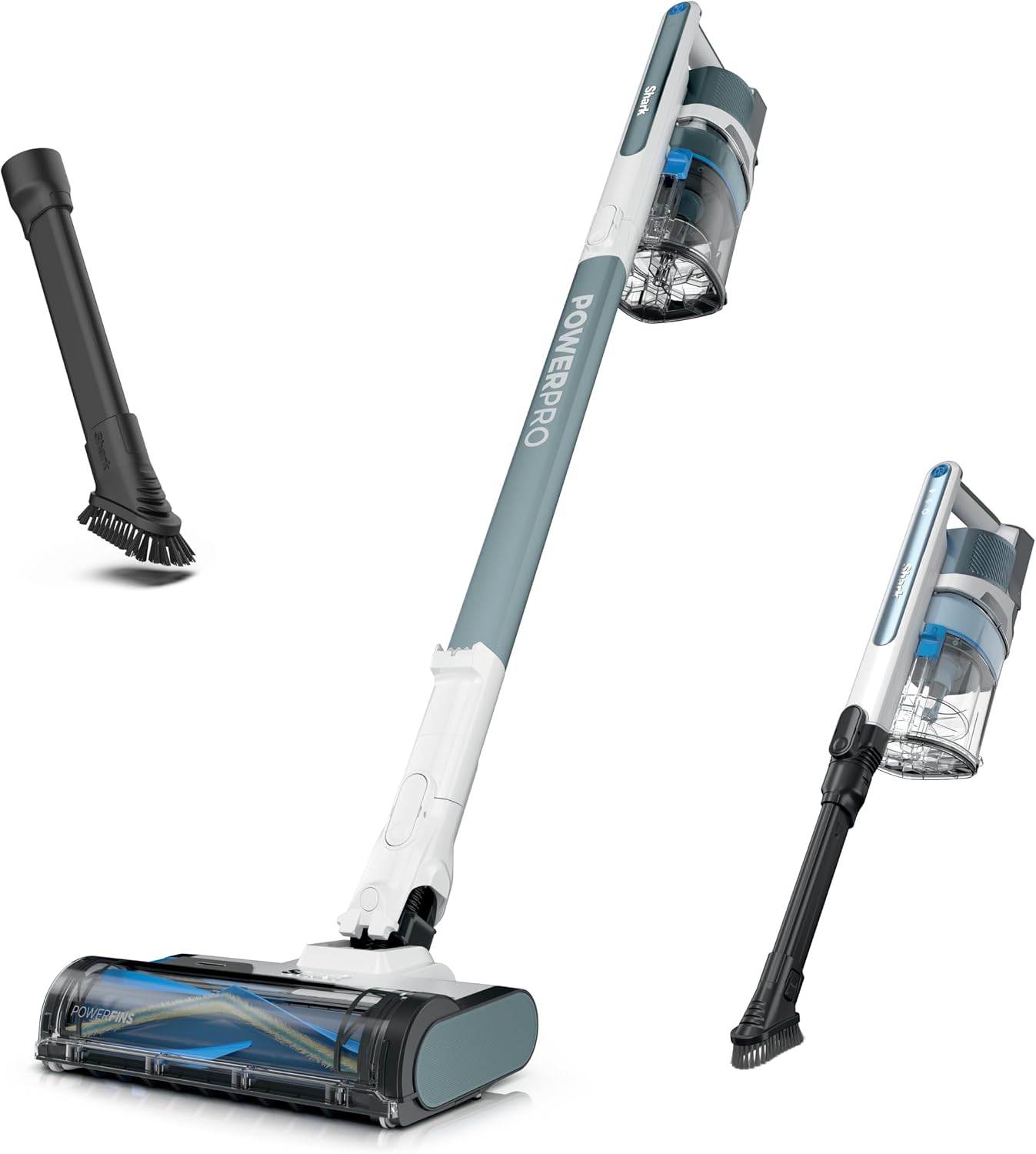
The daily driver: Shark PowerPro Plus Cordless Stick Vacuum, Pure Water, IZ377H
 Visit on Amazon →
The stick is the machine that earns its keep in this routine, because it's the one you'll actually grab. One-handed operation is the entire point of the format, so that's the first thing I check: can you carry it, run it, and empty it with one hand while the other hand is holding a dog collar or a dustpan? If the answer is no, it's a canister with extra steps.
The Shark PowerPro Plus is the cordless stick in this guide, and the cordless part matters more than people think. It goes upstairs without a cord negotiation, it reaches the car mats in the garage, and it lives on a wall mount by the back door instead of in a closet you have to open. Check current Amazon price.
Flaws but not dealbreakers: Every stick in this class makes the same trade. The bin is smaller than a canister's, and runtime depends on the mode you pick, which is exactly why the routine below tells you to empty early and run the pass twice instead of running one long pass on a dying battery. A stick vacuum is a maintenance tool, not a deep-clean machine. If you want to shampoo carpet, this isn't that.
Anyone who needs a vacuum they can pull off the wall and run for five minutes before guests arrive will get the most out of it.
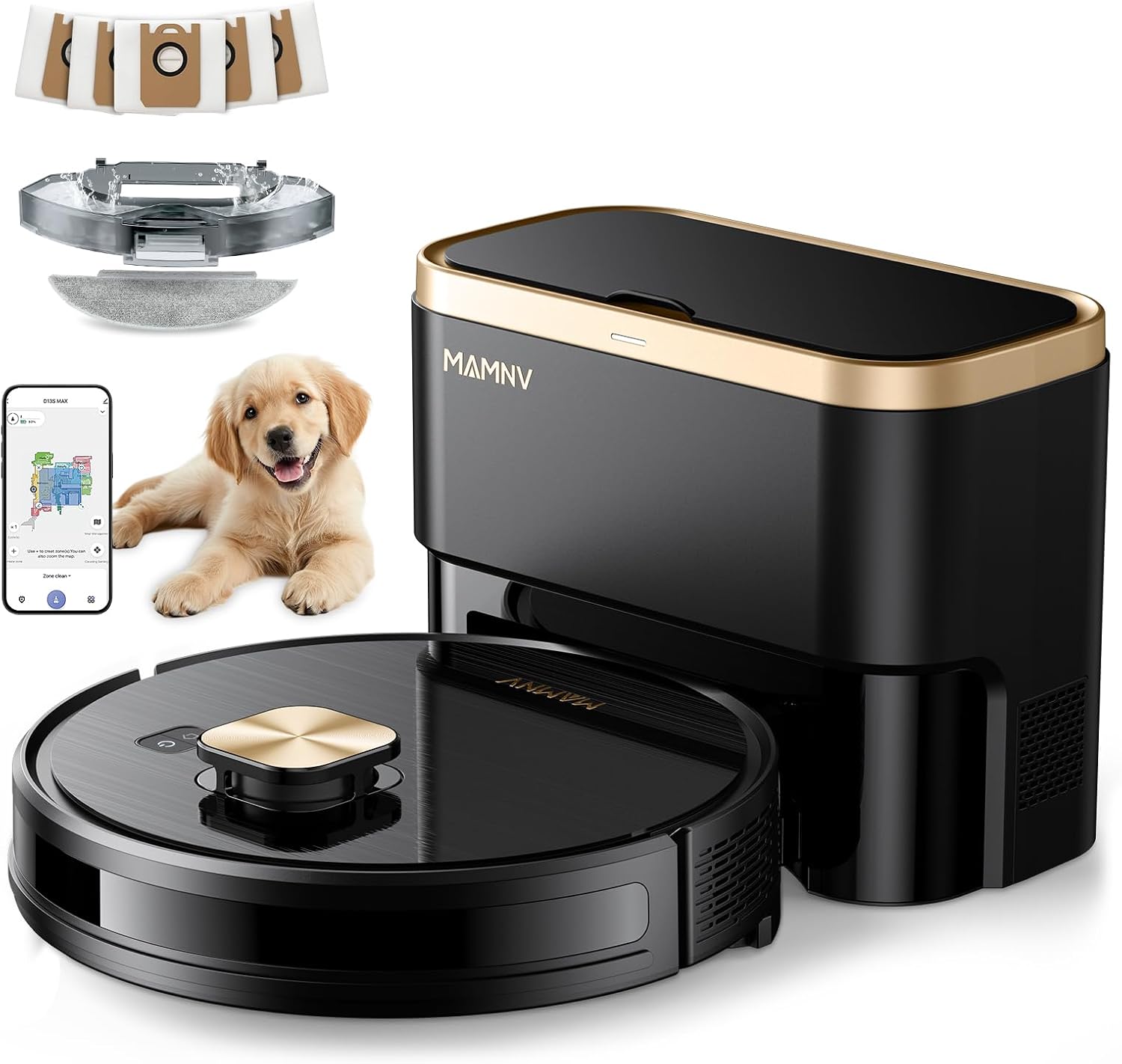
The floor-level backup: Robot Vacuum,11500Pa Suction,LiDAR Navigation,Self-Emptying,Pet Hair
 Visit on Amazon →
The robot is the machine that runs the pass you'd otherwise skip. LiDAR navigation means it maps the rooms instead of wandering into the same corner four times, and self-emptying means the dust lands in a base instead of a bin you have to touch every single day. The suction figure on the listing is the claim you'll see on the box, and the pet hair in the name tells you who it was aimed at.
What a robot is genuinely good at: open floor, under the bed, the hallway that collects hair like a filter, and the daily maintenance pass while you're at work. What it is not good at: stairs, edges tight to baseboards, and the second pass on thick carpet. That's why this routine pairs it with a stick instead of replacing one with the other. Check current Amazon price.
Flaws but not dealbreakers: A robot vacuum asks you to keep the floor picked up, which is a habit, not a feature. If your floors are covered in charging cables and dog toys, it will spend more time untangling than cleaning. And no robot I've met handles a staircase.
Anyone with a mostly open main floor and a pet that sheds year-round will get the most value here.
The routine, step by step
Step one: Park the vacuum where the mess happens. A stick vacuum on a wall mount by the kitchen is worth two in a closet. The best vacuum is the one within arm's reach when the dog walks in with wet paws, and convenience beats suction specs every time.
Step two: Set the floor rule before you start. Hard floor gets the brush roll off and a slower, wider pass. Carpet gets the roll on and a slower pass in one direction, not a back-and-forth scrub. Pick the mode once and don't fiddle with it mid-room, because a "max" mode you can't reach during a real clean is a mode you'll never use.
Step three: Perimeter first, then open floor. Edges, baseboards, and the strip along the couch are where hair and grit collect. Do the perimeter while the bin is empty and the suction is at its best, then take the middle of the room.
Step four: Do the second pass. This is the whole routine. Go back over the same area a second time, even if it looks clean. The first pass lifts the surface layer, the second pass gets what was sitting under it. If pickup drops off badly on that second pass, your bin cyclones aren't keeping up and you need to empty sooner.
Step five: Stairs get the wand, not the head. Take the head off, use the wand and the crevice tool on the treads, and work top to bottom so debris doesn't rain onto the clean steps below. This is the part that kills cheap sticks, and it's the reason a light, balanced machine matters more than a big bin.
Step six: Empty the bin one-handed, every time. Not when it's full. When it's half full. The bin you can empty one-handed wins, the one that needs two hands and a prayer goes in the trash. Do it over the kitchen bin, tap the filter housing once, and put it back on the wall.
Step seven: Check the brush roll weekly. Run a finger along the roll. If hair is wrapped at the seam, cut it now, not when it's a felted sleeve. If your vacuum has a self-cleaning roll, this check takes ten seconds. If it doesn't, budget five minutes every week, because a tangled roll is the single most common reason a stick vacuum "stops working."
Step eight: Hand the daily pass to the robot. Schedule it for when you're out of the house, and let it run the open floor every day. Daily low-effort passes beat one heroic weekly clean, and they keep the hair load low enough that your stick's bin doesn't fill halfway through a room.
Step nine: Wash the filter on a schedule. Rinse it, let it dry completely, and keep a spare. A clogged filter mimics a dying motor, and half the vacuums I've seen retired were fine machines with a dirty filter.
Where this routine breaks down
Be honest about the limits. A stick vacuum's runtime is a real constraint on thick carpet, so if your whole upstairs is plush pile, plan on splitting the job into two rooms per charge instead of pretending one pass will cover the floor.
A robot vacuum can't do stairs, can't clean under a low couch it can't fit beneath, and won't rescue a floor covered in clutter. If you have three stories and two long-haired dogs, this routine still works, but you'll be doing the brush roll check more often than the marketing suggests.
And if your home has a mix of thick carpet and area rugs, a corded canister still wins the deep-clean day. The stick handles the daily grind. The canister comes out twice a year.
The competition and why it lost
A robot-only household sounds great until you meet a staircase. Robots are excellent maintenance machines and terrible detail machines, and the edges and corners they miss are exactly where pet hair piles up. Running one without a stick just moves the problem.
A cheap corded stick with a brush roll that tangles after a single pet-hair pass loses for a simpler reason: you stop using it. A vacuum that needs monthly detangling surgery is a vacuum that gets left in the closet, and a vacuum in the closet cleans nothing.
A corded canister is still the best deep-clean tool I own, and I'll say that plainly. It also weighs more, needs an outlet, and gets dragged up the stairs, which means it comes out twice a year instead of twice a week. The routine above is built for frequency, not for peak power.
What this routine costs you in time
The money side is simple: the only real spend is the hardware, so check the current listing price for each machine before you commit. Everything else in this routine is free.
The time side is where the math actually matters. A robot pass on open floor costs you nothing but a schedule. The stick pass on the main floor runs a few minutes once you know the order. The weekly brush roll check is under a minute on a self-cleaning roll. The half-full emptying habit is ten seconds a room.
Stack that against an hour of Saturday cleaning you keep putting off, and the routine pays for itself in the first month. The machines are the easy part. The order of operations is what separates a floor that stays clean from a vacuum that lives in a closet.
Do it in the same order every time, and you'll stop thinking about it. That's the goal.