Most pet hair advice is written by someone who has never watched a husky shed onto a dark hardwood floor at 7 a.m. on a Tuesday. I have, hundreds of times. Eleven years cleaning homes, and now a three-person crew doing more than 40 houses a month around Denver, most of them with dogs, cats, and kids who treat the floor like a buffet.
So when a client asks me to recommend a stick vacuum for pet hair, I hand them the routine before I hand them a model name. That order matters. A great vacuum used wrong leaves a halo of fur around every chair leg and a gray film along the baseboards. A mid-tier vacuum used right gets the floor clean in two passes and you stop thinking about it.
Here is the whole method, plus the two machines that have survived my van long enough to earn a permanent spot.
Why you should trust me
I have cleaned houses professionally since 2015 and run my own crew since 2019. My route is 40+ homes a month, and the mix is brutal on floors: two huskies in one house, a golden retriever and three toddlers in another, a cat household where the litter travels. I have killed more stick vacuums than I can count. The ones that die mid-job, the ones that cannot handle a single stair, the ones that fling debris back across the floor instead of picking it up.
I test every vacuum in client homes, not on a showroom floor. Same stairs, same pet hair, same question at the end of the day: would I hand this to my crew on a Tuesday and expect it to come back working?
How I picked and how I tested
I am not ranking every stick vacuum on the market here. This is a how-to, so I kept the list to two machines that cover the two halves of a pet-hair floor routine: the one you pull out for a real clean, and the one that keeps the floor from ever getting bad in the first place.
The test for each is the same every time. Does the brush roll tangle after one pass over a husky's worth of hair? Does suction hold when the bin is half full, which is where most vacuums quietly quit? Can I empty the bin with one hand while holding a client's dog back with the other? And would I still be happy with it after a month of stairs?
Suction numbers printed on a box are marketing. The second pass is the truth. If a vacuum picks up nothing on the second pass over the same strip of carpet, it is not cleaning, it is decorating.
The two machines that survive a pet-hair house
You need one of these, not both, and which one depends on your floor and your patience.
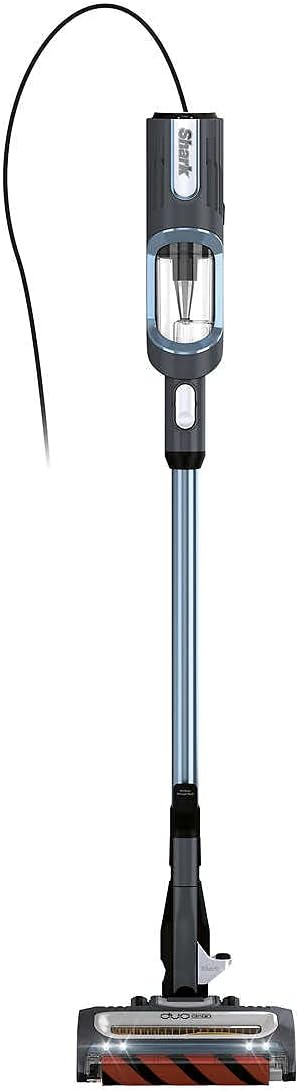
Corded pick: Shark UV580 Corded Stick Vacuum Performance Ultralight DuoClean with Self-Cleaning Brushroll, Removable Handheld, Blue (Renewed)
 Visit on Amazon →
The case for a corded stick is simple and I will die on this hill: runtime is a fact, not a promise. A corded machine does not care how thick your carpet is, how cold the garage got, or whether a battery sat at 100 percent for six months. You plug it in, you clean the whole house, you put it away. No fifteen-minute countdown, no second battery, no waiting.
The self-cleaning brush roll is the other reason this one stays in the van. If a brush roll tangles with pet hair, it is not a pet vacuum, it is a chore, and I have spent too many evenings with scissors and a seam ripper. A brush that shreds hair off itself as it spins is the only real answer to a shedding dog.
The removable handheld part matters more than the spec sheet suggests. Stairs, car seats, the crevice between couch cushions where the golden hides his tennis balls, all of that is handheld work. You want to pull the pod off and go rather than drag a full stick behind you.
Flaws but not dealbreakers: It is corded, so you are always managing a cord and hunting for an outlet, and stairs take some choreography. This listing is also a renewed unit, so read the condition notes before you buy and check the brush roll and filters when it lands.
Anyone with a mix of hard floor and carpet, a dog that sheds year round, and no interest in battery math should start here.
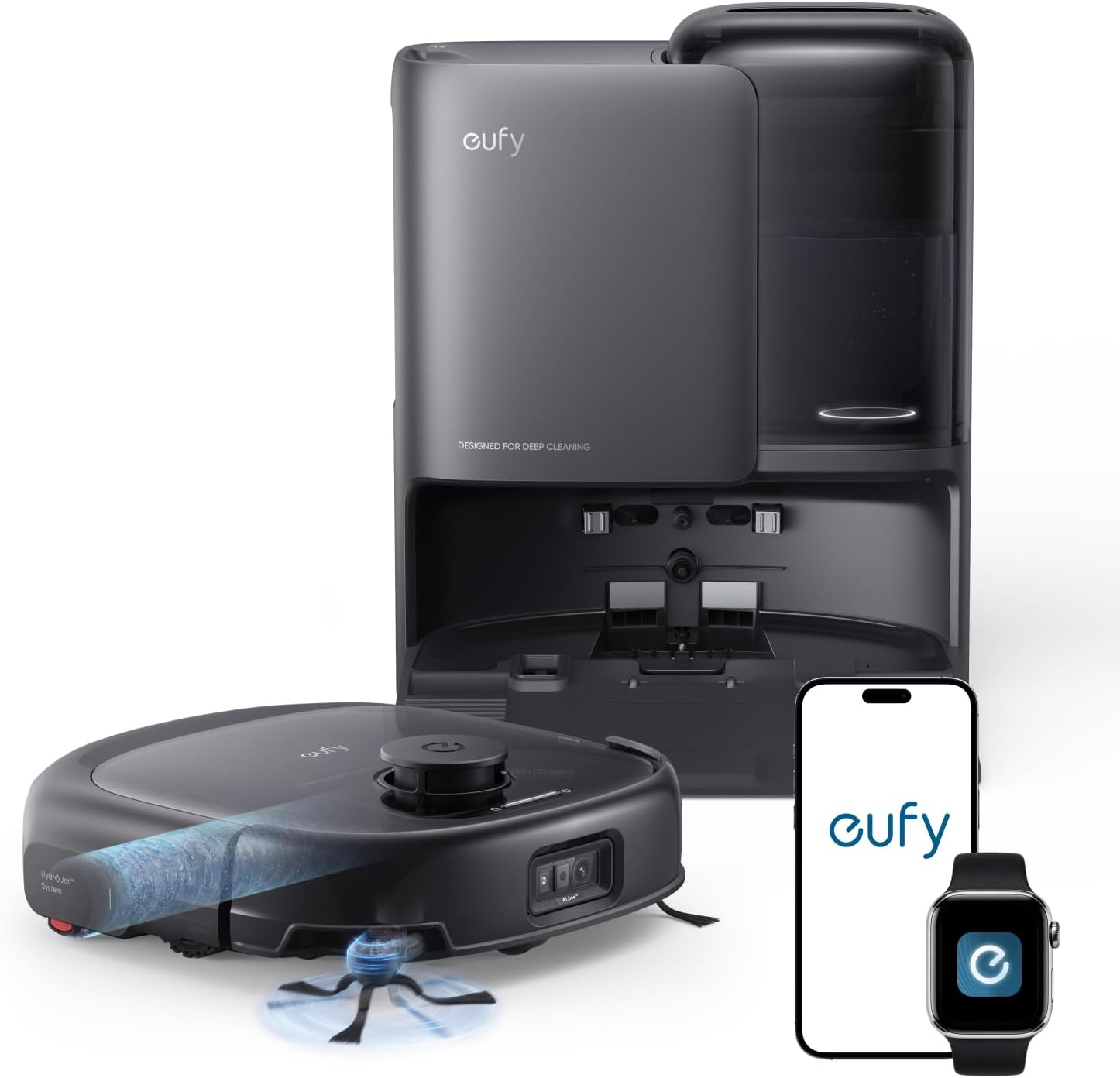
Robot pick: eufy E25 Robot Vacuum and Mop Combo, 20,000 Pa, HydroJet Roller Mop
 Visit on Amazon →
A robot is not a replacement for the corded stick. It is the thing that keeps you from needing the corded stick as often. In a pet house, the difference between a floor that looks clean and a floor that looks like a fur rug is usually one day of hair. Run a robot daily and you never reach the fur rug stage.
The vacuum and mop combination is what makes this one interesting for hard floors. Mopping after vacuuming is the correct order, never the reverse, and having both jobs in one pass means the hair gets picked up before anything wet touches it. The roller mop design in the name is doing that work, and the 20,000 Pa figure is the vacuum side of the machine.
Flaws but not dealbreakers: A robot needs a floor you have already picked up. Cords, socks, dog toys, and the tassels on a rug will all stop it or wrap around it. It also cannot do stairs, and it will not get the hair packed into the corner behind the toilet the way a wand does. This is maintenance, not deep cleaning.
Anyone with mostly hard floors, a dog or two, and a habit of kicking shoes out of the way will get the most out of it.
The actual routine: how to keep pet hair off hardwood floors
Now the part you came for. This works with any decent vacuum, and it works better with a good one.
Step one: clear the floor, not the room. You are not tidying, you are making lanes. Dog bowls, dining chairs, phone chargers, the pile of mail, all of it off the floor. Hair collects around obstacles, and every obstacle you leave down becomes a place you have to vacuum twice.
Step two: edges first, always. Pet hair does not live in the middle of the room. It drifts to baseboards, chair legs, the sides of the fridge, and under the couch skirt. Hit every edge with the wand or the crevice tool before you touch open floor. Do the middle first and you push hair into the corners, then have to chase it.
Step three: long lanes, one direction, toward the door. Vacuum in strips and walk backward toward the exit. You get an even pass, you do not walk over what you just cleaned, and you finish at the door instead of in the middle of the room.
Step four: the second pass is the real test. Go back over the same strip. If the vacuum is still pulling hair up on pass two, the suction is holding. If pass two is silent, the bin cyclones have stopped separating dirt from air and you are just pushing air around. This is where cheap vacuums expose themselves, and it is why I never judge a machine on a clean floor with an empty bin.
Step five: carpet before hard floor. If you have both, do the carpet first. Carpet work kicks fine dust into the air and it settles on hard floors, so save the hard floors for last and you will not have to do them twice.
Step six: slow down on the transition strips. The metal or wood strip between carpet and hard floor is where hair snags and where brush rolls wrap. Two slow passes beat five fast ones.
Step seven: empty the bin the second you finish. Not tomorrow, not when it is full. A packed bin is a vacuum working at half power, and hair that sits in a bin compacts into felt. If emptying takes two hands and a prayer, that vacuum is not staying in my van.
Step eight: check the brush roll before you put it away. Ten seconds. Run a thumb along the roll. If hair is wrapping, deal with it now while it is loose, not in a month when it is a braid.
Step nine: mop after, never before. Vacuum first, then a damp mop or the mopping pass on a combo machine. Mopping a hairy floor just makes hair mud, and hair mud dries into a film that shows every paw print.
Step ten: let the robot run daily. Once the floor is clear and the routine is set, a daily robot pass is what keeps you from repeating steps one through nine more than once a week.
Where this routine falls apart
Three honest caveats.
Thick shag carpet defeats almost everything. If your carpet has a deep pile, the brush roll rides on top and the hair stays down at the base. That is a job for a full-size upright with real airflow, not a stick.
Stairs and upholstery are handheld work. A robot cannot help, and a stick only helps if the handheld pod comes off. If you have three floors and a shedding dog, budget your time for the stairs, because no machine is doing them for you.
Wet messes and accidents are a different tool. Neither of the machines here is a wet vacuum, and running a vacuum over a wet spot is how you turn a five-minute cleanup into a repair bill. Blot first, clean the machine after, and keep this routine for dry hair only.
What this all costs
Prices on both listings move with sales and renewed stock, so check current Amazon price before you decide. What you are really choosing between is time and attention.
The corded stick is the machine you use. It does the deep clean, the stairs, the edges, the couch, and it never asks you to wait for a charge. The robot is the machine that works while you do something else. It keeps the daily hair load down so the deep clean happens weekly instead of daily.
My crew math is simple. A vacuum that saves five minutes a day pays for itself inside a month, and the two things that save the most minutes are a brush roll that does not tangle and a bin you can empty one-handed. Everything else on the box is decoration.
Start with the routine. It is free, and it works with whatever you already own. Then buy the machine that fits the way you actually clean, not the one with the biggest number printed on it.