A stick vacuum for pet hair has one job, and it is not winning a spec sheet. It has to pick up on the second pass over a rug that already looks clean, it has to survive a husky in July, and it has to be light enough that you actually pull it out of the closet on a Tuesday instead of reaching for the broom.
I clean houses in Denver for a living. Eleven years in, four of them running a three person crew that touches more than 40 homes a month, and I have watched stick vacuums die in every way a machine can die. Mid-staircase. Mid-bin-empty. Mid-sentence from a client asking why the vacuum is flinging kibble back onto the tile.
Most of those failures trace back to three decisions made in the store. Trusting the runtime number on the box. Buying a brush roll that wraps hair around itself like thread on a spool. Buying something that needs two hands and a wall to stand up. Get those three right and you can clean a whole house with one hand while you hold a dog back with the other.
Why you should trust me
I have cleaned houses in Denver for eleven years, and for the last four I have run a three person crew covering more than 40 homes a month. That is a lot of square footage, a lot of stairs, and a lot of pets who treat the floor like a buffet. My clients have huskies, goldens, cats, toddlers, and one parrot who throws pellets out of the cage for sport.
That means I do not recommend a vacuum because it looks good under showroom lights. I recommend the ones that come back on the truck the next week. A vacuum that saves me five minutes a day pays for itself inside a week of work. A vacuum that needs monthly brush roll surgery takes that time back with interest.
How I judge a stick vacuum before it earns a spot on the truck
Four questions, in this order.
Does the brush roll tangle after one pet hair pass? If hair wraps the roller instead of traveling into the bin, it is not a pet vacuum. It is a chore with a handle. This is the first thing I check and the thing most people check last.
Does suction hold when the bin is half full? Bin cyclones are the cone system that separates dirt from air. When they work, you get full power with a half-full bin. When they do not, the vacuum quits pulling about the time you reach the back bedroom, and you blame yourself instead of the machine.
Can I empty it one handed? You will empty a bin while holding the vacuum, holding a door, or holding a dog back. A bin that needs two hands and a prayer goes in the trash, eventually.
Would I hand it to my crew on a Tuesday? My crew does not have patience for a vacuum that fights them, and neither do you. If I would not hand it to someone who cleans eight houses a day, it does not belong in your closet either.
Notice that none of those four questions is about the number on the box. Suction numbers are marketing. Battery life is a promise, runtime is a fact, and the real test is what still happens when the bin is half full on medium pile.
The two cordless stick vacuums I would hand to my crew
Both of these are cordless sticks with a real place in a rotation. One is my pet hair answer. One is my stairs and storage answer. Neither one is the kind of vacuum you have to prop against a wall while you move a laundry basket, which sounds like a small thing until you have cleaned a staircase with a vacuum that keeps falling over.
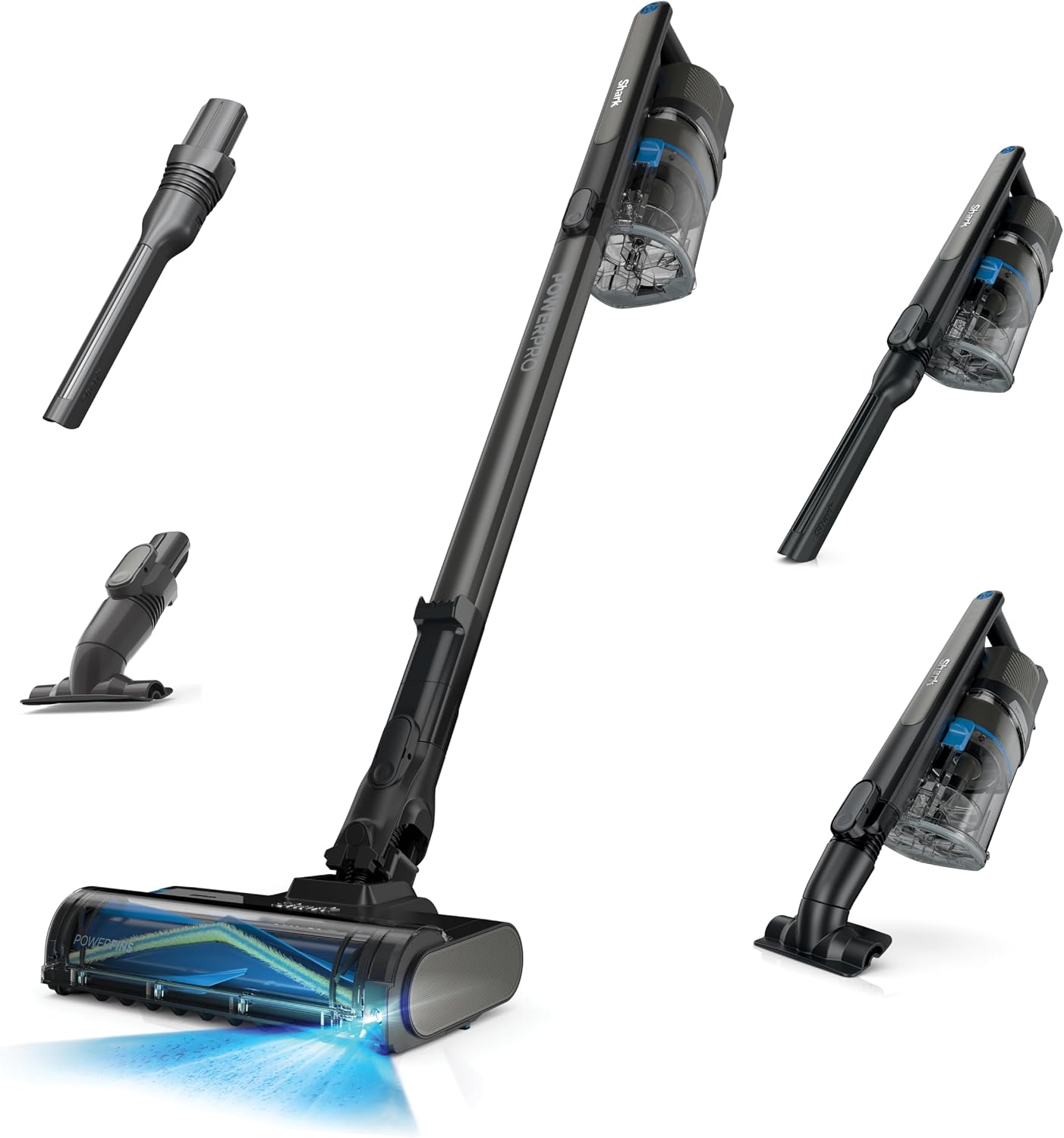
Best for pet hair: Shark PowerPro Reveal Plus Cordless Vacuum Cleaner - Charcoal - IZ376H
 Visit on Amazon →
This is the one I would put in the pet hair slot. It is a cordless stick built for whole-home passes rather than a quick crumb sweep, and the charcoal finish is the kind that does not show every scratch after a month in a hall closet.
What I would check before you commit, and what I check on every cordless I try: run it across a rug that a shedding dog has been sleeping on, then look at the brush roll. If hair has wrapped the roller, that is the vacuum telling you what the next year looks like. Then empty the bin with one hand while you hold the vacuum upright with the other, because that is how you will actually do it in a kitchen with a dog trying to get out the door.
Where it fits: daily hard floor passes, area rugs, and the rooms where hair is fresh rather than ground in. Check current Amazon price.
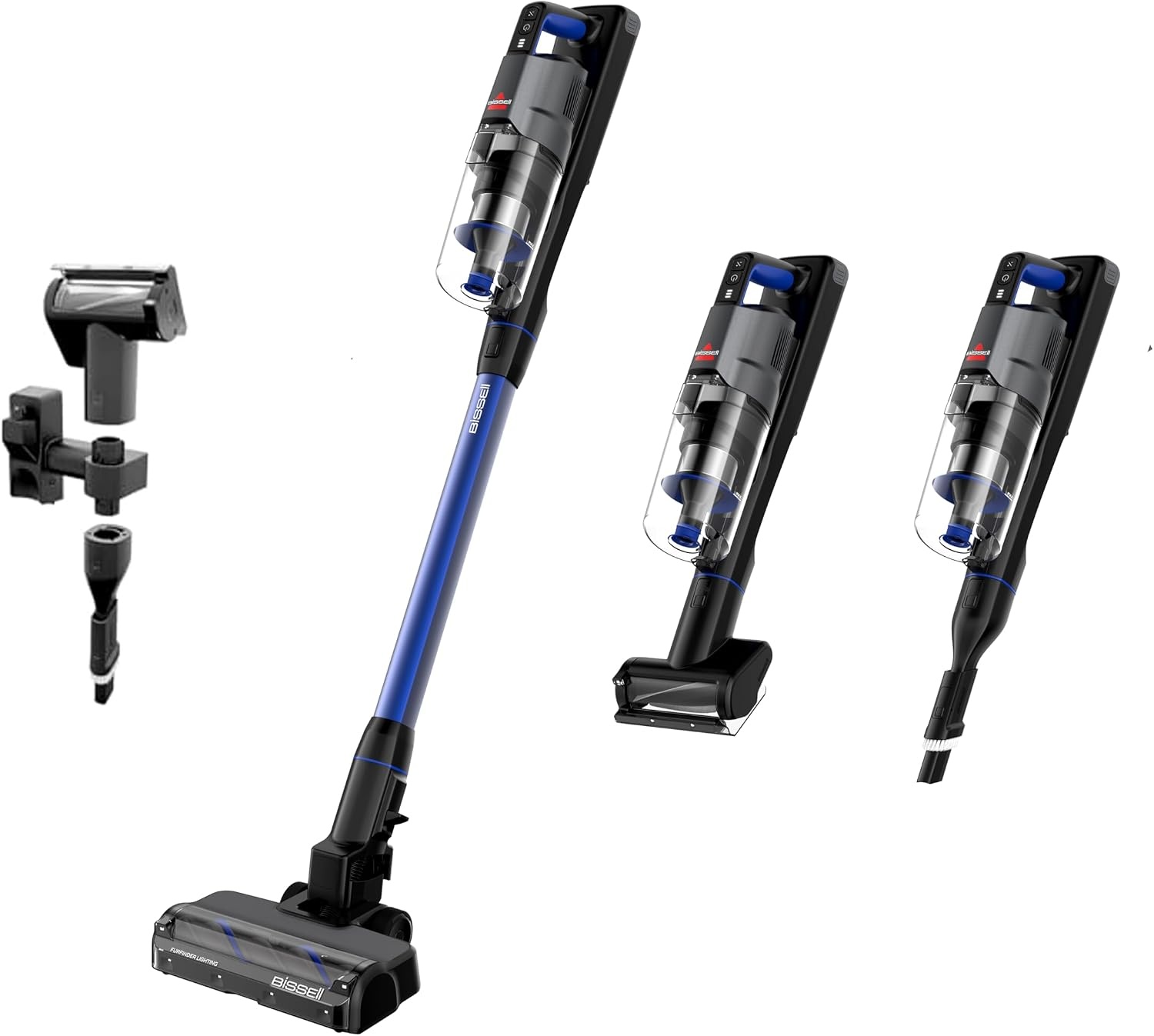
Best for stairs and parking: Bissell PowerClean FurFinder 200W Self-Standing Cordless Vacuum, 4052
 Visit on Amazon →
The self-standing part of the name is the part I care about. A stick vacuum that stands on its own is the difference between parking it on a landing while you carry a laundry basket and propping it against a wall and hoping. On a staircase, that is the whole job.
The FurFinder name tells you who this one is aimed at, and if you have ever pulled a wad of golden retriever undercoat off a brush roll with scissors, you know why a vacuum built around fur pickup is worth a look. Cordless matters on stairs too, because a cord that reaches the top step is a cord that has already been yanked out of the outlet twice.
What I would check: whether the bin empties over a trash can without you shaking it, whether the wand reaches under a bed skirt, and whether the whole thing still stands when the bin is half full. Check current Amazon price.
The actual buying workflow: eight checks before you pay
Work through these in order, in the store or on the product page, and you will avoid most of the mistakes I see.
Check one: measure your real runtime need. Do not shop the number on the box, shop your house. Time how long it takes you to vacuum the floors you actually vacuum in one go, then add five minutes for the week you skip a day. If your house takes 25 minutes, a stick that dies at 20 is a stick that dies in the middle of the hallway, every single time.
Check two: put your hand on the brush roll. Look at the bristles and the shape of the roller. Ask how hair is supposed to leave the roller and get into the bin. If the answer is "you cut it off," keep walking. This is the single biggest predictor of whether a stick vacuum stays pleasant to use in a pet home.
Check three: size up the bin. Small bins are the hidden tax on cordless vacuums. A bin you fill three times in one cleaning is a bin that costs you two trips to the kitchen and your patience. Bigger is better, but only if the empty mechanism is one handed.
Check four: does it stand on its own? Park it in the middle of the aisle and let go. If it falls, you will be the one catching it for the next three years, usually with your foot, usually while carrying something.
Check five: check the balance, not the spec weight. Hold it with the wand extended the way you would actually use it. Weight at the top of the handle is a different animal from weight near the floor. A vacuum that feels heavy in the first ten seconds feels like a dumbbell at minute twenty.
Check six: wand and crevice reach. Stick vacuums win or lose under furniture. Measure the gap under your sofa and your bed before you buy, then look at the wand length and the tools in the box. A crevice tool that lives in a bag in the closet is a tool you will never use.
Check seven: filtration and seals. If anyone in the house sneezes through spring, look at how many stages of filtration the vacuum runs and how the bin seals when it closes. Fine dust escaping the bin is the reason a lot of people decide their vacuum stopped working when it is actually working fine.
Check eight: the battery story. Ask whether the battery is sealed into the handle or comes out. A swappable battery is the difference between waiting for a charge and finishing the house. If it is sealed, treat the runtime as the whole cleaning session, because it is.
The second pass test
Once the vacuum is in your house, do this before the return window closes. Vacuum a rug once, slowly, the way you normally would. Then go back over the same rug with the bin half full and watch what comes up. A vacuum that still pulls hair and grit on the second pass has working bin cyclones. A vacuum that leaves a gray haze behind is telling you it loses separation as it fills, and that is the failure you will live with in month six, not month one.
Do it on your worst surface, not your easiest one. Bare floor hides everything. Then take it up the stairs, because stairs are where a stick vacuum either earns its keep or becomes the reason you still own a broom.
What to skip
Some features cost money and do nothing for you.
- A max mode you cannot reach mid-clean. If you have to stop and find a button with your thumb while the vacuum is running, you will never use it, and the number on the box was never real.
- An app that wants an account and a firmware update before the vacuum runs. An app that tells you the battery percentage is fine. Everything past that is a subscription you did not ask for.
- Corded stick vacuums, unless you genuinely enjoy managing a cord in three rooms and a hallway.
- Anything with a real runtime under 15 minutes, because that is a vacuum for one room, not one house.
- Brush rolls that need monthly detangling surgery. If you are budgeting scissors and a seam ripper into your cleaning routine, the vacuum already lost.
What this actually saves you
A vacuum that saves five minutes a day saves you roughly 30 hours a year. Over three years, that is most of a work week back, and that math does not care which brand is on the handle. What it does care about is whether you have to stop and cut hair off a roller every other week, because that is the five minutes you just gave back.
Check current Amazon price on both of the vacuums above, confirm the return window, and run the second pass test the day it arrives. If it fails on your worst rug with a half-full bin, send it back. That is what the window is for.
You do not need the most expensive stick in the aisle. You need the one that still picks up on the second pass, stands up when you let go, and empties with one hand. Get those three right and the rest is noise. Your floors were built to be cleaned this way, so let the vacuum do the work instead of your wrists.