I have cleaned homes in Denver for eleven years, and for the last four I have run a three person crew that covers more than 40 houses a month. A lot of those houses have dogs, cats, and kids who treat the kitchen floor like a buffet line. So when someone asks me to compare stick vacuums for pet hair, I do not hand them a spec sheet. I hand them the test I would apply before letting my crew walk into a client's house with it on a Tuesday: does it still pick up on the second pass with a half full bin, and does the brush roll survive a husky and a golden in the same afternoon.
That is the frame for this comparison. Four machines are in it, two cordless sticks and two robots, and they are not interchangeable. A stick gets under the kitchen table and up the stairs today. A robot keeps the floor from ever getting bad in the first place. Most pet homes end up needing one of each eventually, but if you are buying one machine right now, the decision comes down to which job you hate more.
The short answer: if you want a cordless stick for a pet home, the Dyson V15 Detect is the one I would put my own money on, because the laser dust detection is genuinely useful and the suction holds up in rooms with real dirt in them. If you want the floor handled while you are somewhere else, the roborock Q5+ with its self empty dock is the better buy.
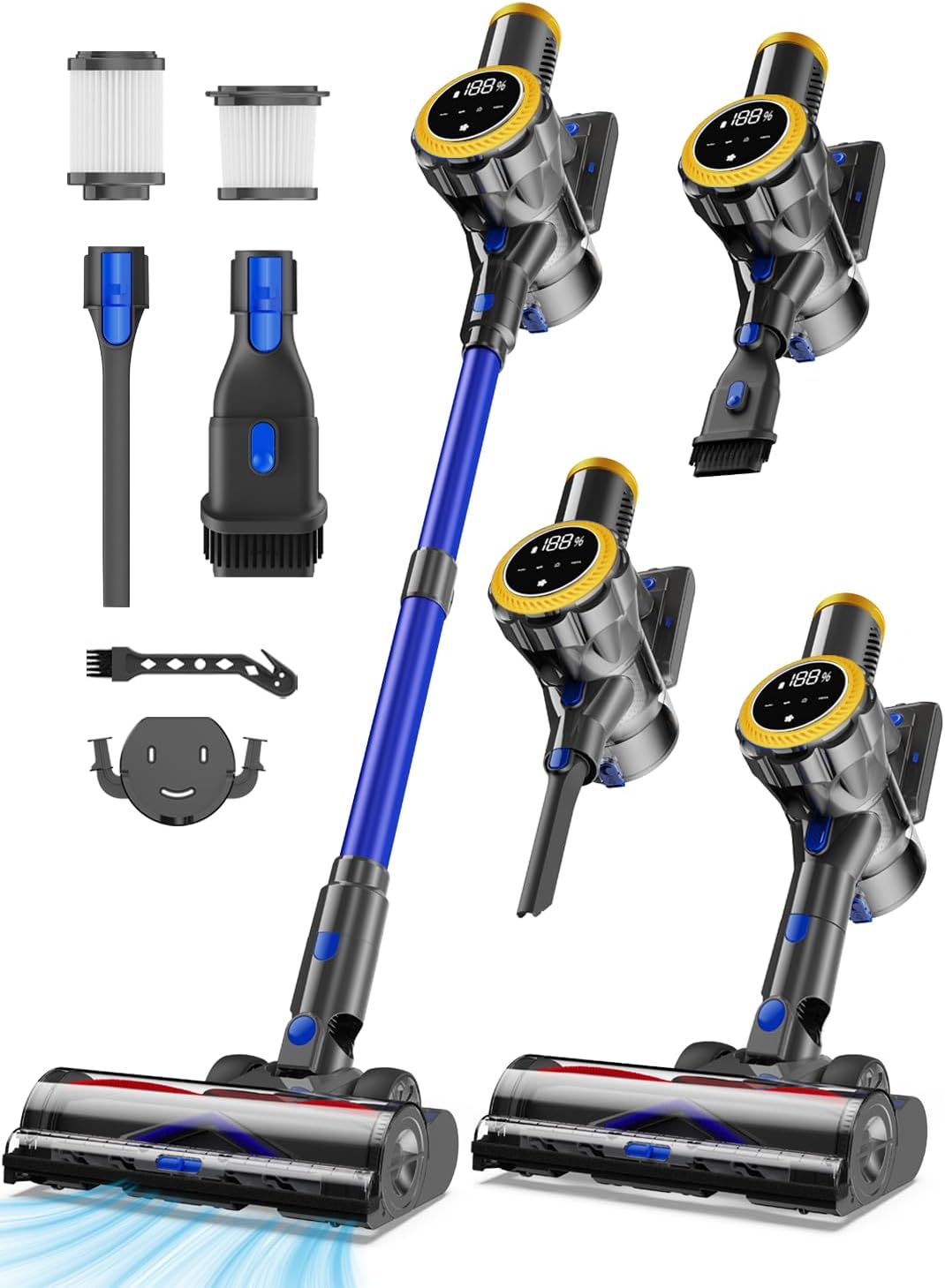
Cordless Vacuum Cleaner, 580W/38Kpa, 65 minute stick
Lowest cost of entry here, and the lightest machine in the group. The LED display is a small thing that matters when you are tracking battery on a staircase.
Wattage and kilopascal figures are peak numbers on a bare floor. There is no dock, and the bin and filter are exactly where cheap sticks fall apart first.
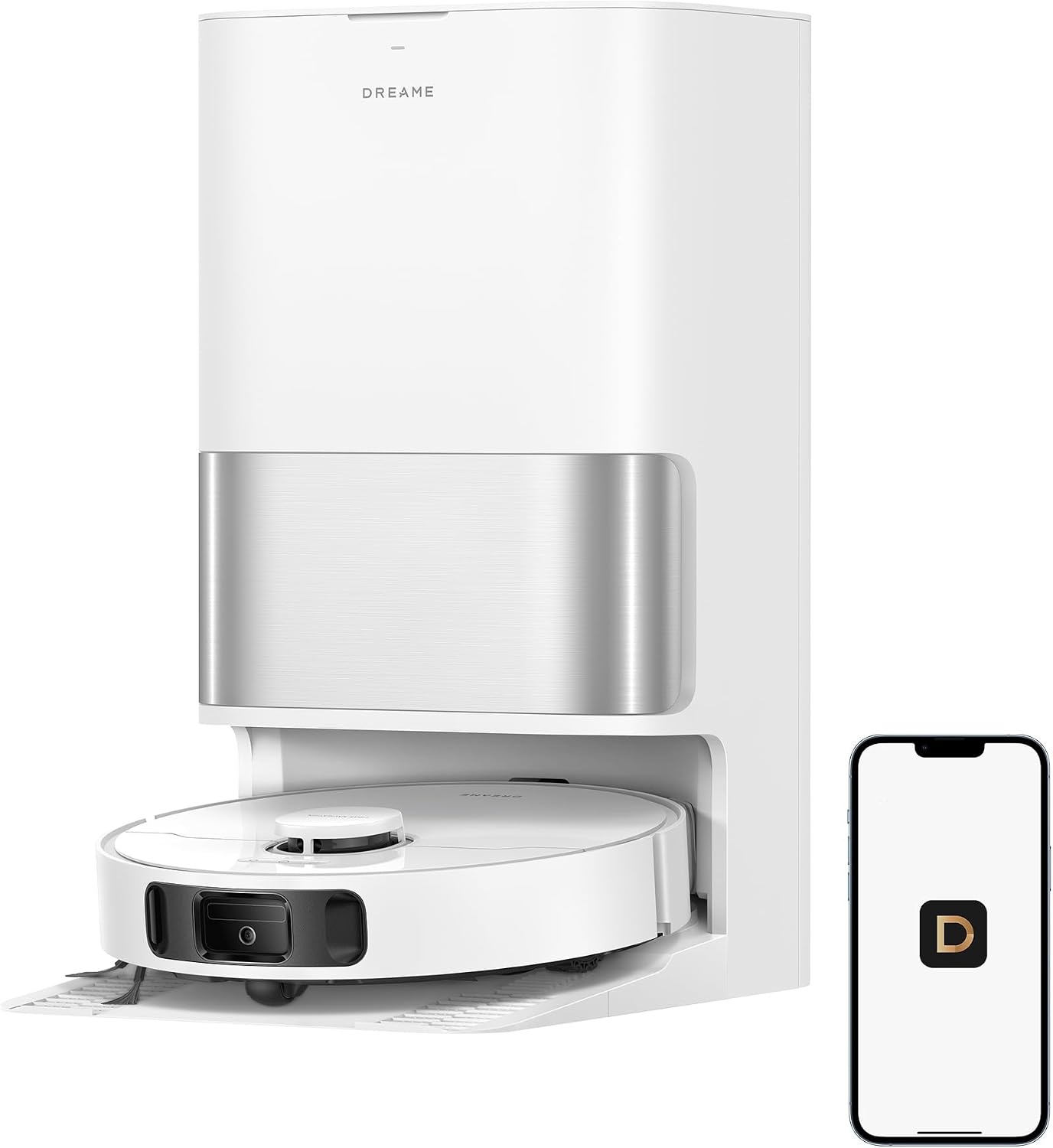
dreame D30 Ultra CE Robot Vacuum and Mop
The 25,000Pa suction claim is the highest in this group, and it vacuums and mops in one pass, which is the whole game on hard floors with muddy paw prints.
Mop pads and water tanks are maintenance you sign up for. It cannot do stairs, a couch, or a car, and the dock still needs a human now and then.
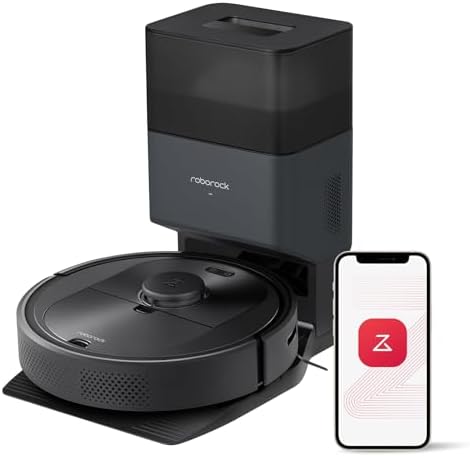
roborock Q5+ Robot Vacuum with Self Empty Dock (Renewed)
Hands free for up to 7 weeks with the self empty dock, and a 180 minute maximum run time means it can cover a whole level in one session. Renewed is the cheapest way into a dock this good.
2700Pa is modest next to the dreame, there is no mopping, and a renewed unit comes with its own terms, so read the listing before you commit.
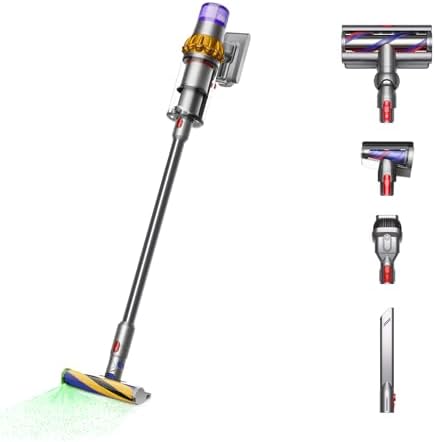
Dyson V15 Detect Cordless Vacuum Cleaner
Laser dust detection that actually earns its place, plus suction that holds up in homes with real dirt. This is the best overall stick in my book.
It is heavy in the hand after twenty minutes, and it is the most expensive way to solve a floor problem.
Prices and availability were captured from Amazon Creators API and may change.
How I judge a vacuum in a pet home
Four things decide it for me, and none of them appear on a marketing page.
The first is the brush roll. If hair wraps the roll after one pass, it is not a pet vacuum, it is a chore with a battery. A self cleaning brush roll that shreds hair off itself as it spins is the only real answer here, and it is the single fastest way to tell whether a machine was designed for pet homes or just sold to them.
The second is whether suction holds when the bin is half full. Bin cyclones, the cone system that separates dirt from air, are what keep airflow alive as the bin fills. A vacuum that picks up beautifully on an empty bin and then smears on the second pass is a vacuum that will make you stop using it by week three.
The third is one handed operation. A vacuum that needs two hands is a dustpan with a motor. I want to empty the bin with one hand over a trash can while the other hand is holding a leash, a rag, or a client's front door open.
The fourth is runtime as a fact rather than a promise. Battery life is a marketing number measured on a bare floor with an empty bin. On medium pile carpet, with a powered brush roll, you get a different number. I care about that one.
The cordless picks
The Dyson V15 Detect is the machine I recommend to pet owners who want one stick and want it to be good. The laser dust detection sounds like a gimmick until you have run it across a floor you already vacuumed and watched it light up a fine layer of hair and dander you could not see. In a house with two dogs, that visible feedback changes how you clean, because you stop guessing when the floor is done. The suction is the part that matters most to me though. The V15 does not fall off a cliff when the bin starts filling, which is the failure mode I see in almost every cheap cordless.
What you pay for that is weight and money. It is the heaviest machine in this comparison, and it is the most expensive. If you have a two story house and a bad shoulder, that weight shows up on the second flight of stairs. I still rank it first overall, but I rank it first for people whose arms are fine with it.
The 580W/38Kpa cordless stick is the other end of the spectrum, and I am not going to pretend it is the same machine. What it offers is a very low entry price, a light body, a 65 minute claimed run time, and an LED display that shows you what is left in the tank. The display matters more than it sounds, because the worst feeling in this job is a battery dying halfway up a staircase with a full bin.
The honest caveat is that peak wattage and peak kilopascal numbers are measured under ideal conditions. What I would want to know before handing this to my crew is whether the filter clogs, whether the bin empties cleanly with one hand, and whether the brush roll tangles after a single husky pass. If it passes those three, it is a remarkable amount of vacuum for the money. If it fails the brush roll test, it belongs in a house without long haired pets.
The robot picks
Robots do a different job, and I wish more people understood that before they bought one and felt disappointed. A robot does not replace a stick. It replaces the daily five minute touch up that keeps hair from turning into tumbleweeds.
The roborock Q5+ is the one I would choose for a busy pet household, and the reason is the dock. The self empty dock gives you hands free cleaning for up to seven weeks, which means the bin you would otherwise be tapping out every single day is somebody else's problem. The 180 minute maximum run time is enough to cover a whole level in one session rather than getting sent home to recharge halfway through.
Its suction rating of 2700Pa is the modest number in this group, and I will not dress that up. On hard floors and low pile it is fine. On thick carpet with embedded hair, it is working harder than the dreame would. This listing is also a renewed unit, which is how you get into a dock of this quality for less. Renewed is not a dirty word, but it is a different warranty conversation, so read the terms on the listing rather than assuming they match a new unit.
The dreame D30 Ultra CE is the more ambitious machine. A 25,000Pa suction claim is the biggest number here by a wide margin, and it vacuums and mops in the same pass, which is exactly what you want in a house where wet paw prints meet a tile floor. For hard flooring households with pets, the vacuum and mop combination is the closest thing to a real labor saving device in this whole group.
The cost is complexity. Mop pads need washing or replacing, water tanks need filling and emptying, and the dock has more parts that can need attention. It also cannot climb stairs or clean your couch, which is the permanent limit of every robot.
The trade-offs nobody puts on the box
Cordless sticks win on reach and immediacy. They get under the table, up the stairs, along the baseboards, and into the crevice where the fridge meets the wall. They lose on endurance and on the fact that you have to be the one holding them.
Robots win on consistency. They lose on edges, stairs, and anything above floor level, and they need a floor that is not covered in yesterday's laundry.
Renewed and budget listings win on price. They lose on certainty. With a renewed robot, the terms come from the listing, not from me. With a budget stick, the spec sheet numbers are peaks, not sustained performance.
The thing I tell every client is that the machine you will actually use is the one that is easy to grab. A $500 vacuum that lives in a closet behind two boxes gets used twice a month. A $70 stick that hangs on a hook by the door gets used every day, and a floor that gets vacuumed every day beats a better vacuum that stays in the closet.
Who should buy which
Buy the Dyson V15 Detect if you have pets, a mix of carpet and hard floor, stairs, and you want one cordless machine that does the whole job well. Accept the weight and the price as the cost of that.
Buy the 580W/38Kpa cordless stick if this is a second vacuum for a specific job, an upstairs unit, a car, or a first apartment, and you want to spend as little as possible while still getting a light machine with a real display.
Buy the roborock Q5+ if your main pain is the daily hair on hard floors and low pile, and you want to stop thinking about it for weeks at a time. Just check the renewed terms first.
Buy the dreame D30 Ultra CE if your home is mostly hard flooring and you want vacuuming and mopping handled in one pass, and you do not mind maintaining pads and tanks to get it.
What I check before buying any of them
Read the brush roll description and ask whether it self cleans. Look at the bin volume and picture emptying it one handed. Check whether the filter is washable, because a filter you have to buy every month is a subscription, not a vacuum. Confirm the battery is replaceable rather than sealed, since a sealed battery is a machine with an expiry date. And on renewed units, read the seller's terms carefully, because that is where the real difference lives.
Do those five checks and you will avoid the two failure modes I see most: a vacuum that cannot handle pet hair, and a vacuum that dies in year two because nobody could replace the battery.