I have cleaned more than 40 homes a month for eleven years, and I have watched cordless vacuums die in ways their spec sheets never predicted. They quit halfway up a staircase. They choke on one husky in shedding season. They lean in a corner at an angle because the handle will not hold them up. So when I sit down to write a cordless stick vacuum comparison, I am not comparing suction numbers on a showroom floor. I am comparing what happens on the second pass, when the bin is half full and the dog is staring at me.
The short answer: the Dyson V8 is the safest cordless stick vacuum for a normal house, the 600W cordless stick vacuum is the budget pick that punches above its class, the renewed LG CordZero Kompressor is for anyone who hates emptying a bin mid-job, and the Shark WANDVAC is not really a stick vacuum at all. It is the handheld you grab for stairs, cars, and crumbs.
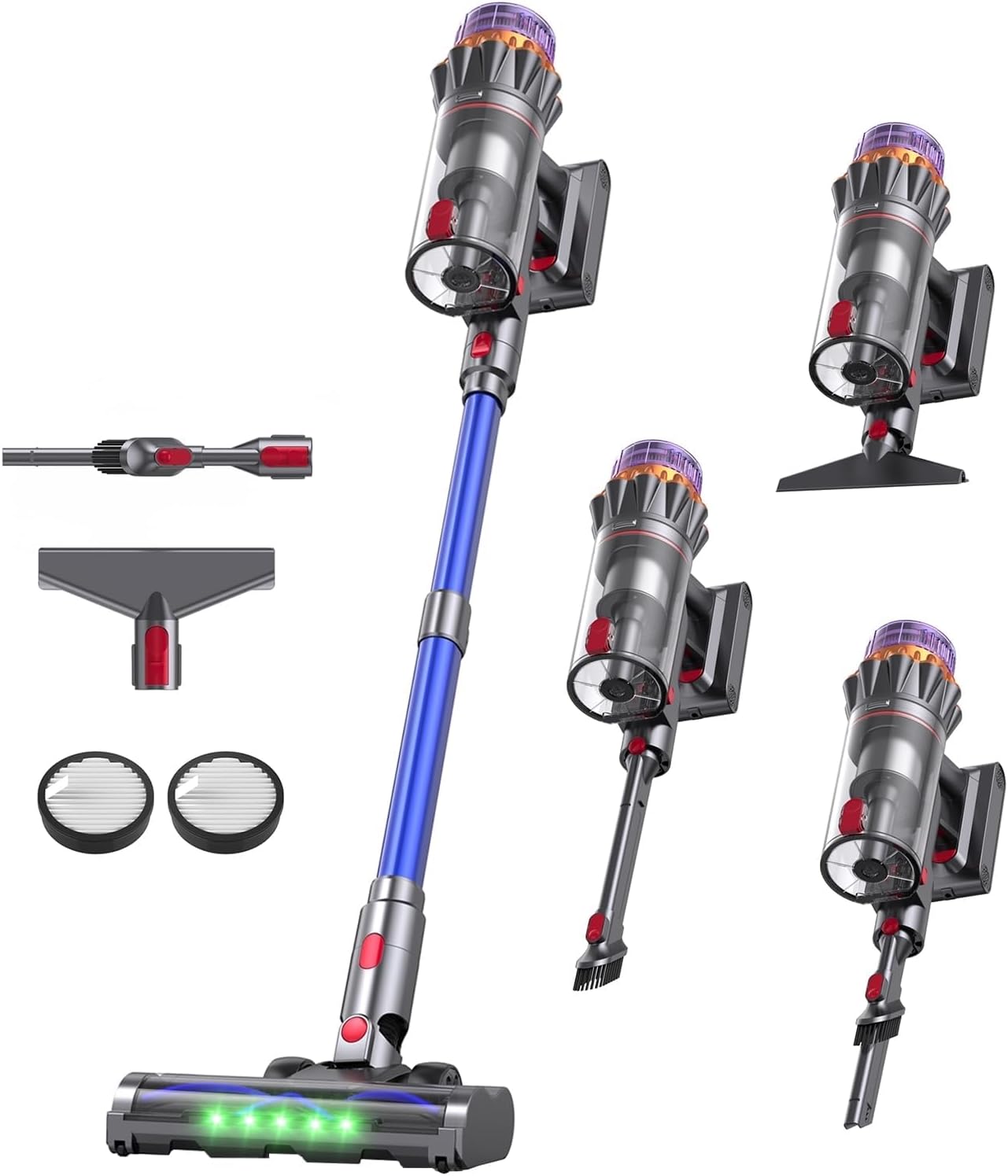
Cordless Stick Vacuum Cleaner, 600W 55Kpa 70Mins for Home, Pet Hair, Carpet
The biggest numbers on the page and the lowest cost of the three full-size sticks here. A full wand and floor head for less than a mid-range handheld.
No brand behind it for parts or batteries, and big motor numbers are the easiest thing in this category to inflate.
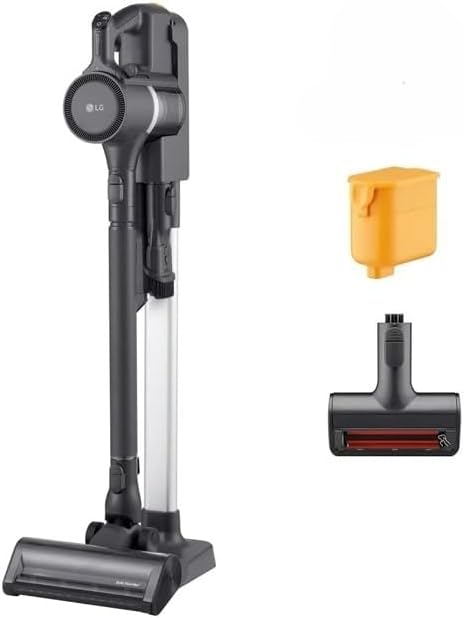
LG CordZero Kompressor Cordless Stick Vacuum A941KTMP (Renewed)
The Kompressor lever squashes debris so the bin fills slower, and the CordZero line is designed around swapping batteries instead of waiting on a charger.
Renewed means you inherit someone else's battery, and the battery is the most expensive part to replace.
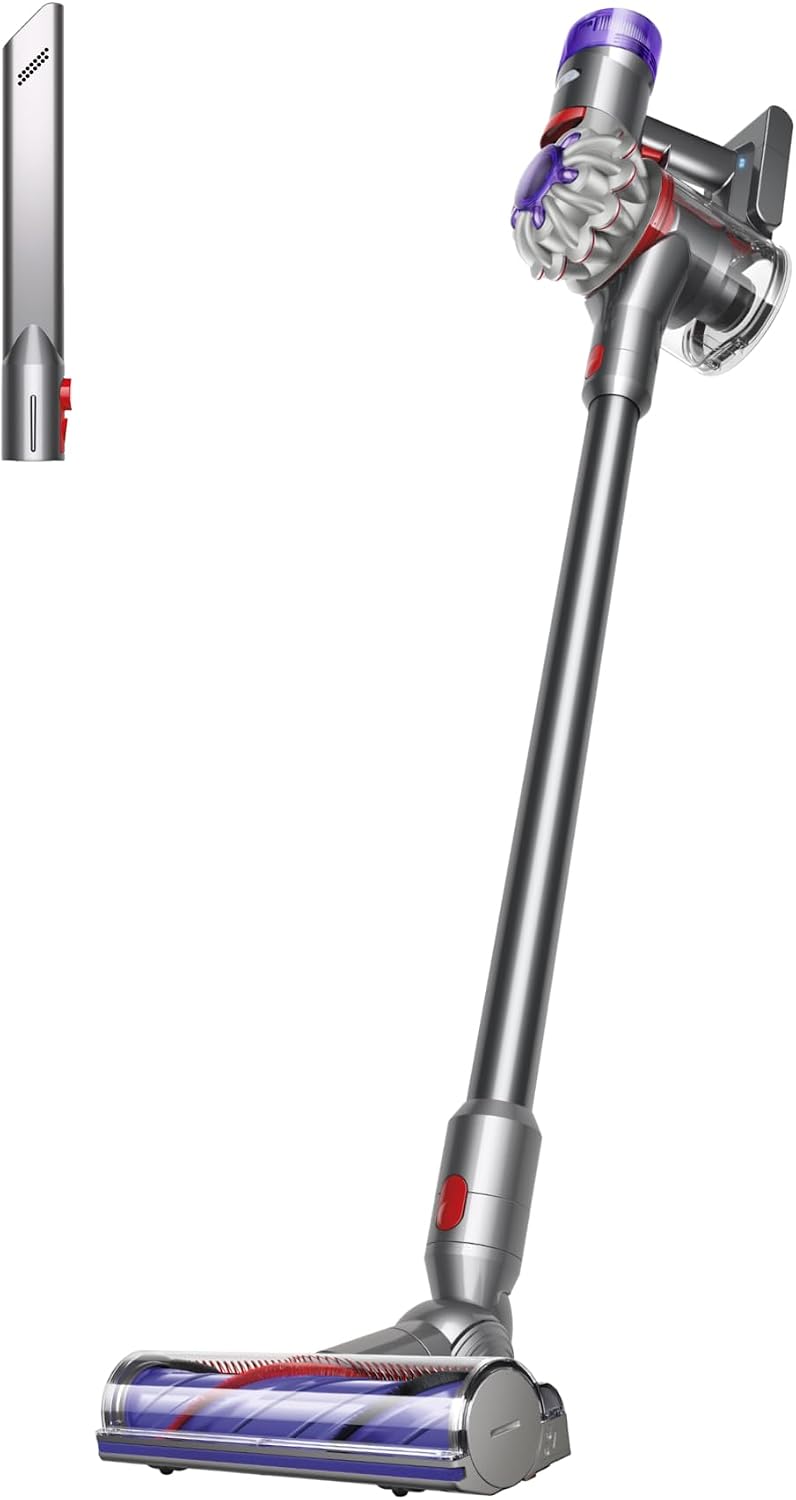
Dyson V8 Cordless Vacuum
The known quantity. Tools, filters, and familiarity make it the lowest-risk pick for a normal house.
It is the oldest platform in this group, and Dyson's newer machines have moved past it.
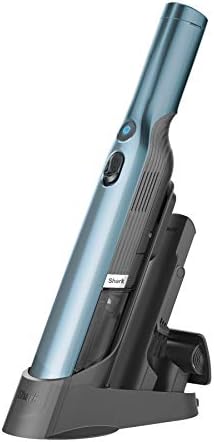
Shark WV201 WANDVAC Handheld Vacuum, Lightweight at 1.4 Pounds with Powerful Suction, Charging Dock, Single Touch Empty and Detachable Dust Cup, Graphite, Slate
1.4 pounds, a dock that lives on the wall, and a single-touch empty cup you can dump with one hand. This is the one that actually gets used.
It is a handheld. There is no full-size floor head, so it cannot be your only vacuum.
Prices and availability were captured from Amazon Creators API and may change.
How I judge a cordless stick vacuum
I judge these machines on five things, and none of them is a suction number.
First, the brush roll. If hair wraps the roll on the first pass, the vacuum is a chore, not a tool. Second, the bin. If I cannot empty it one-handed over a trash can without touching the dirt, it fails. Third, runtime on a real floor. A 70-minute claim is measured on low power, on a bare floor, with an empty bin, which is not a house. Fourth, whether it stands up on its own between passes, because I set a vacuum down dozens of times per job. Fifth, whether I would hand it to my crew on a Tuesday and expect it back in one piece.
A note on the word suction. Kilopascals and watts are the easiest numbers to inflate in this category. What I care about is whether suction holds on the second pass with a half-full bin. That is where cheap cyclones separate from good ones, and no spec sheet will tell you which one you bought.
Dyson V8 Cordless Vacuum
The V8 is the vacuum that made cordless normal in real homes, and it is the name most of my clients already recognize when I open a closet. That familiarity is worth something. Filters, tools, and batteries for a well-known platform are easier to track down a few years later than they are for a no-name import.
What you get with the V8 is a known quantity: a stick with a floor head, a wand, and a bin, doing the job it was designed to do. It is also the oldest platform in this group, and Dyson's newer machines have moved past it in ways that matter to heavy users. If you clean two homes a week, that gap is invisible. If you clean forty, you will notice it.
My honest criticism is the one I give every client who asks: the V8 is the safe pick, not the exciting one. You buy it because you want the cordless vacuum with the fewest surprises, and you accept that part of what you pay for is the support system around the name. For most people reading a comparison like this, that is the right trade.
Cordless Stick Vacuum Cleaner, 600W 55Kpa 70Mins
This is the one that makes people's eyes go wide in the search results. Six hundred watts. Fifty-five kilopascals. Seventy minutes. Those numbers beat everything else here on paper, and it is the lowest cost of the three full-size sticks in this comparison.
Here is the thing about those numbers. A 70-minute runtime is measured the way every manufacturer measures it: lowest power setting, bare floor, empty bin, fresh battery. Put it on medium pile carpet with a bin half full of dog hair and you will get a fraction of that. That is how the test works, not a lie. The same goes for peak suction. The 55Kpa figure is a maximum, and maximum is usually a mode you cannot reach without holding a button down.
What I like is the shape of the deal. You get a full-size stick with a wand and a floor head for the price of a mid-range handheld, and for an apartment or a small house with one shedding pet, that can be enough. What worries me is everything after the sale. There is no brand here with a parts department, which means the battery, the single most expensive component, is the question that decides whether this vacuum lasts three years or gets recycled at eighteen months. Ask about it before you buy, and buy somewhere with an easy return window.
LG CordZero Kompressor Cordless Stick Vacuum A941KTMP (Renewed)
The Kompressor name is the whole pitch, and it is a good one. Instead of a plain dust cup, there is a lever that compresses what you have picked up, so the bin holds more before it needs emptying. In a house with pets, that is not a gimmick. It is the difference between stopping mid-room and finishing the room.
The CordZero line is also built around the idea that a big home needs more than one battery. If you have watched a charge indicator drop to one bar with three rooms left, you understand why that matters. For a two-story house with carpet and a dog, I would take that design philosophy over raw suction numbers.
Then there is the word in parentheses: renewed. A renewed unit is a real vacuum that someone else owned first, and that changes the math. You are not buying a sealed box. You are buying a machine whose battery has a history you cannot see, and the battery is the part that decides how long a cordless vacuum lives. That is not a reason to avoid renewed, but it is a reason to buy from a seller with a clear return window and to ask directly about the battery and the filter. If the answer is vague, walk.
Shark WV201 WANDVAC Handheld Vacuum
I need to be straight with you: this is not a stick vacuum in the sense the other three are. It is a handheld. It weighs 1.4 pounds, it lives on a charging dock, and it has a detachable dust cup with a single-touch empty. There is no wand and no full-size floor head for cleaning a whole house.
That is exactly why it belongs here. Every crew I know, mine included, has a vacuum for the big open floors and a different tool for the awkward stuff: the stairs, the car seats, the gap between the fridge and the wall, the crumbs under a high chair. The WANDVAC is built for that second job. At 1.4 pounds it is light enough to hold overhead or in one hand while you steady yourself on a stair rail, which is not true of any full-size stick.
The single-touch empty is the detail I care about most, because I have fought too many bins that needed two hands and a prayer. This one dumps without you touching the dirt. The trade-off is honest: it is a companion, not a primary vacuum. Buy it to solve the small jobs, not to replace the stick in your closet.
The trade-offs the spec sheets leave out
Three things decide whether you will still like a cordless vacuum a year from now, and none of them appear in a product listing.
The first is the bin you can empty one-handed. A bin that requires a twist, a second hand, or a screwdriver is a bin you will avoid emptying, and a bin you avoid emptying is a vacuum that loses suction. The WANDVAC's single-touch cup and the LG's compression lever attack that problem from two directions, and I respect both.
The second is battery replacement. Every cordless vacuum here runs on cells that fade. The question is not whether the battery dies, it is whether you can buy another one. A well-known platform gives you a path. A no-name import gives you a hope. That difference often matters more than any suction claim on the box.
The third is the max mode problem. Almost every cordless vacuum has a boost setting that drains the battery in minutes. If you cannot reach that button mid-clean, with one hand, while the vacuum is running, it may as well not exist. Watch where the controls sit under your thumb before you commit.
Who should buy which
If you want one vacuum for a normal house and you want the fewest surprises, buy the Dyson V8. You are paying for a known platform, and for most people that is money well spent.
If budget is the whole conversation, the 600W cordless stick vacuum is the value play. It promises the biggest numbers here and delivers a full-size stick at the lowest cost of the three sticks. Confirm the battery situation before you check out.
If you have a big house, thick carpet, and a pet that sheds year-round, the renewed LG CordZero Kompressor is the interesting pick. The compression lever buys you real time between bin dumps, and the platform is designed around living with more than one battery.
If your problem is stairs, cars, and crumbs, buy the Shark WANDVAC. It will not clean your whole house, and it is not trying to. It will be the vacuum you reach for most often, because it is the easiest one to pick up.
What I would check before you click buy
Four questions, in order. Can I empty the bin with one hand? Can I buy a replacement battery from a source I trust? Does the floor head come apart so I can cut hair off the brush roll without a fight? And what is the return window, because a vacuum that does not fit your home is a vacuum you should be able to send back.
Do those four checks and you will avoid the two failure modes I see most in client homes: a vacuum that dies because nobody wanted to deal with the bin, and a vacuum that gets abandoned because the battery gave out and there was no replacement to buy.