Related: Best Cordless Vacuum for Stairs and Tight Corners
I have cleaned houses in Denver for eleven years, and for the last four I have run a three person crew that handles more than 40 homes a month. Most of those homes have at least one dog. A few have two huskies and a golden retriever, which is a shedding situation that humbles any vacuum marketed as a pet model. That is why I am picky about stick vacuums for pet hair, and why I judge them on four things that never appear on the box.
Those four things are simple. Does the brush roll tangle after one pass through husky fur? Does the suction hold when the bin is half full, because half full is the state you are actually in for most of a job? Can you empty the bin with one hand while holding a cloth in the other? And would you hand it to a crew member on a Tuesday and expect it to come back alive? Everything else, including the big number printed on the front of the box, is marketing.
The four machines below cover the realistic ways people clean a home with pets. One is built around the tangle problem. One is the cheap one you keep by the litter box. One washes hard floors instead of pretending to deep clean carpet. And one does the daily work while you are not home at all. None of them is right for everybody, so here is what each one is actually for.
Best for Pet Hair: Bissell PowerClean FurFinder
The name tells you the whole brief. Bissell built this one around fur, and specifically around the part of fur that kills most stick vacuums, which is the brush roll. A brush that wraps itself in hair stops being a brush within about ten feet of a shedding dog, and then you are pushing a heavy stick around a floor you are not actually cleaning.
It is corded, and I want to be clear that this is a feature rather than a compromise. Corded means the suction does not taper off as a battery drains, and it means you never stop mid-room to check a percentage. In a house with three bedrooms and a hallway, that matters more than the freedom to work without a plug. You plan where the outlet is, you do the room, you move on.
The HEPA filtration is the quiet win here. If someone in the house reacts to dust, the exhaust air is the part nobody thinks about, and HEPA is the difference between trapping fine debris and blowing it back across the room you just finished. If you want one corded stick vacuum for carpet, stairs, and a dog that sheds year round, this is the one I would start with.
Best Budget Pick: Eureka Blaze 3-in-1
This is the vacuum I recommend to people who want a stick vacuum and have a small budget and mostly hard floors. It is light, it is corded, and it converts into a handheld, which is the part that earns its keep. Handheld mode is what you use on the stairs, in the car, along the baseboards, and under the couch where the dog hides his toys.
The honest framing: this is a second vacuum, not a primary one. On bare floors and low pile rugs it does the job it was designed for, and it does it without drama. On thick carpet with a heavy shedder, you are asking a light machine to do heavy work, and no amount of wishful thinking changes that.
Where it wins is placement. A vacuum that lives in the mudroom and takes five seconds to grab gets used daily. A five hundred dollar machine in a closet gets used on Saturdays. For litter box scatter, kitchen crumbs, and the trail of hair that follows a dog from the door to the water bowl, this is the practical answer, and the price makes keeping a second one painless.
Best for Hard Floors: Tineco iFLOOR 5 Breeze Complete
Here is the thing nobody tells you about homes with pets and hard floors: the hair is not the hard part. The hard part is that the hair sticks to whatever the dog tracked in, and now you are vacuuming and mopping the same square foot twice. This machine exists to collapse those two jobs into one pass.
It is a wet dry floor washer, so it picks up dry debris and washes the floor at the same time, and it is cordless and light enough to push one handed. Edge clean matters more than it sounds, because the line where the floor meets the cabinet is where everything collects and where a round mop head never reaches. The auto self-cleaning cycle is the other feature I would pay for, because the alternative is rinsing a dirty brush by hand in the sink, which is exactly the chore that makes people stop using a floor washer.
Be clear on what it is not. This is not a carpet vacuum. It is for tile, vinyl, sealed hardwood, and laminate. If your house is mostly hard floor with a couple of area rugs, this plus a corded stick covers the whole place.
Best for Hands-Free Maintenance: roborock Q5+
A robot is not a stick vacuum, and I am including it because the honest answer for a lot of pet homes is that you need both. The stick handles the stairs, the couch, the corners, and the emergency. The robot handles Tuesday, when nobody wants to vacuum at all.
The self-empty dock is the feature that decides whether a robot survives in a real house. A dock that holds weeks of debris means you are not emptying a thimble sized bin every single day, and daily bin emptying is the reason most robots end up under a bed, powered off. The suction and the run time numbers on this listing are the maximums, which is normal for the category, and the practical result is a machine that can cover a floor plan in one charge on a normal setting.
It is compatible with Alexa, which is nice if you already talk to your house. And it is a renewed unit, so read the listing carefully and know that you are buying refurbished rather than new. For the money, a renewed robot with a self-empty dock is one of the better deals in floor care, as long as you go in with your eyes open.
How I judge a stick vacuum
I keep a running list of the things that separate a vacuum that lasts a year from one that lasts a week, and it has nothing to do with the spec sheet.
The second pass. Any vacuum picks up on a clean floor with an empty bin. The question is what happens on pass two, when the bin is half full and the floor is not clean yet. If suction drops off a cliff as the bin fills, the machine is a demo unit, not a tool. Cyclone separation is what keeps that from happening, and it is the first thing I check.
The brush roll after one pet hair pass. If hair wraps the roll and stays wrapped, the vacuum is a chore with a cord. The brush has to shed hair as it spins, or you are going to be cutting tangles out with scissors every month, and nobody keeps doing that.
One-handed everything. Carrying, steering, and emptying. If it takes two hands to open the bin over a trash can, I will not use it, and neither will you.
The stair test. Stairs are where stick vacuums either justify themselves or fall apart. A machine that cannot balance on a step, reach the nose of the tread, or convert to a handheld is a machine that stays downstairs.
What the specs actually mean in a real home
Suction numbers are marketing, and they are measured under conditions you will never reproduce. A 2700Pa rating and a 200 air watt rating are not comparable, because they are different units measured different ways. What you can compare is the design: does the machine have the airflow to move debris and the sealed system to keep it moving as the bin fills.
Runtime is a promise on a spec sheet and a fact on your floor. A 180 minute maximum run time is measured on the lowest setting with an empty bin on bare floor. Thick carpet on a high setting eats that number alive. If runtime is your deciding factor, buy a corded machine or buy one with swappable batteries, and stop doing math on marketing copy.
Corded versus cordless is a workflow question, not a quality question. Cordless wins for speed and for reaching the top of the stairs. Corded wins for suction that does not fade and for never stopping. Most pet homes I clean would be best served by one of each, and if that sounds like too many vacuums, remember that you already own three chargers for your phone.
Wet and dry are different jobs. A floor washer cleans hard floors and does it well. It does not deep clean carpet, and no amount of marketing changes the physics. A robot handles daily maintenance. It does not handle the stairs, the couch, or the pile of fur behind the door. Buy the machine for the job you actually have.
Stick vacuum reference table
| Product | Power | Best for | Notes |
|---|---|---|---|
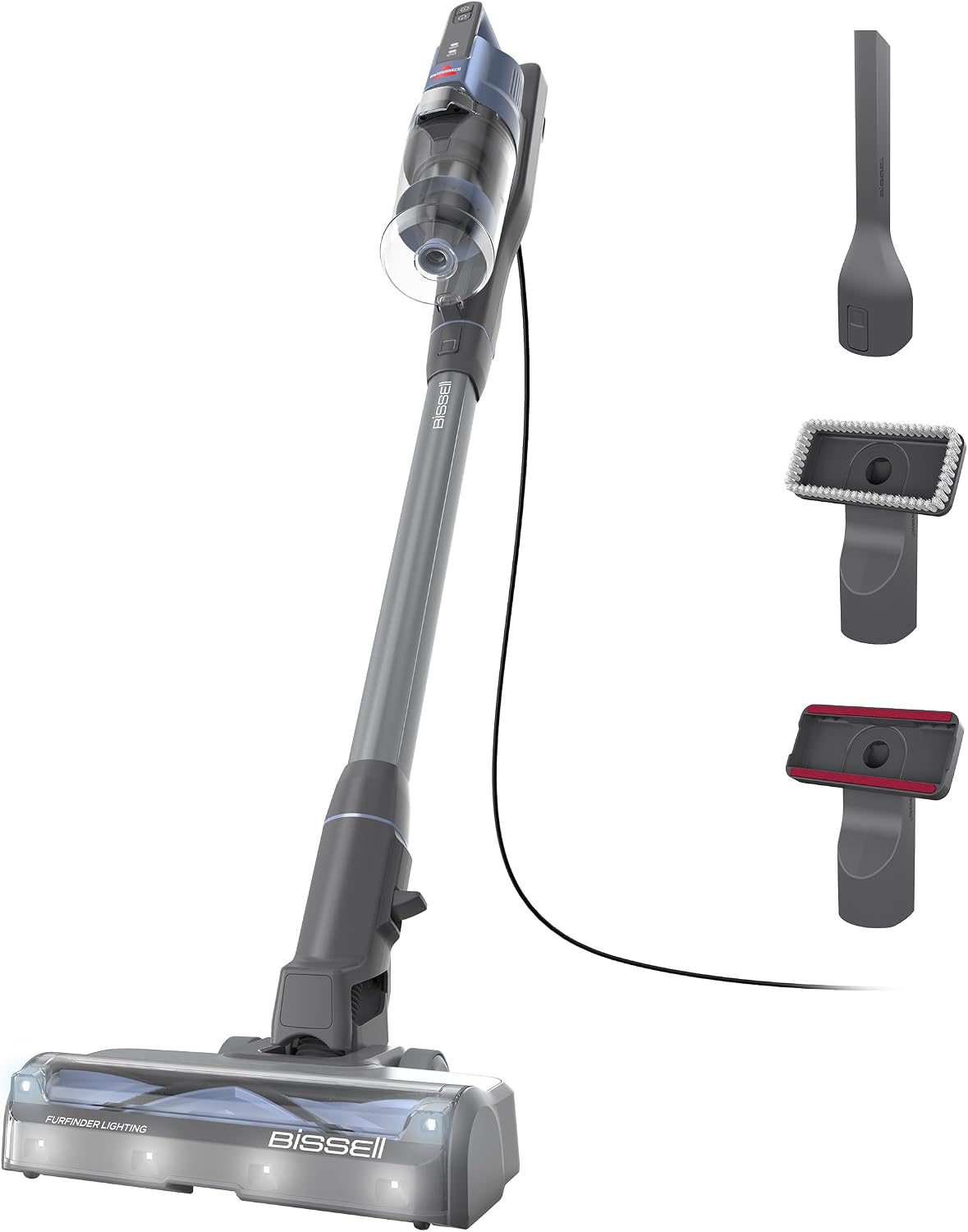 Visit on Amazon → Bissell PowerClean FurFinder Corded Stick Vacuum, HEPA, 4282K |
Corded | Pet hair, carpet, stairs | Built around the tangle problem, HEPA filtration |
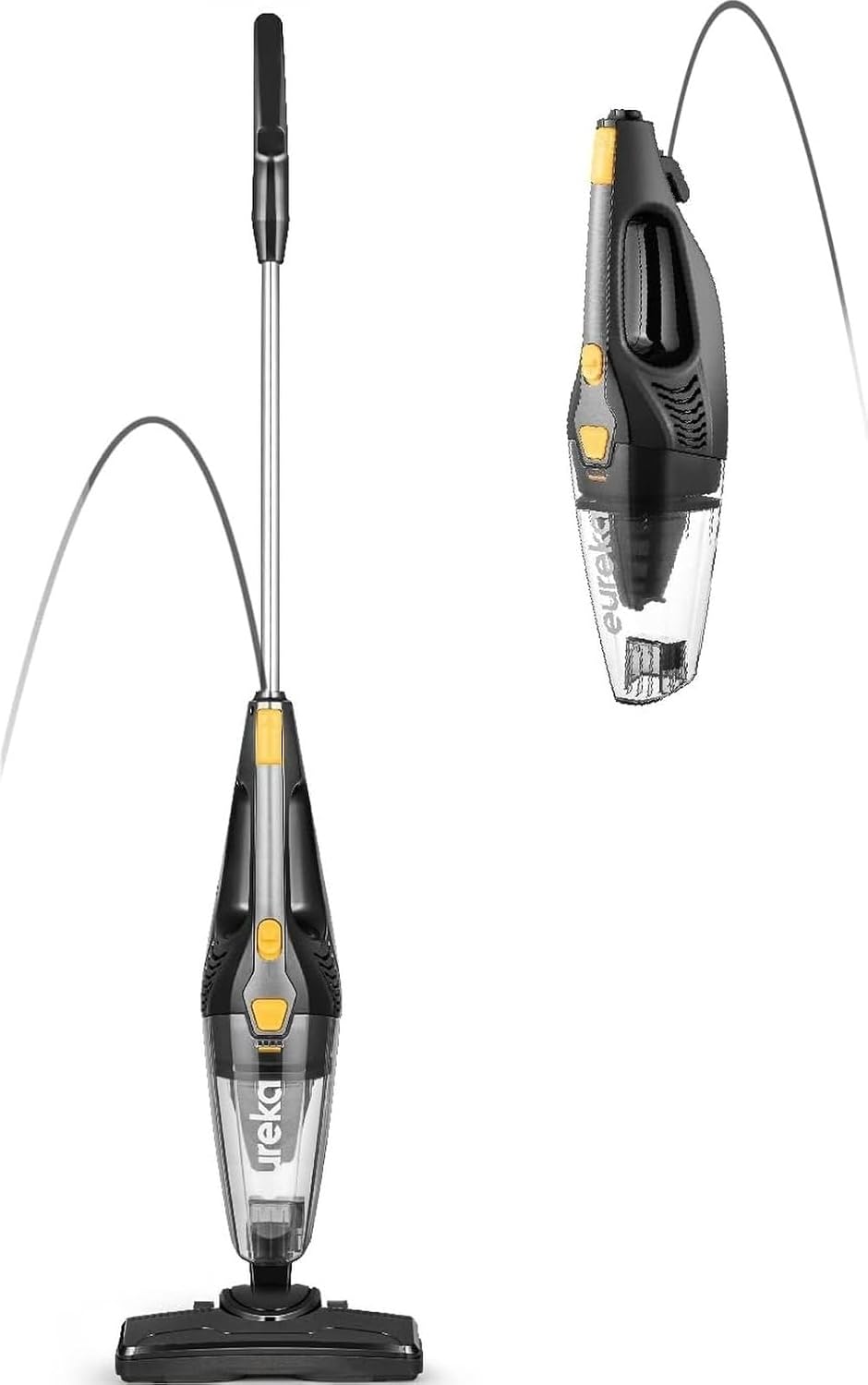 Visit on Amazon → Eureka Blaze Stick Vacuum Cleaner, 3-in-1 Small Handheld Vac with Filter |
Corded | Hard floors, small messes | Light, converts to handheld, second vacuum territory |
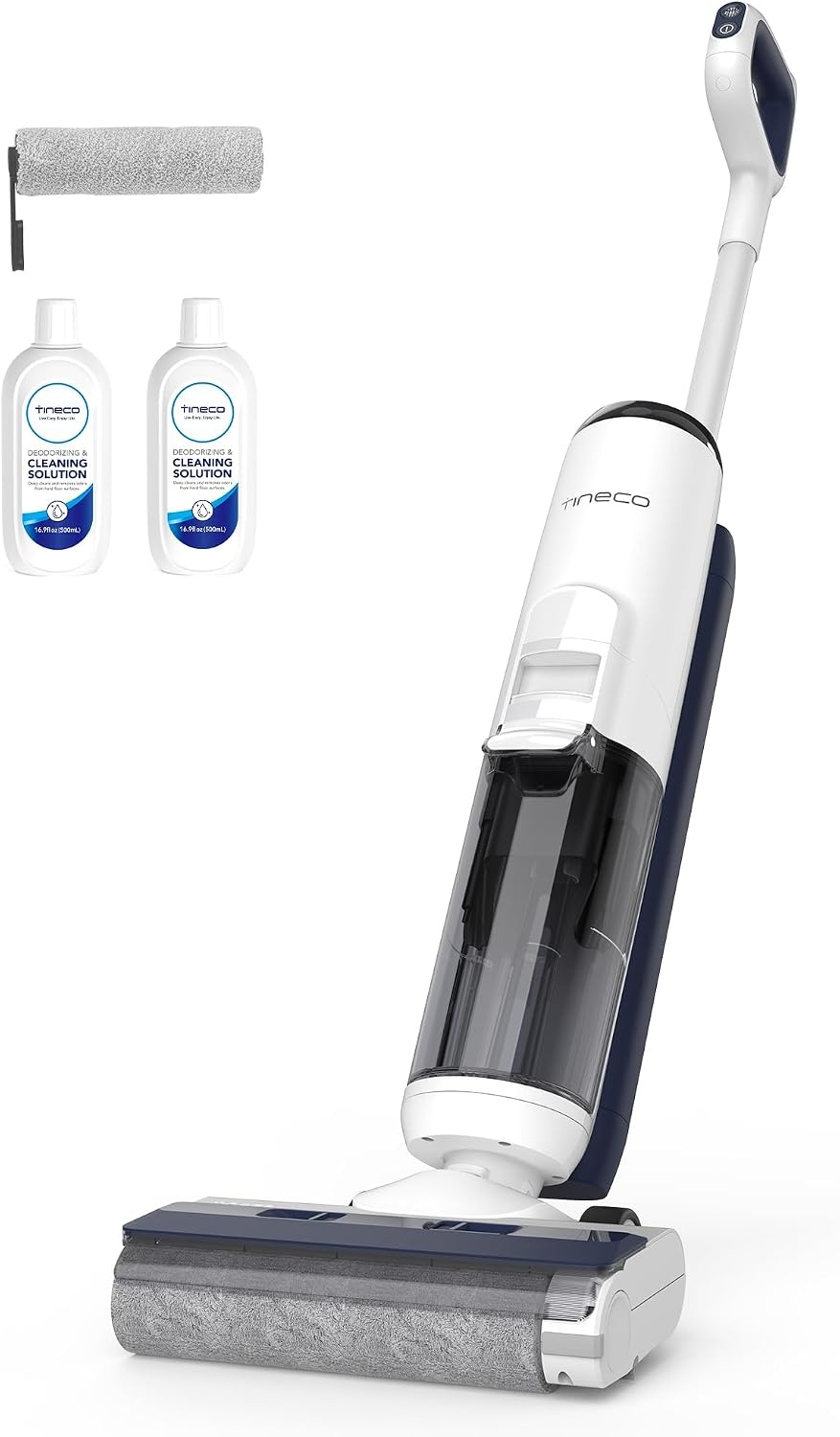 Visit on Amazon → Tineco iFLOOR 5 Breeze Complete Wet Dry Vacuum Cordless Floor Washer |
Cordless | Hard floor washing | Wet and dry in one pass, auto self-cleaning, edge clean |
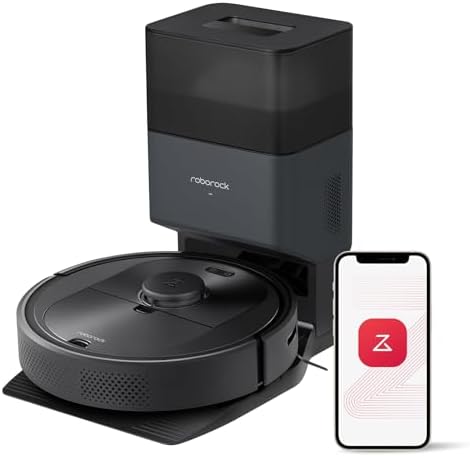 Visit on Amazon → roborock Q5+ Robot Vacuum with Self-Empty Dock |
Cordless | Daily maintenance | Self-empty dock, app and Alexa control, renewed unit |
The table is the short version. The long version is that no single machine covers a pet home, and the people who are happiest with their floors own two: something corded for the heavy days, and something that runs when they do not want to.
Should you buy the Bissell PowerClean FurFinder?
Yes, if your problem is pet hair on carpet and stairs. It is corded, which means no runtime clock running down while you work, and it is built around the brush roll problem that kills most pet vacuums. HEPA filtration is the bonus if anyone in the house reacts to dust. The tradeoff is a cord, which means you plan where you plug in, and you give up the freedom of grabbing it and walking out to the car.
Should you buy the Eureka Blaze?
Buy it as a second vacuum, not a first one. It is the one you keep by the litter box, in the mudroom, or in the trunk. The 3-in-1 conversion is genuinely useful for stairs, upholstery, and car seats, and it is light enough that you will actually reach for it. It will not replace a full-size machine on wall-to-wall carpet, and it was never meant to.
Should you buy the Tineco iFLOOR 5 Breeze Complete?
Buy it if your home is mostly hard floor and mopping is the chore you dread most. It washes and picks up debris in one pass, it self-cleans, and it is light enough to push one handed. It is not a carpet vacuum, so do not expect it to replace one, and do not expect it to reach under low furniture the way a stick with a wand will.
Should you buy the roborock Q5+?
Buy it if you want the daily layer handled without thinking about it. The self-empty dock is the whole point, because a robot that needs its bin emptied every day gets abandoned by week two. It is a renewed unit, so read the seller details and know what you are buying. If you want new, budget for it. If you want a floor that is maintained on autopilot, this is the cheapest honest way to get there.
The short version
If I had to hand one machine to a new crew member in a house with a shedding dog, it would be the corded Bissell, because a cord is a promise you can keep and a battery is a promise you cannot. If your floors are hard and your real enemy is the sticky layer under the hair, the Tineco is the one that changes your week. If your budget is small, the Eureka earns its spot by being the vacuum you will actually pick up. And if you simply want to stop thinking about the floor between deep cleans, the roborock does that job while you are at work.
Buy for the job you have. Not the job the box promises.