Every husky owner in Denver tells me the same thing before I even plug in: "I vacuum every single day and it still looks like I never touched the floor." They are not wrong, and the vacuum is usually not the problem. The problem is technique, plus a brush roll that turns into a felt sock by Tuesday.
A stick vacuum for pet hair has to pass one test in my book. Not the suction number on the box. The second pass. Run it over a rug once, then run it again with the bin half full. If that second pass is still pulling hair out of the pile, you own a vacuum. If it is just polishing the top of the carpet, you own a very expensive broom.
I clean more than 40 homes a month with a three person crew, and most of those homes have at least one dog or cat. I have watched cordless sticks die mid staircase, fling kibble across a kitchen, and clog so badly that the owner assumed the motor had burned out. What follows is the routine I actually use, plus the two cordless sticks I would hand to my crew on a Tuesday morning without a second thought.
Why you should trust me
I have been cleaning houses professionally for eleven years and running my own crew for the last six. We cover Denver from apartments with one elderly cat to a ranch house with two huskies and a golden retriever who sheds like it is a full time career. I have personally killed more stick vacuums than most people will own in a lifetime, and I remember exactly what killed each one.
I do not test in showrooms. Every vacuum I write about gets a full real home clean, including stairs, including the corner where the litter box lives, including the couch the dog sleeps on. If a machine cannot survive a month of that rotation, I say so, and I stop recommending it.
Why pet hair is the hardest thing you will ask a stick vacuum to do
Hair is not dust. Dust is light and it lifts easily. Pet hair is long, it wraps, and it mats down into the carpet pile instead of sitting on top of it. Three things have to go right at the same time.
Airflow does the lifting, not suction. The spec sheet number is measured with an empty bin and a clean filter. In a real home the bin fills with hair and dander in ten minutes and airflow drops with it. That is why bin cyclones matter. A good cone system keeps the filter clear as the bin fills, which is the only reason the second pass still works.
The brush roll decides whether you finish the room or fight the machine. Hair wraps around a standard bristle roll and stays wrapped. You can feel the drag in your wrist before you see it. A tangle free or self cleaning roll shreds hair off itself as it spins, and that single feature is worth more than 50 extra air watts on a spec sheet.
The bin has to empty with one hand. I am usually holding a trash bag, a client's dog, or a stair rail. If I need two hands and a prayer to dump the bin, I stop using the vacuum and so will you.
The two cordless sticks my crew actually reaches for
I am not going to pretend there is one perfect stick vacuum for every home. There are two here, and they solve different problems.
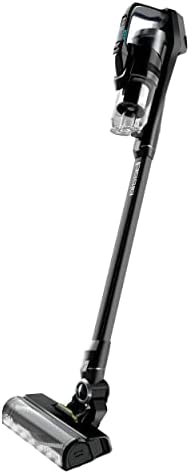
Best for pet hair and stairs: BISSELL ICONpet Cordless with Tangle Free Brushroll, SmartSeal Filtration, Lightweight Stick Hand Vacuum, 22889, Titanium/Black/Blue
 Visit on Amazon →
This is the one I reach for in pet homes, and it is almost entirely because of the brush roll. The tangle free design does what the name says. I have run it through a husky house, a golden house, and a house with three long haired cats, and I have not had to cut hair off the roll. That is not a small claim. With most cordless sticks I am doing surgery with scissors by the third room.
It is light enough that I can carry it up and down stairs in one hand while the other hand holds a caddy, which is the entire point of a stick vacuum. The handheld conversion takes a second, so it goes from floor to couch cushions to car mats without me walking back to the van for a second tool.
SmartSeal filtration is the other feature that earns its place in my rotation. Fine dander stays inside the machine instead of blowing back into the room, which matters in homes where somebody sneezes all spring.
Flaws but not dealbreakers: Run time is the honest weak spot. On high power with the brush roll spinning, you are not cleaning a whole 3,000 square foot house on one charge. I work floor by floor. The bin also fills fast in a heavy shedding home, so plan on emptying it once per level.
Check current Amazon price before you order, since it moves around.
Anyone with one or two shedding pets, a two story house, and a habit of vacuuming one room at a time will get along with this machine.
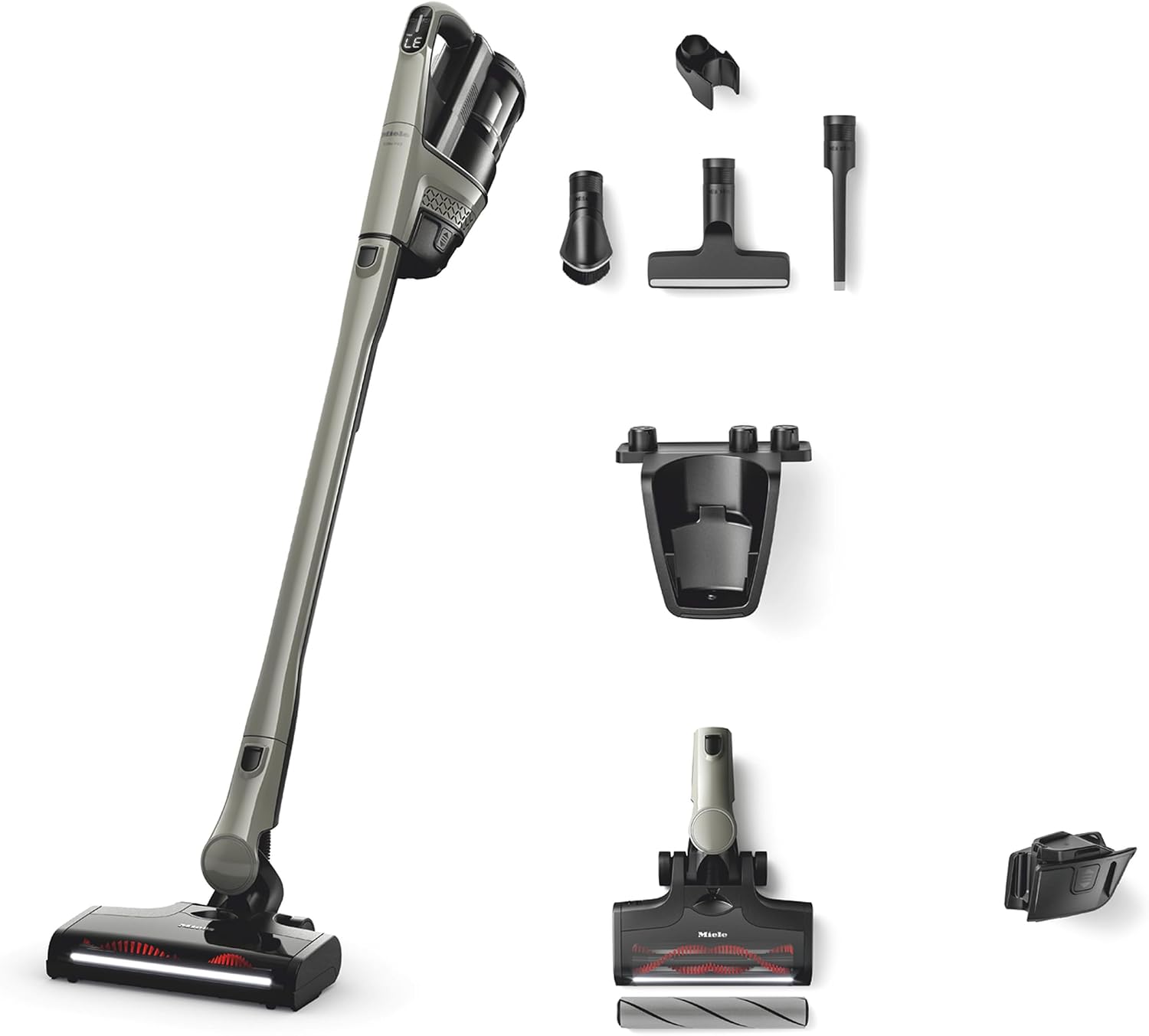
Best for hard floors and self standing storage: Miele Triflex HX3 Hard Floor Cordless Stick Vacuum, Self-Standing
 Visit on Amazon →
The Miele is what I bring into houses where the floors are mostly hardwood, tile, and luxury vinyl, and the pets are short haired or the shedding is moderate. The hard floor head is excellent at pulling grit and hair off a smooth surface in one pass, and the edge pickup along baseboards is the best of any stick I have used.
The self standing part is not a gimmick. It parks upright on its own, so I can set it down mid room to move a chair, answer a client, or carry something to the kitchen. Every stick that flops over when you let go of it is a stick that eventually hits the floor with a crash and a cracked housing.
Miele build quality is the other reason it lives in the van. The joints do not wobble, the wand does not rattle, and the whole thing feels designed by people who expect it to last a decade. In a professional rotation that matters more than any spec sheet.
Flaws but not dealbreakers: It is a hard floor specialist at heart. On thick carpet with a heavy shedding dog, reach for the tangle free BISSELL instead. It is also the pricier of the two, and the bin is not enormous, so a whole house clean with a golden retriever means a couple of empty stops.
Check current Amazon price before you buy, because the configuration matters.
Anyone with hard floors, a tidy storage closet, and a strong preference for a machine that stands on its own should start here.
How to vacuum pet hair with a stick vacuum: the step by step
Technique is free and it is worth more than an upgrade. This is the order I work in.
Step one: clear the floor first. Pick up toys, socks, charging cables, and anything the dog has claimed. A stick vacuum that eats a phone charger is a stick vacuum with a broken brush roll.
Step two: start on hard floor, finish on carpet. Work the smooth rooms first, then the rugs. Hair on a hard floor is easy. Hair pressed into carpet pile is the hard part, and you want your filter as clean as possible when you get there.
Step three: slow down. This is the single biggest mistake I see. People push a cordless stick like a broom. Hair needs dwell time under the brush roll. Two slow passes beat six fast ones every time.
Step four: overlap by half. Half the head width, not a sliver. Pet hair sits in the valleys of the carpet pile, and a half overlap is what actually reaches it.
Step five: go against the pile on rugs. If you can see which way the carpet naps, work across it rather than with it. The brush roll digs in and lifts hair instead of skating over the top.
Step six: do the second pass while the bin is half full. This is the test that tells you the truth about your machine. If pass two is still pulling hair, you are done. If it is not, empty the bin, tap the filter, and try again.
Step seven: empty the bin before it is full. Not after. A bin at 80 percent is already choking airflow on most cordless sticks. In pet homes I empty at half.
Step eight: hit the couch, the stairs, and the car. Convert to handheld. Cushions first, then stair treads, then car mats. This is where a stick earns its keep over a canister.
Step nine: clean the brush roll and filter monthly. Even a tangle free roll collects fine fuzz. Pull the roll, run a finger along it, and rinse or tap the filter per the manual. A clogged filter is the number one reason a cordless vacuum feels like it lost power.
Where a stick vacuum still loses
I love a cordless stick and I also keep a canister in the van, because there are jobs a stick cannot do.
Wall to wall plush carpet in a whole house with two heavy shedders is still canister work. You need sustained airflow for twenty minutes, and a stick battery paired with a small bin will not deliver that.
Stairs with a wide tread and a tight landing are awkward with a long wand. Handheld mode solves it, but you will bend more than you would with a canister and a hose.
Big debris is not a stick vacuum job. Cereal, kibble, and craft glitter bounce off the head or clog the inlet. Grab a broom or a shop vac for that mess.
And the marketing number on the box is not run time. Run time is what you get on medium power, on medium pile carpet, with a half full bin. Assume the real number is about half the big print and you will never be disappointed.
What this all costs
Two machines, two different budgets. The BISSELL sits in the mid range and does the pet hair job. The Miele sits higher and does the hard floor and long term durability job. Check current Amazon price on both before you decide, because cordless vacuum pricing swings with every sale event.
The honest math is not cost per vacuum, it is cost per clean. If a machine saves you ten minutes on every whole house clean and you clean twice a week, that is roughly 17 hours a year back. My crew bills by the hour, so I do the math that way. In a home, the currency is just your Saturday.
Filters and brush rolls are the real consumable cost. Budget for a replacement filter every six to twelve months in a pet home, plus a spare brush roll if you have a heavy shedder. That is the difference between a vacuum that lasts five years and one that dies at eighteen months.
Questions clients ask me about pet hair and stick vacuums
Do I need a self cleaning brush roll? If you have a dog or cat that sheds, yes. It decides whether vacuuming is a five minute job or a twenty minute job with scissors.
Is a stick vacuum enough for a whole house? For hard floors and light carpet, yes. For wall to wall plush carpet and multiple heavy shedders, keep a canister for the deep clean and use the stick for maintenance in between.
How often should I vacuum with a shedding pet? In my client homes, high traffic rooms get a pass every day during shedding season and every other day the rest of the year. The rugs that get ignored are the ones that go gray.
Does the vacuum really need to stand on its own? It matters more than people think. You will set it down mid clean. A machine that parks itself is a machine you will actually use.
Will a stick vacuum help with allergies? Filtration helps. Sealed systems that keep dander inside the machine instead of blowing it back into the room make a noticeable difference in a house where somebody sneezes.
That is the whole routine. Match the machine to your floors, slow down on the second pass, empty the bin early, and keep the filter clean. Do those four things and the pet hair stops winning. Your floors were built to be clean. Let them.