I have cleaned more than 400 homes around Denver since I started my crew, and I have killed stick vacuums in just about every way one can die. Some quit halfway up a staircase. Some refused to pick up a single Cheerio on the second pass. One flung cat litter across a hallway like it was trying to start something. So when clients ask me which cordless vacuum to buy, I do not answer with a spec sheet. I answer with the machines I would hand to my three-person crew on a Tuesday morning.
That is what this comparison is: four cordless vacuums, what each one is genuinely good at, and where each one will annoy you. If you are shopping for stick vacuums for pet hair, the table below is the short version and the sections after it are where the real differences live.
Related: Stick Vacuum Run Time Explained
For most homes with a dog or a cat, my pick is the Shark Pet Cordless Stick Vacuum IX141, because it is built around the hair problem instead of treating hair as an accessory. The Dyson V8 is the safest all-rounder. The LG CordZero Kompressor is the one for large floors and long cleaning sessions, provided you are comfortable buying renewed. And the Shark WANDVAC is not a floor vacuum at all, which is exactly why it ends up being the most-used tool in my caddy.
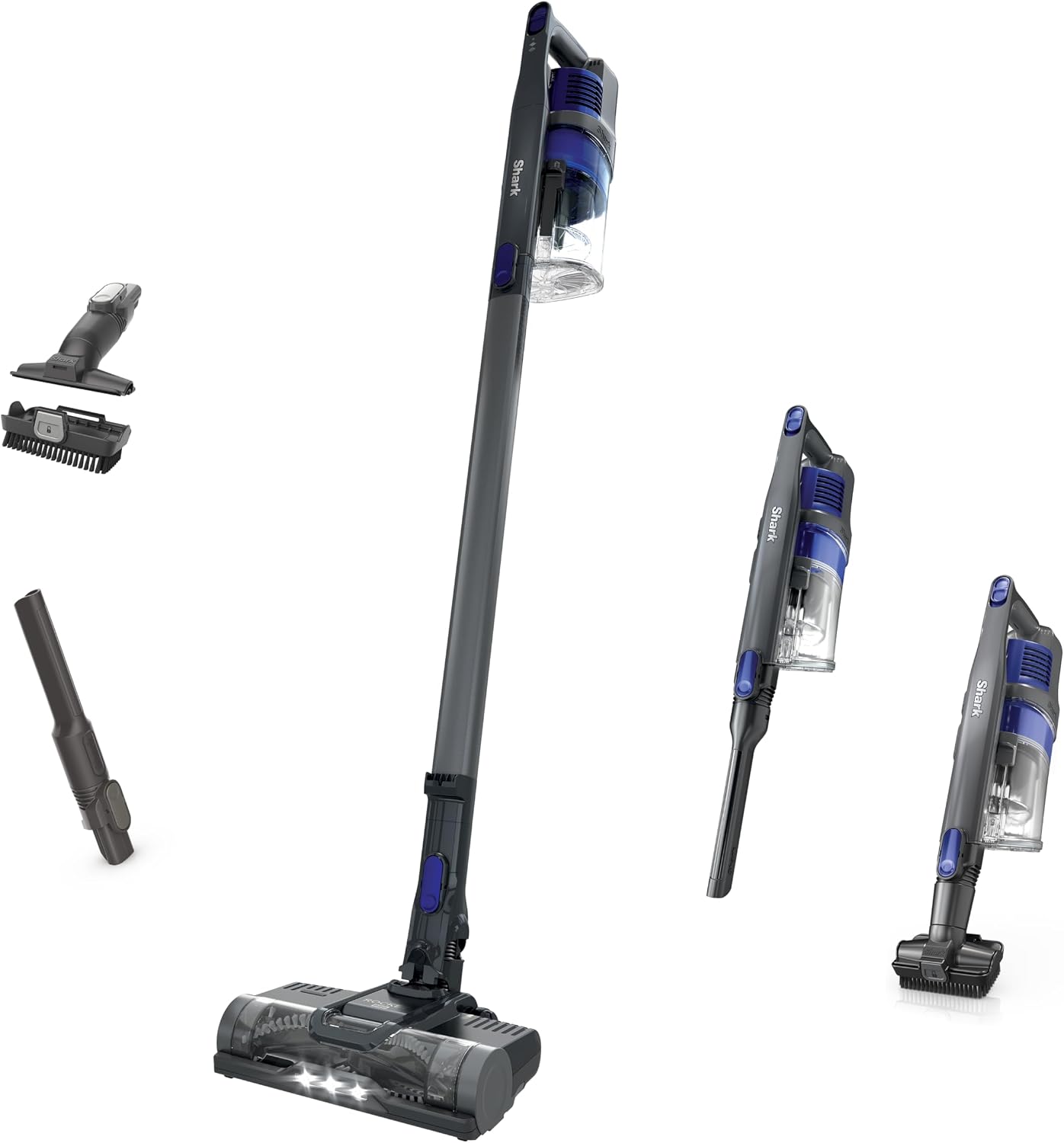
Shark Pet Cordless Stick Vacuum, Grey, IX141
Built for hair-heavy homes, with a real floor head and onboard tools at the friendliest price tier here
No display, no auto mode, and it still wants a wall dock
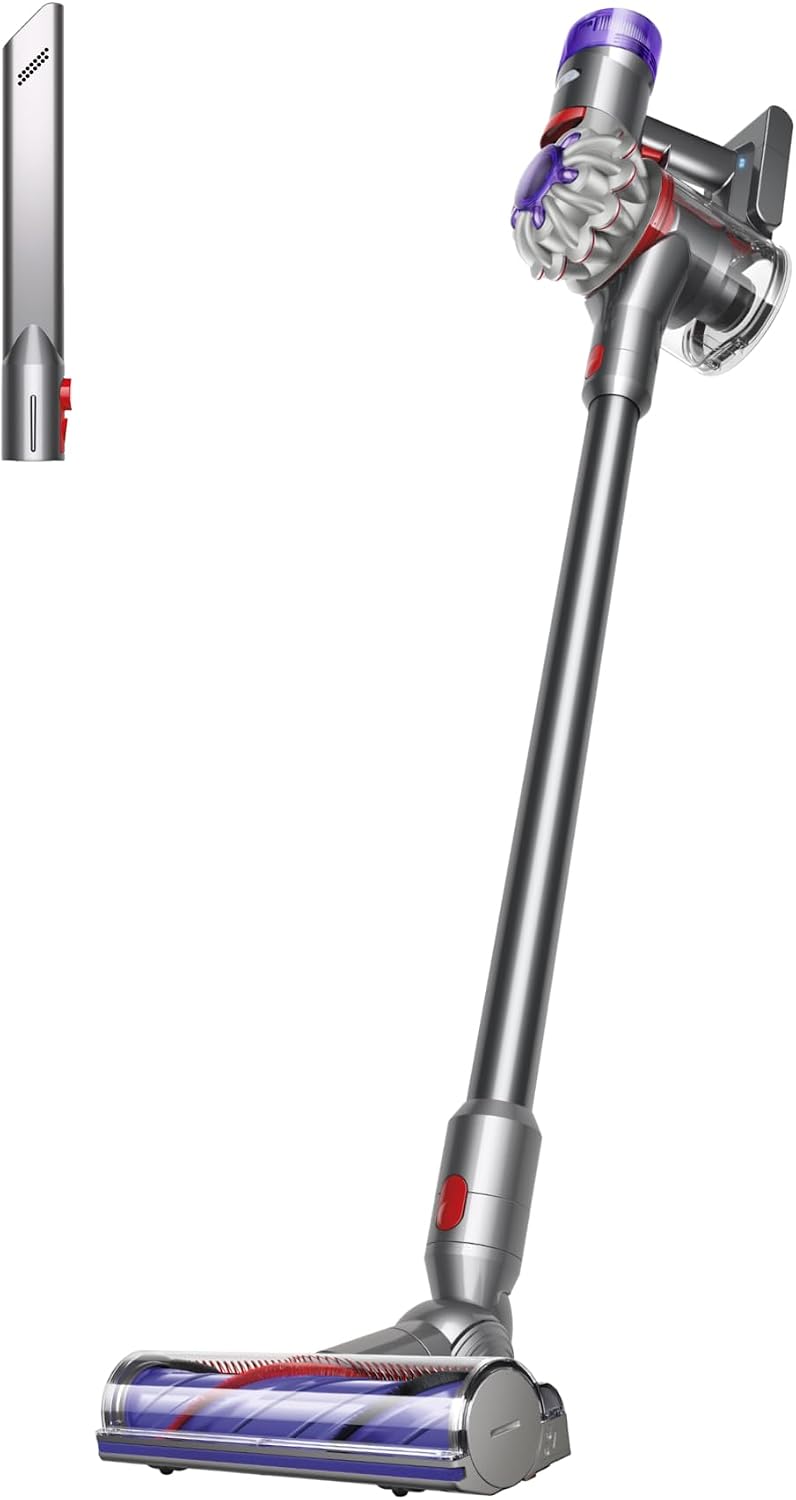
Dyson V8 Cordless Vacuum
Predictable behavior, easy parts and filter supply, one-motion bin emptying
Oldest platform in this group and the most expensive machine here
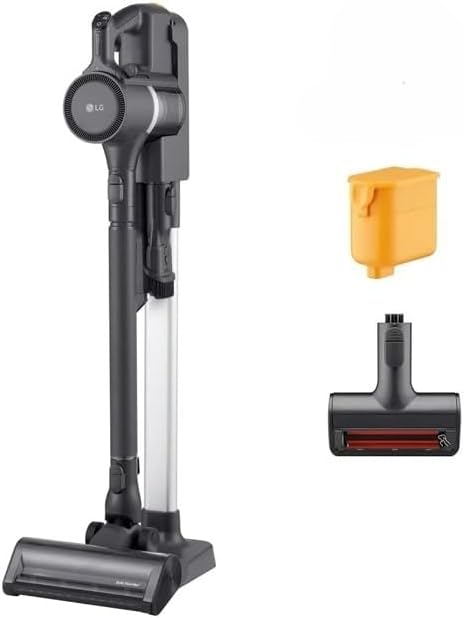
LG CordZero Kompressor Cordless Stick Vacuum A941KTMP (Renewed)
Bin compression and a platform designed for swappable batteries, so big floors get finished
It is a renewed unit, so condition and warranty need checking
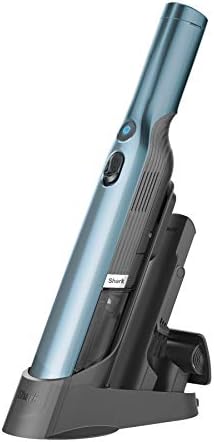
Shark WV201 WANDVAC Handheld Vacuum, Graphite, Slate
1.4 pounds, charging dock, single-touch empty, detachable dust cup
Handheld only: small cup, short sessions, no floor head
Prices and availability were captured from Amazon Creators API and may change.
What I check before a vacuum earns a spot
Four questions, every time. Does the brush roll still spin freely after a pass through a house with two huskies? Does pickup hold when the bin is half full, or does the machine start politely pushing debris around the room? Can I empty it with one hand while holding a trash bag in the other? And would I hand it to my crew on a Tuesday, when the schedule is full and nobody has patience for a finicky tool?
Two smaller things matter more than they should. First, whether the vacuum stands on its own or needs a wall dock, because a vacuum that has to lean on something ends up on the floor. Second, crevice reach, which is how far the wand and tools actually get under a couch or along a baseboard. That is where stick vacuums either beat a broom or lose to one.
Shark Pet Cordless Stick Vacuum, Grey, IX141
The IX141 is the machine I point pet owners toward first. It is a full stick vacuum with a floor head and onboard tools, sold as part of Shark's pet line, and the entire design brief is hair: hair on hardwood, hair on area rugs, hair that has woven itself into a couch cushion. In a house with a golden retriever and a shedding cat, the job is not deep carpet extraction. The job is volume. You need a vacuum that keeps moving and keeps picking up on the tenth pass, because that is what a Tuesday looks like in a pet home.
What I like about this one for my own work is the combination of a real floor head, tools that live on the machine, and a price tier that sits comfortably below the Dyson in this group. That last part matters when you are buying a tool to be used, not displayed. Clients who buy one of these tend to keep it on a dock near the kitchen, run a five-minute pass every evening, and stop noticing hair on the baseboards.
The trade-offs are the usual ones for this class. It is a stick vacuum, so it supplements a full-size machine rather than replacing it, and it wants a wall mount or a dedicated corner. There is no dust-detection display and no auto mode. It is just a vacuum, which some people will correctly call a feature.
Dyson V8 Cordless Vacuum
The V8 is the cordless vacuum most people have already used somewhere, and that familiarity is a real advantage. Parts, filters, and attachments are easy to find, the machine is well documented, and if something goes wrong you are not hunting for a proprietary piece from a brand nobody stocks. In my experience that ecosystem is worth more than any single spec on a box.
It is also the most expensive machine in this group and the oldest platform here. Both of those facts deserve to be said out loud. If you want the newest Dyson features, this is not that machine. If you want a cordless vacuum that behaves exactly the way you expect, with a trigger you hold while you clean and a bin you empty in one motion, the V8 is the least surprising thing you can buy.
Where it earns its keep in my rotation is on hard floors and quick tidy passes. It is easy to carry one-handed up a staircase, and it is the vacuum I hand to a client who does not want to think about which tool to grab. Where it loses points is cost and age. You are paying a premium for a familiar name, and there are newer machines in this very list.
LG CordZero Kompressor Cordless Stick Vacuum A941KTMP (Renewed)
This is the pick for big houses and long sessions. LG's CordZero line is the one I recommend to clients with more square footage than patience, because the system is built around keeping you cleaning instead of waiting. The Kompressor name refers to the bin compression lever that packs debris down so you empty less often, and CordZero is the platform in this group designed around swappable batteries. If your home has a main floor, an upstairs, and a finished basement, that matters more than any suction number printed on a box.
The catch is in the parentheses. This listing is a renewed unit, which means someone else owned it first. Renewed is not a dirty word, and for a vacuum it can be a smart way into a higher tier for less money, but go in with your eyes open. Check who is selling it, read the condition notes, confirm what warranty comes with it, and test the battery and the brush roll in the first week while the return window is still open. A renewed vacuum that works is a bargain. A renewed vacuum that arrives with a tired battery is someone else's problem, and you do not want it to become yours.
Buy this one if you want a large-home system and you are willing to do a little homework. Skip it if you want a box that has never been opened.
Shark WV201 WANDVAC Handheld Vacuum, Graphite, Slate
The WANDVAC is the odd one out, and it is the one I would replace first if it disappeared from my caddy. It is a handheld, not a floor vacuum, and it weighs 1.4 pounds. That number sounds like marketing until you are holding it above your head to get cobwebs off a ceiling fan. It comes with a charging dock, empties with a single touch, and the dust cup detaches for rinsing, all of which sounds minor until you have owned a handheld that needed two hands and a prayer to empty.
In my rotation it handles stairs, car interiors, couch crevices, window tracks, and the ring of litter around a box. It is also the vacuum I grab when a client's kid has scattered cereal somewhere no full-size machine can reach. A handheld like this is the difference between a two-minute fix and dragging out a canister.
The trade-offs are honest ones. It is not a floor vacuum and it never will be. The cup is small, sessions are short, and if you try to clean a whole house with it you will spend more time at the trash can than on the floor. Buy it as a companion, not as your only vacuum.
The trade-offs the spec sheets hide
Renewed is a different purchase. One machine here is renewed, and renewed means you are buying condition, not just a model number. The savings can be real. So can the surprises. Treat the return window as part of the product.
Handheld and stick are not the same category. The WANDVAC and the three floor machines solve different problems. Buying a handheld as your only vacuum is the single most common mistake I see.
Docks decide where the vacuum lives. A stick vacuum stored in a closet gets used less than one sitting on a dock in the hallway. Plan the dock before you buy, not after.
The second pass is the only spec that matters. Suction numbers are marketing. The real test is whether the machine still picks up when the bin is half full and the brush roll already has hair on it.
Emptying matters more than you think. A bin you can empty one-handed, with a trash bag in the other hand, is a vacuum you will keep using for years. A bin that needs two hands and a prayer ends up in the garage.
Which one I would hand to my crew
For a pet home under about 2,000 square feet, the Shark Pet Cordless Stick Vacuum IX141 is the buy. It is aimed at the exact mess you have, and the price leaves room for a handheld later.
For a big house with multiple floors, the LG CordZero Kompressor A941KTMP is the one, provided you read the renewed listing carefully and test it early.
For the person who wants zero surprises and does not mind paying for a familiar name, the Dyson V8 is still a safe answer. Just know you are buying maturity, not novelty.
And for almost everyone, the WANDVAC earns a spot as the second vacuum. Stairs, cars, and crevices do not care which flagship you own.
What I am testing next
I am running two more cordless machines through client homes this month, including one budget stick that has surprised me on stairs. I will also have a longer report on brush roll design and why some rollers survive a husky and some need monthly surgery. If a machine changes my mind, I will say so here.
The short version: pick the vacuum that matches the mess you actually have, not the one with the loudest box. Then empty the bin one-handed and get on with your day.